
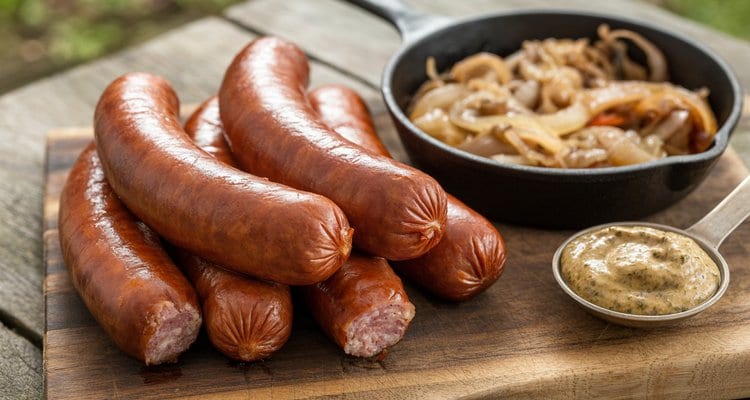
There is something almost magical about the moment a backyard cookout shifts from ordinary to unforgettable. Grilling bratwurst over direct flames is fine – but smoking them low and slow is a game-changer that takes a humble sausage and turns it into the undisputed star of the grill. Smoked brats develop a rich, mahogany casing, stay remarkably juicy, and carry a depth of wood-fired flavor that you simply cannot replicate over a roaring gas burner. This guide walks you through everything you need to know: why smoking bratwurst beats hot-and-fast grilling, how to choose the right sausages, how to set up your smoker or pellet grill, and the exact time and temperature targets that take your brats from raw to perfect. We will even cover the classic beer onion pairing that makes the whole meal come together.
Why Smoke Bratwurst? (Is It Worth It?)
If you have ever put brats directly over high heat, you know the frustration – the casings split, the fat drips into the flames, and you end up with dry, charred sausages instead of the plump, juicy ones you were hoping for. Smoking eliminates that problem entirely. At low temperatures, the fat inside the casing renders slowly. Instead of escaping through a burst seam, it stays inside the sausage and bastes the meat from the inside out as it cooks. The result is a bratwurst that snaps when you bite into it and floods your mouth with savory, smoky juice. Beyond the flavor and texture benefits, smoking is also far more forgiving for the cook. A pellet grill like a Traeger or Pit Boss holds temperature automatically, so you can set it and walk away rather than babysitting the grill.
Once the brats hit the smoker, your only real job is flipping them once and pulling them at the right internal temperature.

Choosing the Right Sausages
Fresh vs. Pre-Cooked Brats
The single most important decision you will make is whether you buy fresh (uncooked) brats or pre-cooked ones. For smoking, always go with uncooked brats. Pre-cooked sausages have already been heated through during processing, so they absorb far less smoke flavor and tend to dry out when exposed to additional heat. Fresh brats – like the classic Johnsonville variety you will find at most grocery stores – are packed raw into natural casings and are ready to absorb everything your smoker has to offer. The raw fat and protein structure soaks up the wood smoke as the meat cooks, producing that deep, layered flavor that makes smoked brats worth every extra minute.
Flavor Profiles and Variety
Traditional pork bratwurst is the gold standard for the smoker. The higher fat content in pork sausage renders beautifully at low temperatures, and the mild, savory flavor pairs naturally with just about any smoking wood. That said, the smoker is an excellent stage for other varieties as well. Beef brats hold up well to bolder woods like hickory and offer a heartier, meatier flavor. Cheese-stuffed brats are a crowd favorite – the cheese stays melty and gooey inside the casing rather than seeping out, as long as you keep the temperature controlled. If you are cooking for guests with dietary restrictions, it is worth checking labels for gluten-free options, as formulations vary by brand.
- Hotec stainless steel kitchen tongs — easily turn and move food
- Weber Original Kettle Premium charcoal grill — classic kettle grill for smoking and indirect cooking
- MEATER Plus Bluetooth wireless meat thermometer — verifies doneness for various meats without guesswork
Setting Up Your Smoker or Pellet Grill
Wood Selection
Wood choice has a meaningful impact on the final flavor of your smoked brats. Fruitwoods are the most popular option because they produce a mild, slightly sweet smoke that complements pork without overpowering it.
| Wood | Flavor Profile | Best For |
|---|---|---|
| Apple | Mild, slightly sweet, fruity | Pork brats, cheese brats |
| Cherry | Mild, sweet, adds mahogany color | Pork brats, beef brats |
| Hickory | Bold, robust, classic BBQ | Beef brats, traditional pork |
| Apple + Cherry Blend | Balanced, sweet, great color | All brat varieties |
Choose a mild wood when you want the bratwurst seasoning to lead, or a stronger wood when smoke should be more prominent.
Temperature Control and Setup
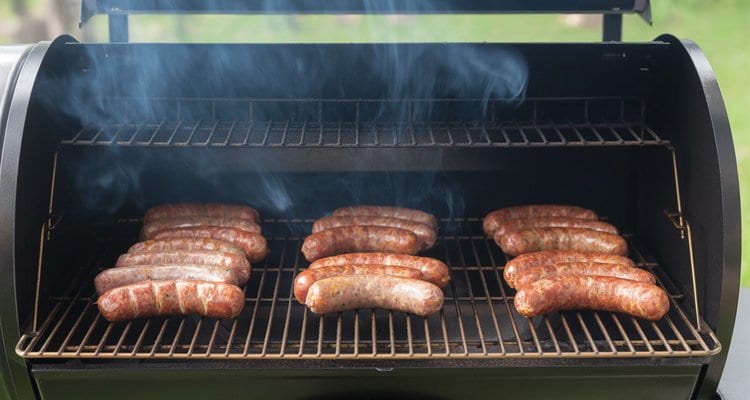
Make sure your brats are fully thawed before they go on the smoker — frozen sausages can’t properly absorb wood smoke, so any brats coming out of the freezer need a full thaw in the refrigerator first. It also helps to let them sit out at room temperature for about 30 minutes before cooking to take the refrigerator chill off, which promotes more even cooking once they hit the grates. For pellet grills like the Traeger or Pit Boss, setup is straightforward – fill the hopper with your chosen pellets, set the temperature, and let the grill preheat for 10-15 minutes before adding the sausages. Always place the brats over indirect heat, not directly above a flame or heating element. Electric smokers and smoker ovens work well too — set the temperature dial or digital controller the same way you would a pellet grill, and place the brats on a middle rack for even heat exposure.
If your controller’s lowest “Smoke” setting reads 180°F, that works fine for brats too, though it will take longer than the 225°F approach below and won’t build quite as much bark. If you are using a charcoal or offset smoker, build a two-zone fire by banking your coals to one side. Place the brats on the cool side, add your wood chunks or chips to the coals, and close the lid. The goal is steady, ambient heat – not direct radiant heat from below the sausages. A brief safety note: even at low temperatures, monitor your smoker to ensure it is holding steady and not building excessive heat that could cause flare-ups.
The Smoking Process: Time, Temperature, and Technique
Cooking at 225°F
At 225°F, plan for approximately 1.5 to 2 hours of total cook time depending on the thickness of your sausages. This lower temperature gives the smoke the most time to work its way into the meat, producing the deepest, most complex flavor. The brats will develop a gorgeous mahogany color on the outside while staying perfectly juicy inside.
Cooking at 250°F
Bumping the temperature to 250°F – a common setting on the Pit Boss and many other pellet grills – shortens the cook to around 60-90 minutes. You still get excellent smoke penetration and a beautiful casing color. This is a great middle-ground option when you want solid smoke flavor but do not have two full hours to dedicate to the cook.
Flipping and Finishing
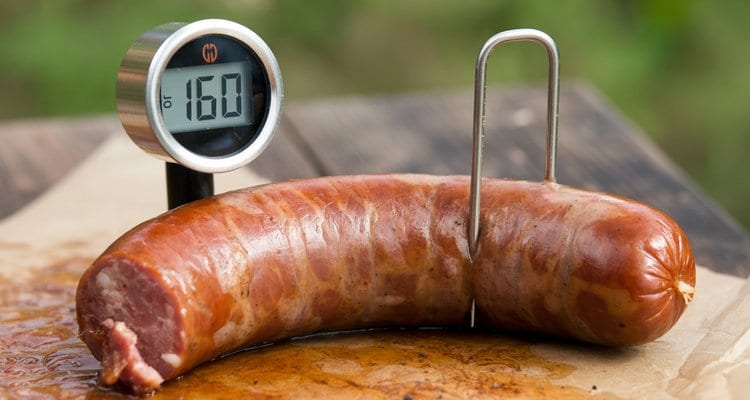
One of the great things about smoking is that the ambient heat surrounds the sausages from all sides, so flipping is not strictly required for food safety. That said, rotating the brats once at the halfway mark does make a noticeable difference in the final color. The side resting against the grate will develop a slightly darker crust – a quick flip ensures even, all-around color on the casing. Regardless of cook time or temperature, the finish line is always the same: an internal temperature of 160°F. This is the USDA safe temperature for ground pork and pork sausages. Pull out a reliable instant-read thermometer and check the thickest part of the sausage – not the ends, where the reading can run hotter. Once you hit 160°F, pull the brats immediately and let them rest for a few minutes before serving.
The Perfect Pairing: Beer Onions and Buns
How to Make Beer Onions
A smoked brat deserves more than a squirt of ketchup. Beer onions are the classic companion – sweet, savory, slightly caramelized, and deeply flavorful from the lager they simmer in. You can make them right alongside the brats using a cast-iron skillet on the smoker shelf or on a side burner. Here is the basic method:
- If you have time, soak the raw brats in a beer-and-onion bath in the refrigerator for anywhere from 4 to 24 hours before smoking — it adds moisture and can help prevent the casings from splitting on the grill. For the onions themselves: slice 2-3 large yellow onions into thin half-rings, and feel free to add a sliced bell pepper or two into the same skillet for a classic onions-and-peppers topping.
- Melt 2 tablespoons of butter in a cast-iron skillet over medium heat.
- Add the onions and cook, stirring occasionally, until they soften and begin to turn golden – about 10-12 minutes.
- Pour in one 12-ounce lager or pilsner and reduce the heat to low.
- Simmer until the beer reduces by half and the onions are fully caramelized and tender – another 10-15 minutes.
- Season with salt and a pinch of black pepper to taste.
The onions will be ready by the time your brats come off the smoker. Keep them warm in the skillet until serving.
Serving Suggestions
For the full experience, serve your smoked brats on high-quality, bakery-style buns – brioche or pretzel buns hold up especially well to the juicy sausage and the soft onions. Toast the buns lightly on the grill grate for 60-90 seconds just before serving. Top each brat generously with the beer onions, then add a smear of spicy brown mustard or stone-ground mustard. The sharpness of the mustard cuts beautifully through the richness of the smoked sausage and the sweetness of the caramelized onions.
Frequently Asked Questions
Can you cook brats in a smoker?
How long do brats take to smoke at 225°F?
Do you need to flip brats when smoking?
How long to smoke brats at 250°F on a Pit Boss?
Is it worth it to smoke bratwurst?
How do you store and reheat leftover smoked brats?
Refrigerate leftover brats in an airtight container for up to 3-4 days, or freeze for up to 2 months. To reheat without drying out the casing, warm them gently in a covered skillet with a splash of water or beer over medium-low heat, or wrap in foil and reheat in a 300°F oven until warmed through — avoid high heat or the microwave alone, which tends to split the casing and dry out the meat.
Juicy Smoked Brats with Beer Onions
Equipment
- Smoker or pellet grill Set up for indirect heat at 225 degrees F or 250 degrees F
- Instant-read meat thermometer For checking the 160 degrees F internal temperature
- Cast iron skillet For cooking the beer onions
- Tongs For turning and removing the brats
Ingredients
For the Smoked Brats
- 5 links fresh uncooked bratwurst pork, beef, or cheese-stuffed brats
- 1 batch apple, cherry, or hickory wood pellets or chunks use your preferred smoker fuel
For the Beer Onions
- 2 tablespoons butter for sauteing the onions
- 2 large yellow onions sliced into thin half-rings
- 12 ounces lager or pilsner one standard bottle or can
- 1/2 teaspoon kosher salt plus more to taste
- 1/4 teaspoon black pepper freshly ground if possible
For Serving
- 5 bakery-style buns brioche or pretzel buns work well
- 5 tablespoons stone-ground or spicy brown mustard or to taste
Instructions
- Preheat your smoker or pellet grill to 225 degrees F for the deepest smoke flavor. For a faster cook, set it to 250 degrees F.
- Place the fresh uncooked brats directly on the smoker grates over indirect heat, leaving space between each link so smoke can circulate.
- Smoke the brats for 90 minutes at 225 degrees F, or about 75 minutes at 250 degrees F, turning once halfway through for even color.
- While the brats smoke, melt the butter in a cast-iron skillet over medium heat. Add the sliced onions and cook for 10 minutes, stirring occasionally, until softened.
- Pour in the beer, reduce the heat to low, and simmer for 15 minutes until the beer reduces and the onions are tender and caramelized. Season with salt and pepper.
- Check the thickest part of each brat with an instant-read thermometer. Remove the brats from the smoker when they reach 160 degrees F internal temperature.
- Rest the brats for 5 minutes. Toast the buns briefly, then serve each brat with warm beer onions and mustard.
Notes
Related BBQ Guides

Beer Can Chicken: Juicy BBQ Secrets for Tender Results
This beer can chicken recipe delivers moist meat and crispy skin every time, with step-by-step grilling instructions and a simple seasoning rub.

Cast Iron Seasoning Mastery: Your Complete Guide
Learn how to season cast iron the right way, with the best oils, oven and stovetop methods, and maintenance tips for a lifetime nonstick finish.
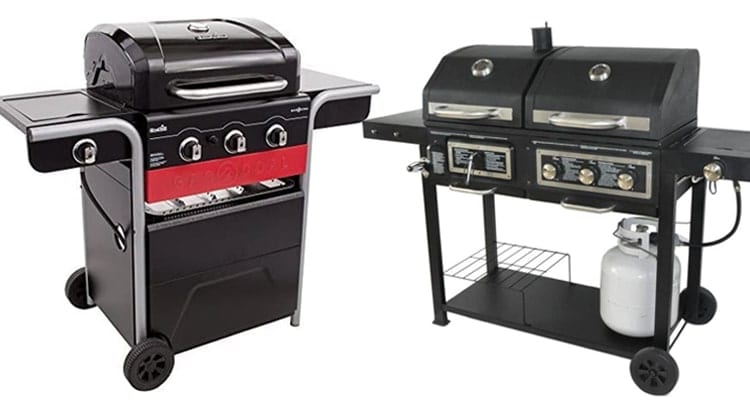
Gas-Charcoal Combo Grills: Best of Both Worlds for 2026
Discover the top gas and charcoal grill combos for 2025. Find the perfect dual-fuel grill for versatile outdoor cooking and entertaining.