
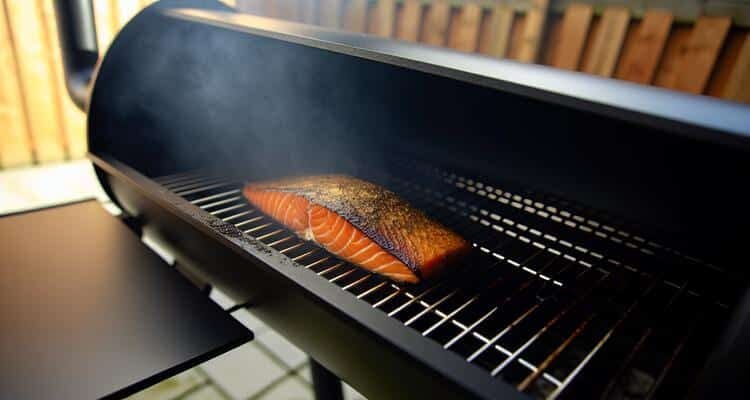
Smoked salmon on a pellet grill is easiest when you control three things: salt, smoke, and final temperature. This guide covers wet and dry brining, pellet choice, grill setup, doneness cues, and serving ideas so you can make moist, smoky salmon without drying out the fillet or overpowering its clean flavor. Use the quick sections below to choose your prep method and cook with confidence.
Why Do Pellet Grills Excel at Smoking Salmon?
Pellet grills have revolutionized backyard smoking, and nowhere is this more evident than when smoking delicate fish like salmon. Here’s why your pellet grill is the ideal tool for this task:
Precise Temperature Control
Salmon requires gentle, consistent heat to avoid overcooking and drying out. Pellet grills excel at maintaining steady temperatures as low as 180°F for hours without constant adjustment. Unlike charcoal smokers that require frequent monitoring and fuel adjustments, pellet grills use digital controllers to automatically feed pellets and maintain your target temperature within 5-10 degrees. This set-it-and-forget-it capability is crucial when smoking fish, which has a much shorter window between perfectly cooked and overdone compared to red meat.
Clean, Consistent Smoke Production
Wood pellets burn cleaner than chunks or chips, producing a thin blue smoke that imparts flavor without overwhelming the delicate taste of salmon. The auger system feeds pellets gradually, ensuring even smoke distribution throughout the entire cook. You won’t need to open the lid repeatedly to add wood, which helps maintain temperature stability and prevents heat loss.
Beginner-Friendly Operation
If you’re new to smoking fish, pellet grills remove much of the intimidation factor. Digital controls let you dial in exact temperatures, built-in probes help you monitor internal temp, and many models include Wi-Fi connectivity so you can check progress from your phone. This ease of use means you can focus on preparation and technique rather than constantly babysitting the smoker. For readers interested in other smoking methods, check out our guide to the best fish smokers for a comparison of electric, propane, and charcoal options. For pellet-grill smoke production, Traeger Signature Blend pellets are a reliable all-purpose choice that works well for salmon.
How Do You Select the Right Salmon for Smoking?
The foundation of great smoked salmon starts with selecting quality fish. Understanding the different types of salmon and what to look for will ensure your final product is as delicious as possible.
Salmon Varieties Explained
The four common varieties differ in flavor, fat content, texture, availability, and cost. Compare those traits before choosing a fillet for the smoker:
| Variety | Flavor and Appearance | Fat and Texture | Best For |
|---|---|---|---|
| Atlantic | Mild, buttery flavor | Around 13–15% fat; abundant marbling helps the fish stay moist and gives it a rich mouthfeel. | Beginners and year-round availability. It is the most widely available variety and is typically farm-raised. |
| Sockeye (red) | Deep red-orange color with a robust, pronounced salmon flavor | Higher oil content absorbs smoke well, while the firmer texture holds up during smoking. | Smoked-salmon enthusiasts who value stronger flavor and do not mind paying more than they would for Atlantic salmon. |
| Coho (silver) | Medium flavor intensity | A leaner 6–8% fat profile produces a firmer smoked texture. | Cooks who want more flavor than Atlantic salmon without the richness of sockeye. |
| King (Chinook) | Rich, buttery flavor with a melt-in-your-mouth texture | The highest fat content, around 15–20%, makes it especially well suited to smoking. | Premium meals, entertaining, and special occasions. |
Atlantic salmon is the most forgiving place to start, while king salmon offers the richest premium result. Once you choose a variety, decide whether fresh or properly thawed frozen salmon better fits your cook.
Fresh vs. Frozen Considerations
While fresh salmon is ideal, high-quality frozen salmon can produce excellent results if handled properly. The key is complete thawing — never attempt to smoke partially frozen salmon. The exterior will overcook while the interior remains raw and icy. Thaw frozen salmon in the refrigerator for 24-48 hours, depending on thickness. Pat it completely dry with paper towels before brining. Never thaw salmon at room temperature or in warm water, as this creates an environment for bacterial growth.
Quality Indicators
When selecting salmon, whether fresh or frozen, look for these signs of quality:
- Firm, springy flesh that bounces back when pressed
- Bright, vibrant color without brown spots or discoloration
- Fresh ocean smell — avoid fish with a strong “fishy” odor
- Translucent appearance with visible marbling (fat lines)
- If buying whole fish, look for clear, bright eyes (not cloudy)
Skin-On vs. Skinless
For smoking, we strongly recommend skin-on salmon. The skin serves multiple purposes: it holds the delicate flesh together during handling, makes it easier to remove from grill grates without the fish falling apart, and acts as a protective barrier between the heat and the meat. You can easily remove the skin after smoking if you prefer, but keep it on during the cook for best results.
Portion Sizes and Cuts
You can smoke individual fillets (6-8 ounces each) or a whole side of salmon (2-3 pounds). Individual fillets cook faster (typically 1.5-2.5 hours at 225°F) and are easier to handle, while a whole side makes a more impressive presentation for gatherings. Regardless of size, thickness matters more than weight for timing — a 1-inch thick fillet will cook in roughly the same time whether it’s 6 ounces or 10 ounces.
What Is the Essential Brining Process for Smoked Salmon?
Brining is one of the most important steps in smoking salmon, yet it’s often skipped by beginners. Understanding why brining works will help you appreciate this crucial step and execute it properly.
Why Brining Matters
- Moisture Retention: Salt in the brine causes proteins to denature and hold onto water molecules, preventing the fish from drying out during the long, low-temperature smoke.
- Flavor Enhancement: The brine seasons the salmon throughout, not just on the surface, creating depth of flavor.
- Texture Improvement: Brining firms up the flesh slightly, which helps the salmon better absorb smoke and creates a more appealing texture.
- Albumin Reduction: Proper brining minimizes the white protein (albumin) that can seep out during cooking.
Wet Brine Method
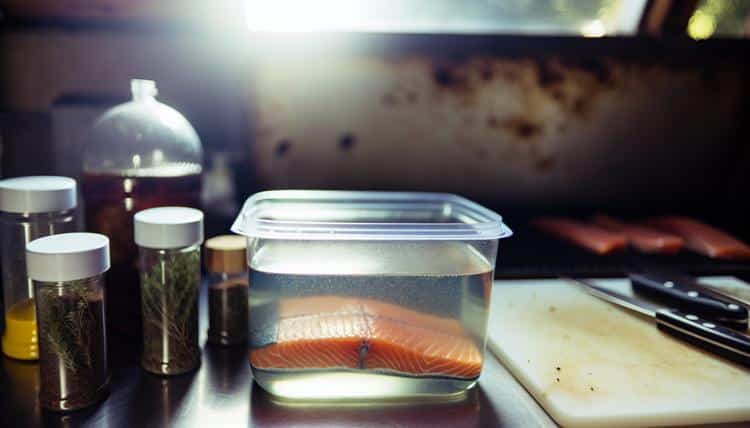
Wet brining submerges the salmon in a salt-sugar solution. This method is faster and easier for beginners.
Wet Brine Recipe
Ingredients:
- 4 cups cold water
- 1/2 cup kosher salt
- 1/2 cup brown sugar
- Optional: 4 garlic cloves (smashed), 2 bay leaves, 1 sliced lemon
Process:
- Dissolve salt and sugar in cold water, stirring until completely dissolved
- Add optional aromatics if desired
- Submerge salmon completely in brine
- Refrigerate for 4-8 hours (no more than 12 hours or salmon becomes too salty)
- Remove from brine, rinse thoroughly under cold water, and pat completely dry
Dry Brine Method
Dry brining coats the salmon with a salt-sugar mixture without liquid. This method requires more time but produces a firmer texture and more concentrated flavor.
Dry Brine Recipe
Ingredients:
- 1/4 cup brown sugar
- 1/4 cup kosher salt
- Optional: 1 tsp black pepper, 1 tsp paprika, 1 tsp garlic powder
- Or use 1-2 tsp of a BBQ rub blend in place of individual spices for a more complex, smoky-sweet flavor
Process:
- Mix sugar, salt, and optional spices
- Coat salmon evenly on all sides with the mixture
- Place on a wire rack over a baking sheet
- Refrigerate uncovered for 12-24 hours
- Rinse thoroughly and pat completely dry
Variation: weighted dry cure. For an even firmer texture, place a second baking sheet or plate on top of the salted salmon with a few heavy cans as weight during the cure. The added pressure presses out more moisture than an unweighted dry brine, producing a denser, more lox-like texture — a technique worth trying if you find standard dry brining doesn’t firm the fish up enough for your taste.
Wet vs. Dry Brine Comparison
| Method | Time Required | Ease | Moisture Level | Flavor Intensity | Best For |
|---|---|---|---|---|---|
| Wet Brine | 4-8 hours | Very Easy | Higher | Mild | Beginners, quicker prep |
| Dry Brine | 12-24 hours | Easy | Moderate | More Concentrated | Advanced flavor, firmer texture |
Forming the Pellicle (Critical Step!)
After brining and rinsing, you must form a pellicle — a tacky, slightly glossy protein layer on the fish’s surface. This step is crucial because smoke adheres to the pellicle, not to wet fish. How to form a pellicle:
- After rinsing and drying brined salmon, place it on a wire rack over a baking sheet
- Refrigerate uncovered for 4-24 hours
- Optional: Place a fan in the refrigerator to speed up the process
- The surface should feel tacky/sticky (not wet) when ready
Don’t skip this step! Without a pellicle, your salmon will have weak smoke flavor and may develop an unappetizing wet surface during smoking.
How Do You Prepare Salmon for Smoking?
Proper preparation ensures your salmon smokes evenly and looks professional when plated.
Step 1: Remove Pin Bones
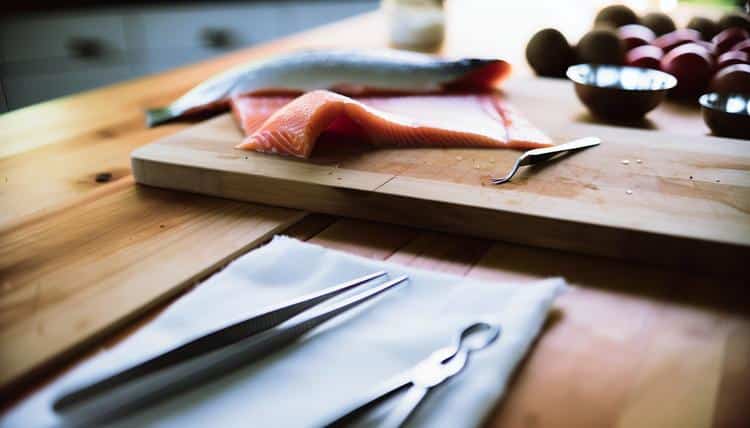
Most salmon fillets contain small pin bones that run through the center. To locate them, run your fingers gently along the fillet from head to tail — you’ll feel small, hard protrusions. Using clean needle-nose pliers or fish tweezers, grasp each bone firmly and pull it out at the same angle it enters the flesh. This takes 2-3 minutes per fillet but makes a huge difference in the eating experience.
Step 2: Rinse and Dry
After brining, rinse the salmon thoroughly under cold running water to remove excess salt. This is important — if you skip this step, your salmon may taste too salty. Pat the fish completely dry with paper towels. Any moisture left on the surface will prevent pellicle formation and hinder smoke adhesion.
Step 3: Form Pellicle
Place the rinsed and dried salmon on a wire cooling rack set over a baking sheet. Refrigerate uncovered for 4-24 hours. During this time, a tacky protein layer will form on the surface — you’ll know it’s ready when the surface feels slightly sticky to the touch and has a glossy appearance. Using a fan in the refrigerator can speed this process to about 4 hours.
Step 4: Bring to Room Temperature
About 30 minutes before smoking, remove the salmon from the refrigerator and let it sit at room temperature. This helps ensure more even cooking throughout the fillet and can reduce albumin buildup. While not strictly required, this step improves final texture and appearance.
How Do You Set Up Your Pellet Grill for Salmon?
Temperature Settings
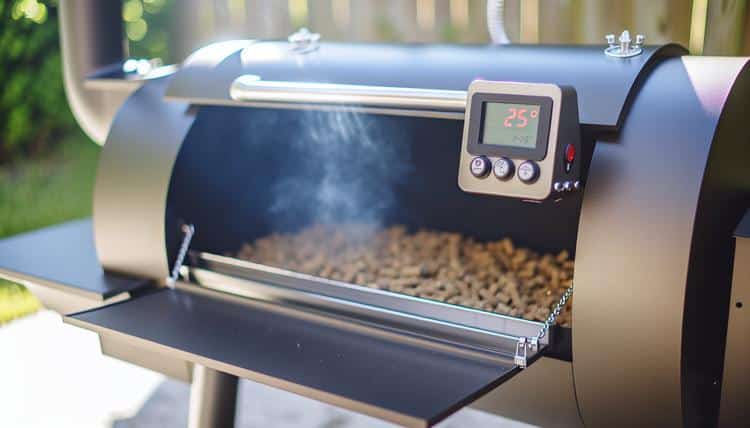
For smoking salmon on a pellet grill, temperature control is everything. Here are your options:
- 225°F (Recommended): The sweet spot for most home cooks. It provides balanced smoke flavor and cooking time (2-3 hours for a 1-inch fillet). The moderate temperature prevents overcooking while allowing adequate smoke absorption.
- 180-200°F (Low and Slow): Produces maximum smoke flavor and a more traditional smoked salmon texture. Expect 4-5 hours for cooking. Great for experienced smokers who want intense smoke.
- 275-300°F (Higher Heat): Cooks faster (1-2 hours) with less smoke flavor. Use this method if you’re short on time or prefer a lighter smoke taste.
Why 225°F is ideal: this temp is gentle enough to prevent the fish from drying out, yet warm enough to allow proper smoke penetration. It’s the temp used by most professional smokehouses and provides the best balance of cooking time, smoke flavor, and moisture retention.
Choosing Wood Pellets
Wood pellet selection dramatically affects the final flavor because strong smoke can easily overpower delicate salmon. Match the wood to the flavor profile you want:
- Alder (traditional choice): Alder is the Pacific Northwest standard for smoked salmon. Its mild, slightly sweet smoke enhances rather than masks the fish, making it the safest starting point when you are unsure which pellets to use.
- Apple: Apple pellets create fruity, mild smoke with a slightly sweet finish. They work especially well with glazed salmon and maple syrup-based glazes.
- Cherry: Cherry pellets provide mild, fruity smoke and give the salmon a beautiful mahogany color. They are versatile enough for any recipe style.
- Maple: Maple pellets produce sweet, smooth smoke that complements sweet glazes without overpowering the fish.
- Mesquite and hickory: Avoid these stronger woods for salmon because they can overwhelm the delicate flavor and create bitter notes.
Start with alder for a balanced traditional result, then try apple, cherry, or maple when you want a sweeter accent. For more pairing guidance across fish and other barbecue, see our comprehensive guide to the best wood pellets for smokers.
Wood Pellet Flavor Guide
| Wood Type | Flavor Intensity | Flavor Profile | Best For | Avoid If |
|---|---|---|---|---|
| Alder | Mild | Delicate, slightly sweet | Traditional smoked salmon, beginners | You want bold smoke |
| Apple | Mild-Medium | Fruity, sweet | Glazed salmon, sweet preparations | You want savory only |
| Cherry | Mild-Medium | Fruity, slightly tart | Color enhancement, versatile | You want neutral flavor |
| Maple | Mild | Sweet, smooth | Maple-glazed salmon | You want strong smoke |
| Pecan | Medium | Nutty, rich | Richer salmon types (King) | Delicate preparations |
Essential Equipment
Before you start smoking, gather your setup:
- Meat thermometer (instant-read or probe style): Non-negotiable for perfect doneness. A wireless meat thermometer lets you monitor temp without opening the lid.
- Fish spatula (wide, flexible): Makes removing delicate salmon from the grill much easier without breaking the fish apart.
- Cooling rack and baking sheet: For pellicle formation and prep.
- Optional: Spray bottle for moisture, silicone brush for glazing.
Grill Preparation Steps
- Fill the hopper with your chosen wood pellets
- Preheat the pellet grill to your target temp (225°F recommended)
- Allow 10-15 minutes for temp to stabilize
- Lightly oil the grill grates with a high-heat oil (avocado or canola) to prevent sticking
- Optional: Place a disposable aluminum drip pan below the grates for easy cleanup
- ThermoMaven instant-read meat thermometer — verify salmon doneness without guessing
- Traeger Signature Blend pellets — a mild all-purpose option for pellet-grill salmon
What Is the Step-by-Step Process for Smoking Salmon?
Step 1: Place Salmon on Grill
Once your pellet grill is preheated and stable, place the salmon directly on the grill grates skin-side down. You’ll cook the entire time with the skin facing down. Leave 1-2 inches of space between pieces to allow smoke circulation. Insert a probe thermometer into the thickest part of the fish if your grill has this capability. Avoid placing the salmon directly over the hottest spot if your grill has uneven heat distribution.
Step 2: Close Lid and Monitor
Close the lid and resist the temptation to peek! Every time you open the lid, you release heat and smoke, extending cooking time and reducing smoke flavor. Trust your pellet grill to maintain temp — that’s what it’s designed to do. Check the probe thermometer reading every 30-45 minutes, but avoid opening the lid unless necessary.
Step 3: Timing Guidelines
At 225°F, expect these approximate cooking times:
- 3/4-inch thick fillet: 1.5-2 hours
- 1-inch thick fillet: 2-3 hours
- 1.5-inch thick fillet: 3-4 hours
- Whole side (2-3 lbs): 3-4 hours
Important: use a thermometer, NOT a clock! Every grill cooks differently, salmon thickness varies, and even outdoor temp affects cooking time. Internal temp is your only reliable guide.
Step 4: Optional Glazing
If you want to add a glaze, apply it only during the last 30 minutes of cooking — earlier application will cause the sugars to burn. Brush on a thin layer every 10 minutes (3 applications total). Popular glazes include maple syrup, honey, teriyaki sauce, or brown sugar mixtures. The glaze creates a beautiful caramelized crust and adds complementary sweetness.
Step 5: Check for Doneness

The most accurate way to determine doneness is with an instant-read thermometer inserted into the thickest part of the fillet:
- 145°F (USDA safe minimum): Fully cooked, flaky texture, opaque throughout. This temp is completely safe but may be slightly dry for some preferences.
- 135-140°F (preferred by many): Moist and tender with a slight translucence in the very center. The salmon will continue cooking after removal (carryover cooking), reaching about 140-145°F while resting.
- 150°F+ (overcooked): The salmon will be dry and chalky. Avoid exceeding 145°F.
Visual cues for doneness:
- Fish flakes easily when tested with a fork
- Flesh is opaque (not translucent)
- Internal color has changed from raw pink to cooked pink/orange
- Juices run clear
Step 6: Remove from Grill
Use a wide fish spatula to remove the salmon. Slide the spatula between the skin and flesh — the salmon should lift cleanly off, leaving the skin on the grill grates. Alternatively, remove the salmon with skin attached and peel it off after plating. Transfer to a serving platter and let rest for 5 minutes before serving. Critical Tip — Don’t Flip! Unlike steaks or burgers, you should NEVER flip salmon while smoking. Cook it entirely skin-side down. The consistent indirect heat from a pellet grill cooks the fish evenly from all sides without flipping. Attempting to flip delicate smoked salmon almost always results in broken, messy pieces.
What Is the Temperature and Timing Reference for Smoked Salmon?
Understanding Internal Temperatures
Internal temperature determines both food safety and final texture. Use these reference points to decide when to remove the salmon from the grill:
- 145°F (USDA safe minimum): The salmon is fully cooked and safe to eat, with completely opaque flesh that flakes easily. Some cooks find salmon slightly dry at this temperature.
- 135–140°F (preferred by many): This range produces moist, tender salmon with a silky texture and may leave slight translucence at the very center, similar to salmon served at a high-end restaurant.
- Allow for carryover cooking: The internal temperature typically rises another 5–7°F while the fish rests. To serve salmon at 140°F, remove it at 135°F and rest it for 5–10 minutes.
Choose the doneness target that fits your preference, account for the expected temperature rise, and use the chart below to estimate how grill temperature and fillet thickness affect the cook.
Complete Time and Temperature Chart
| Salmon Thickness | Grill Temp | Approximate Time | Target Internal Temp | Texture Result |
|---|---|---|---|---|
| 3/4 inch | 225°F | 1.5-2 hours | 135-140°F | Moist, tender |
| 1 inch | 225°F | 2-3 hours | 135-140°F | Perfect doneness |
| 1.5 inches | 225°F | 3-4 hours | 135-140°F | Moist throughout |
| 2+ inches | 225°F | 4-5 hours | 135-140°F | Very moist |
| Any thickness | 180°F | Add 1-2 hours | 135-140°F | Maximum smoke |
| Any thickness | 275°F | Reduce by half | 135-140°F | Less smoke flavor |
Note: Times are approximate. ALWAYS use a meat thermometer for accuracy. Variables like outdoor temp, wind, altitude, and specific grill characteristics all affect cooking time.
How Do You Glaze Smoked Salmon?
Glazing adds a complementary layer of sweetness and creates a beautiful caramelized crust that contrasts wonderfully with the smoky fish. While optional, glazing is highly recommended for special occasions or when you want to elevate your presentation.
Why Glaze?
- Adds complementary sweetness that balances smoky flavor
- Creates an appetizing glossy finish
- Forms a slightly caramelized crust with textural contrast
- Enhances visual appeal for serving guests
When to Apply Glaze
Timing is critical when glazing. Apply glaze only during the last 30 minutes of smoking — any earlier and the sugars will burn and create bitter, blackened spots. For best results, brush on a thin layer every 10 minutes for the final 30 minutes (3 applications total).
Popular Glaze Recipes
Maple Glaze (Classic)
- 1/3 cup pure maple syrup
- 1 tablespoon Dijon mustard
- 1 teaspoon soy sauce
Whisk ingredients together and brush on salmon every 10 minutes during final 30 minutes.
Honey Soy Glaze (Asian-Inspired)
- 1/4 cup honey
- 2 tablespoons soy sauce
- 1 tablespoon rice vinegar
- 1 teaspoon freshly grated ginger
Combine in small saucepan, simmer for 2 minutes, cool slightly, then brush on.
Brown Sugar Glaze (Simple & Sweet)
- 3 tablespoons brown sugar
- 2 tablespoons melted butter
- 1 teaspoon fresh lemon juice
Mix until smooth and brush on salmon in thin layers.
Application Tips
- Use a silicone brush (won’t shed bristles like natural brushes)
- Apply thin layers — thick glaze can drip and burn
- Watch for over-browning and reduce application if needed
- Reserve some unused glaze to drizzle over plated salmon for extra flavor
How Do You Store and Serve Smoked Salmon?
Immediate Serving
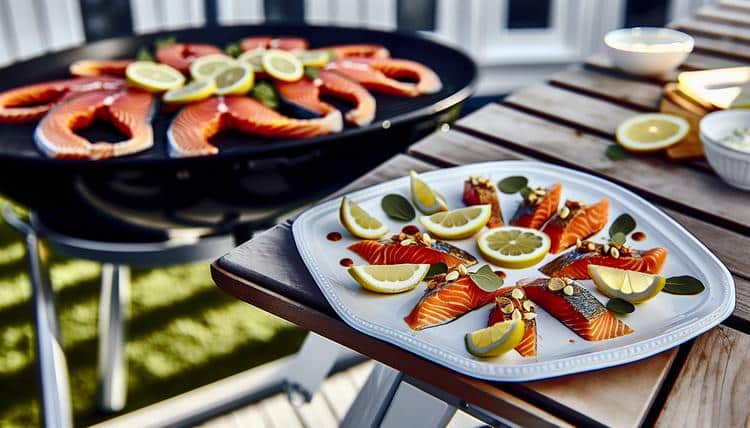
For the best experience, serve smoked salmon shortly after it comes off the grill. Let it rest for 5-10 minutes to allow juices to redistribute, then serve warm with lemon wedges. Smoked salmon pairs beautifully with:
- Grilled or roasted vegetables (asparagus, Brussels sprouts, green beans)
- Rice pilaf or wild rice blend
- Fresh green salad with citrus vinaigrette
- Roasted potatoes or potato salad
- Crusty bread and compound butter
Cooling Properly
If you’re not serving immediately, cool the salmon to room temp within 2 hours. Don’t leave it sitting out longer than this — bacteria multiply rapidly in the “danger zone” (40-140°F). Once cooled, refrigerate promptly.
Refrigerator Storage
Properly stored smoked salmon lasts 5-7 days in the refrigerator:
- Wrap tightly in plastic wrap or aluminum foil
- Place in an airtight container for extra protection
- Store in the coldest part of your refrigerator (usually the back of the lowest shelf)
- For best quality and flavor, consume within 3 days
Freezer Storage
Smoked salmon freezes well for 2-3 months:
- Wrap tightly in plastic wrap, ensuring no air pockets
- Wrap again with aluminum foil for double protection
- Place in a freezer-safe zip-top bag, removing as much air as possible
- Label with date
- For best quality, use within 1 month (safe for 2-3 months but quality declines)
Storage Duration Guide
| Storage Method | Duration | Quality Notes | Reheating Method |
|---|---|---|---|
| Room Temperature | 2 hours max | Serve immediately | N/A |
| Refrigerator | 5-7 days | Best within 3 days | Gentle oven 275°F or cold |
| Freezer | 2-3 months | Best within 1 month | Thaw in fridge overnight, reheat gently |
Reheating Tips
Smoked salmon is actually delicious served cold, which is often the best option:
- Best Option: Serve cold on bagels with cream cheese, in salads, or on crackers
- Gentle Oven: If you prefer warm salmon, reheat at 275°F for 10-15 minutes, tented with foil to retain moisture
- Avoid: The microwave — it dries out fish quickly and creates uneven heating
Serving Suggestions
- Flake cold smoked salmon over bagels with cream cheese, capers, and red onion
- Add to salads (Caesar, spinach, or grain bowls)
- Mix into creamy pasta dishes
- Serve on crackers with horseradish cream as an appetizer
- Include on charcuterie boards alongside cheeses and cured meats
How Do You Fix Common Smoked Salmon Problems?
Problem: Salmon is Dry and Overcooked
Causes:
- Temp too high (above 250°F)
- Cooked past 145°F internal temp
- Didn’t brine before smoking
- Cooked too long for the thickness
Solutions:
- Use a thermometer and pull salmon at 135-140°F
- Lower grill temp to 225°F
- Always brine for moisture retention
- Remember carryover cooking adds 5°F
Problem: Not Enough Smoke Flavor
Causes:
- Temp too high (less smoke at higher temps)
- Cooking time too short
- Wrong wood pellets (too mild or wrong type)
- Didn’t form pellicle properly
Solutions:
- Lower temp to 180-225°F for more smoke time
- Use smoke-friendly pellets (alder, apple, cherry)
- Form proper pellicle — smoke adheres to tacky surface
- Increase smoking time by lowering temp
Problem: Too Much Smoke Flavor / Bitter Taste
Causes:
- Dirty smoke from pellet grill buildup
- Cooking time too long at very low temp
- Strong wood pellets (hickory, mesquite)
- Stale or low-quality pellets
Solutions:
- Clean pellet grill regularly to prevent dirty smoke
- Use milder wood pellets (alder, apple, maple)
- Increase temp to reduce smoke exposure time
- Use fresh, high-quality pellets from sealed bags
Problem: Fish Sticks to Grill Grates
Causes:
- Grates not oiled before cooking
- Tried to move fish too early
- Skin stuck to grates
Solutions:
- Oil grates before preheating grill
- Don’t try to move fish until fully cooked
- Slide spatula between skin and flesh — leave skin on grill
- Consider using a cedar plank for easy removal
Problem: Excessive White Albumin
Causes:
- No brining or insufficient brine time
- Temp too high during cooking
- Salmon overcooked
- Fish went straight from fridge to grill without resting
Solutions:
- Brine for the full recommended time (4-8 hours wet, 12-24 hours dry)
- Cook at lower temp (225°F or below)
- Don’t exceed 140°F internal temp
- Bring fish to room temp 30 minutes before smoking
Problem: Uneven Cooking
Causes:
- Uneven fillet thickness (thick at one end, thin at other)
- Hot spots on grill
- Fish placed directly over heat source
Solutions:
- Choose evenly thick fillets when purchasing
- Rotate salmon halfway through cooking (carefully!)
- Place on indirect heat area away from hot spots
- Use a heat deflector if your grill has uneven temps
For a full comparison of wireless meat thermometer options, see our wireless meat thermometer guide.
Frequently Asked Questions
Do I need to flip salmon when smoking on a pellet grill?
No, you should NOT flip salmon while smoking. Unlike red meats, fish is delicate and flipping can cause it to break apart. Place salmon skin-side down at the start and leave it there for the entire cooking process. The consistent heat from a pellet grill cooks the fish evenly from all sides without flipping.
What is the white stuff that comes out of smoked salmon?
The white substance is called albumin, a protein naturally present in salmon. When fish is heated, albumin coagulates and is pushed to the surface. While it’s completely safe to eat, you can minimize it by brining the salmon properly, not overcooking (stay at 135-140°F), and bringing fish to room temperature before smoking.
Can I smoke frozen salmon on a pellet grill?
No, you must completely thaw salmon before smoking. Smoking frozen or partially frozen salmon leads to uneven cooking, poor smoke absorption, and potential food safety issues. Thaw salmon in the refrigerator for 24-48 hours before brining and smoking. Pat dry thoroughly after thawing.
Do I have to brine salmon before smoking?
While not absolutely required, brining is highly recommended for best results. Brining helps the salmon retain moisture during the long smoking process, enhances flavor throughout the fish, and reduces albumin buildup. If you’re short on time, even a 4-hour wet brine is better than no brine at all.
What’s the best temperature to smoke salmon on a pellet grill?
225°F is the ideal temperature for most home cooks. This provides a perfect balance of smoke flavor and cooking time (typically 2-4 hours depending on thickness). Lower temps (180°F) give more smoke flavor but take longer. Higher temps (275-300°F) cook faster but produce less smoke flavor.
How do I know when smoked salmon is done?
Use a meat thermometer inserted into the thickest part. The USDA recommends 145°F for food safety, but many prefer 135-140°F for optimal moisture and texture. The fish should flake easily with a fork and appear opaque (not translucent). Remember that temperature will rise 5°F after removing from heat.
What are the best wood pellets for smoking salmon?
Alder is the traditional choice with a mild, slightly sweet flavor that won’t overpower the fish. Other excellent options include apple (fruity, sweet), cherry (mild, adds color), and maple (sweet, smooth). Avoid strong woods like mesquite or hickory which can overpower salmon’s delicate flavor.
Can I use a water pan when smoking salmon on a pellet grill?
A water pan is not necessary with pellet grills since they already maintain consistent moisture levels. However, you can add one if desired for extra humidity, especially in very dry climates. If using, place it on the rack below the salmon.
Should I remove the skin before or after smoking salmon?
Leave the skin ON while smoking. It holds the delicate flesh together, makes removal from grill easier, and acts as a protective layer. After smoking, you can easily slide a spatula between the skin and flesh to separate them, or serve skin-on and let diners remove it themselves.
How long does smoked salmon last in the refrigerator?
Properly stored smoked salmon lasts 5-7 days refrigerated in an airtight container. For best quality, consume within 3 days. The salmon will remain safe as long as it stays cold, but flavor and texture may decline after a week. For longer storage, freeze for up to 2-3 months.
Can I smoke salmon without a pellicle?
While you CAN smoke salmon without forming a pellicle, results won’t be as good. The pellicle (tacky protein layer) helps smoke adhere to the fish for better flavor. Without it, smoke absorption is reduced and fish may have moisture on the surface. For best results, air-dry brined salmon for at least 4 hours before smoking.
What should I do if my smoked salmon is too dry?
Prevention is key — don’t overcook past 145°F and consider pulling at 135-140°F. If already dry, flake it and mix with cream cheese, mayo, or sour cream for salmon dip or spread. You can also add it to creamy pasta dishes or fish cakes where moisture is added from other ingredients.
Final Thoughts
Smoking salmon on a pellet grill is one of the most rewarding BBQ projects you can tackle. The combination of precise temp control, consistent smoke, and beginner-friendly operation makes pellet grills the perfect tool for creating restaurant-quality smoked salmon at home.
Key Takeaways
- Pellet grills make smoking salmon accessible for beginners with set-and-forget temp control
- Proper brining (wet or dry) is crucial for moisture retention and flavor
- 225°F and 135-140°F internal temp are the sweet spots for most home cooks
- Alder, apple, cherry, and maple pellets work best — avoid mesquite and hickory
- Don’t flip the fish — cook skin-side down the entire time
- Use a meat thermometer, not a clock, for perfect doneness
- Form a pellicle for proper smoke adhesion and flavor
Your Next Steps
- Start Simple: Try a basic dry brine and smoke at 225°F for your first attempt. Master the fundamentals before experimenting.
- Experiment with Flavors: Once comfortable with the basic technique, try different wood pellets, glazes, and salmon varieties.
- Perfect Your Technique: Keep notes on what works for YOUR specific grill and preferences — every pellet grill has its quirks. Check out our reviews of the best Pit Boss pellet grills and Z Grills pellet grills.
- Try Variations: Experiment with different salmon types (sockeye, king, coho), flavor profiles, and serving styles.
If you’re new to BBQ and pellet grilling in general, check out our comprehensive BBQ & Grilling Guide for Beginners for foundational techniques and tips that apply to all types of cooking on your pellet grill. Remember: smoking salmon on a pellet grill is easier than you think. With proper preparation, temp control, and patience, you’ll create smoked salmon that impresses family and friends. Your pellet grill’s precision takes the guesswork out of the process — just follow these steps and trust the thermometer. Ready to smoke? Grab your salmon, fire up that pellet grill, and enjoy the incredible results. Your first bite of perfectly smoked, restaurant-quality salmon will make all the preparation worthwhile!
Related BBQ Guides

Homemade Fried Chicken Fingers: Crispy Every Time
Master crispy fried chicken fingers at home with buttermilk marinade, double-dredge breading & precise oil temp control. Restaurant results every time.

Beer Can Chicken: Juicy BBQ Secrets for Tender Results
This beer can chicken recipe delivers moist meat and crispy skin every time, with step-by-step grilling instructions and a simple seasoning rub.
Tender Smoked Flank Steak: A Quick & Flavorful Recipe
Master tender smoked flank steak with our reverse sear recipe, ready in under 2 hours. Learn the secrets to brining, smoking, and slicing for perfect