
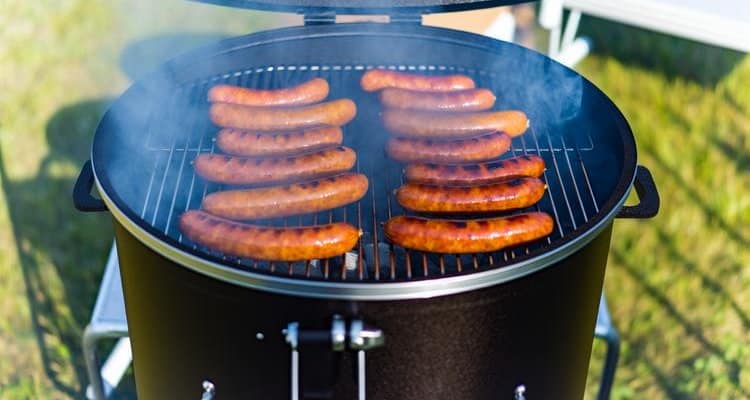
Imagine biting into perfectly smoked sausage with crispy, golden-brown casings and a juicy, flavorful interior. The satisfaction of achieving restaurant-quality smoked sausage at home is within reach for any BBQ enthusiast. Whether you’re working with bratwurst, Italian sausage, or breakfast links, mastering the art of how to smoke sausage opens up a world of incredible BBQ possibilities.
Many beginners struggle with split casings, dry sausage, or inconsistent results when they first attempt smoking sausage. The good news? These common pitfalls are entirely avoidable when you understand the fundamentals of smoking sausage temp control, proper spacing techniques, and timing guidelines.
This comprehensive guide covers everything you need to know about how to smoke sausage, from selecting the right wood to achieving perfect internal temperatures. You’ll learn proper techniques for smoking sausage temp management, discover how long to smoke sausage of different varieties, and understand which woods produce the best flavor profiles. By the end of this guide, you’ll have the confidence to achieve professional-quality smoked sausage on your first attempt, complete with troubleshooting strategies and food safety best practices.
What Types of Sausage Can You Smoke?
Before learning how to smoke sausage effectively, you need to understand the different sausage categories and how they impact your smoking approach. The type of sausage you choose determines both the smoking sausage temp and how long to smoke sausage to achieve perfect results.
Fresh vs. Pre-Cooked vs. Cured Sausages
Start by identifying the sausage category because it determines the target temperature, smoking time, and whether this beginner method applies:
| Category | What It Contains | Target Temperature | Smoking Guidance |
|---|---|---|---|
| Fresh or raw | Uncooked ground meat, including bratwurst, Italian sausage, and breakfast links | 165°F minimum | Takes the longest but accepts the most smoke flavor during cooking |
| Pre-cooked | Fully cooked sausage, including kielbasa and most hot dogs | 140°F for reheating | Usually needs only 30–45 minutes because it is already safe to eat |
| Cured | Sausage preserved with salt and nitrites | Varies by product and process | Requires specialized handling beyond this beginner guide |
Fresh links require a full cook, pre-cooked links are the most forgiving practice option, and cured sausage should be handled with a product-specific method.
Popular Sausage Varieties for Smoking
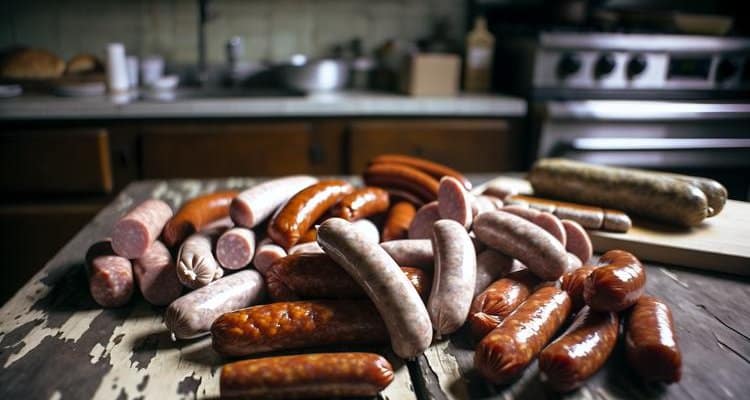
These common sausages differ in size, seasoning, fat content, and how quickly they finish:
- Bratwurst: This German-style fresh sausage is made from pork, sometimes mixed with veal, and has a mild, slightly sweet profile. Thick brats use natural casings that crisp well at the proper temperature.
- Italian sausage: Mild and spicy versions feature fennel and garlic. These fresh links pair especially well with fruit woods such as apple or cherry.
- Chorizo: Fresh Mexican chorizo is spicy, heavily seasoned, and well suited to smoking, but its high fat content requires careful temperature control. Cured Spanish chorizo is a different product category.
- Kielbasa: This pre-cooked Polish sausage is already smoked and safe to eat, but another short smoking session deepens its flavor.
- Breakfast links: These thin fresh sausages usually finish in 1–1.5 hours, making them a manageable first project when monitored carefully.
Choose kielbasa for the easiest first cook, breakfast links for a short fresh-sausage cook, or thicker bratwurst and Italian sausage when you want a longer smoke window.
Size and Casing Considerations
Sausage diameter dramatically changes the cooking time. Thick bratwurst measuring 1–1.5 inches across can take 2–3 hours, while 0.5–0.75-inch breakfast links may finish in about 90 minutes.
The casing also changes texture, splitting risk, and moisture retention:
- Natural casings: Traditional animal-intestine casings deliver excellent snap but are delicate and need gentle temperature control to prevent splitting.
- Synthetic casings: These are more forgiving for beginners, although they do not crisp as well as natural casings.
- Skinless sausage: With no casing to retain juices or slow heat penetration, these links cook faster and dry more easily. Watch them closely, pull them a few degrees early, and consider a slightly lower smoker temperature.
Use diameter to estimate when to begin checking temperature, then adjust your heat management for the casing’s durability and moisture protection.
| Sausage Type | Raw/Pre-cooked | Smoking Time | Internal Temp Target | Notes |
|---|---|---|---|---|
| Bratwurst | Raw | 2-3 hours | 165°F | Thick diameter, natural casing |
| Italian Sausage | Raw | 2-2.5 hours | 165°F | Pairs well with fruit woods |
| Chorizo | Raw (Mexican) | 2-2.5 hours | 165°F | High fat, watch for flare-ups |
| Kielbasa | Pre-cooked | 30-45 minutes | 140°F | Great for beginners |
| Breakfast Links | Raw | 1-1.5 hours | 165°F | Thin diameter, quick cook |
| Hot Dogs | Pre-cooked | 30-45 minutes | 140°F | Already fully cooked |
Essential Equipment and Setup
Having the right equipment makes learning how to smoke sausage significantly easier and more successful. While you don’t need expensive gear to start, certain tools are non-negotiable for food safety and quality results.
Smoker Types for Sausage
Any smoker that can hold 225–250°F can cook sausage, but the level of attention and smoke intensity varies:
- Offset smokers: A separate firebox sends smoke through the cooking chamber. This traditional setup produces strong BBQ flavor and good control after you master active fire management.
- Electric smokers: These hold a consistent temperature with minimal intervention, making them the easiest beginner option, although their smoke flavor is less intense than charcoal or wood-fired units.
- Pellet grills: Automated controls and compressed wood pellets make the 225–250°F range easy to maintain.
- Charcoal smokers: Kettle grills and Kamados provide classic flavor at an affordable price but need more temperature monitoring than electric or pellet units.
Choose electric or pellet equipment for easier temperature stability, or use charcoal and offset smokers when stronger traditional smoke flavor justifies more active fire management.
Required Tools
Food safety and steady heat depend on a short list of essential tools:
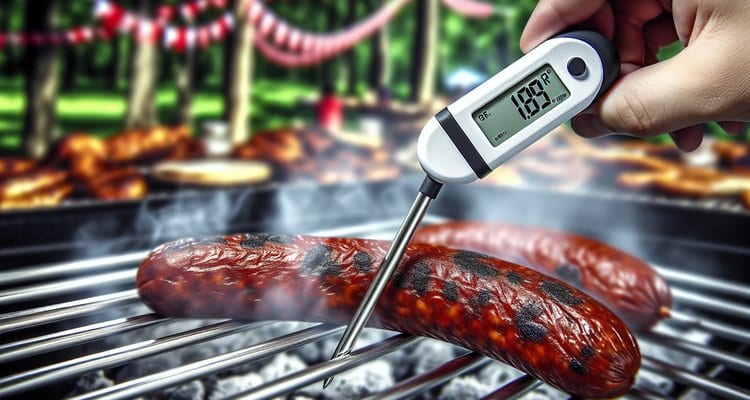
- Instant-read thermometer: This is the most important safety tool. Insert it through the end of a sausage to check the center without piercing the casing’s side. A quality instant-read thermometer confirms doneness without relying on time or appearance.
- Digital probe thermometer: A dual-sensor model can track both smoker temperature and internal sausage temperature continuously without opening the lid.
- Long-handled tongs: Handles at least 12 inches long help you rotate links without burns or punctured casings.
- Drip pan: Placed below the sausage, it catches drippings, limits flare-ups, and supports steadier heat.
- Water pan: Hot water acts as a heat sink and adds humidity that protects sausage from drying during the long cook. Fill it before smoking and monitor the water level.
At minimum, use an accurate thermometer and safe handling tool; add the pans to improve temperature stability, humidity, and cleanup.
Optional but Helpful Accessories
Sausage hangers allow you to hang sausages vertically in cabinet-style smokers, promoting even smoke circulation and preventing “bald spots” where sausages touch the grate.
Temp alarms alert you when smoker temp drifts outside your target range or when sausages reach the desired internal temp.
BBQ gloves protect your hands when handling hot grates or rotating sausages mid-cook.
Large bowl for ice water bath helps prevent wrinkled casings after smoking—a professional finishing technique we’ll cover in the troubleshooting section.
- ThermoMaven wireless meat thermometer — for continuous smoker and sausage temp tracking
- Kona Premium Blend smoker pellets — for adding deep smoke flavor
What’s the Right Wood for Smoking Sausage?
Selecting the best wood for smoking sausage dramatically impacts the final flavor profile. Different woods pair better with specific sausage types, and understanding these pairings elevates your results from good to exceptional.

Wood Flavor Profiles
Match smoke intensity to the sausage’s seasoning so the wood supports rather than overwhelms the meat:
- Hickory: Strong, bacon-like smoke gives pork sausage a classic American BBQ profile. Use it moderately with bratwurst and Italian sausage.
- Mesquite: The strongest option delivers intense, earthy smoke. Reserve it for heavily seasoned links such as chorizo and use it sparingly.
- Oak: Medium-strength, versatile smoke works with nearly any sausage and is forgiving for beginners.
- Pecan: Mild, nutty smoke resembles a softer hickory and suits delicately seasoned sausage.
- Apple and cherry: Mild, slightly sweet fruitwood smoke complements pork without covering its seasoning. Our comprehensive guide to smoking woods offers more pairing guidance.
- Maple: Gentle sweetness works especially well with breakfast sausage and other mild varieties.
Apple or oak is the safest starting point; move toward hickory or mesquite only when the sausage can support a stronger smoke profile.
How Much Wood to Use
When learning how to smoke sausage, less is more with wood. Start with 2-3 small chunks (fist-sized) or 1-2 cups of wood chips. This provides 1.5-2 hours of smoke, which is the maximum recommended smoke exposure for sausage.
Add wood only during the first 1.5-2 hours of smoking. After this period, sausages stop absorbing significant smoke flavor, and additional smoke just creates bitter, acrid flavors. Finish cooking without adding more wood.
Signs of too much smoke include thick, white billowing smoke (clean smoke is thin and blue-gray), bitter taste in the finished product, and sausages that are dark brown or blackened rather than golden-brown.
| Wood Type | Flavor Profile | Intensity | Best Pairings | Notes |
|---|---|---|---|---|
| Hickory | Bacon-like, traditional BBQ | Strong | Bratwurst, Italian sausage | Classic choice, use moderately |
| Mesquite | Intense, earthy | Very Strong | Chorizo, spicy sausages | Easy to overpower, use sparingly |
| Oak | Traditional, balanced | Medium | All sausage types | Versatile, beginner-friendly |
| Pecan | Nutty, subtle | Medium | Mild Italian, chicken sausage | Similar to hickory but milder |
| Apple | Fruity, sweet | Mild | Pork sausages, breakfast links | Can’t over-smoke with apple |
| Cherry | Fruity, slightly sweet | Mild | All pork sausages | Beautiful mahogany color |
| Maple | Sweet, delicate | Mild | Breakfast sausage | Excellent for poultry sausages |
How Do You Prepare Sausage for Smoking?
Proper preparation before smoking makes the difference between good and great results when you learn how to smoke sausage. These simple but crucial steps ensure even cooking and maximum flavor.
Temperature Preparation
Remove sausages from the refrigerator 30-60 minutes before smoking to bring them closer to room temp. This promotes more even cooking throughout the sausage, preventing cold centers when the exterior reaches target temp.
Cold sausages placed directly in a hot smoker can cause casings to contract rapidly and split. The gradual warm-up period allows casings to relax, significantly reducing the risk of bursting.
For food safety, don’t leave raw sausage at room temp for more than 60 minutes. If your kitchen is very warm (above 75°F), reduce this time to 30 minutes.
Pat sausages dry with paper towels before smoking. Surface moisture prevents proper smoke ring formation and delays browning. A dry surface allows smoke to adhere better and develops that desirable golden-brown color more quickly. For even better smoke adhesion, let patted-dry sausages air-dry uncovered in the refrigerator for 30-60 minutes before smoking. This forms a thin, slightly tacky surface layer called a pellicle — the same principle used when smoking fish or jerky — which gives smoke particles something to stick to and produces more even coloring than smoking straight off a wet surface.
To Prick or Not to Prick: Myth Busting
The myth that you should prick sausages to “release steam” and prevent bursting is completely false. When you poke holes in sausage casings, you create escape routes for valuable juices and fats—the very elements that keep smoked sausage moist and flavorful.
Natural casings are designed to expand slightly as the sausage cooks, allowing steam to release gradually through the casing’s natural permeability. This process happens automatically at the proper smoking sausage temp (225-250°F).
Casings split from excessive heat, not from internal pressure. The solution is correct temp control, not poking holes that ruin the sausage.
Seasoning and Oiling
Most sausages are pre-seasoned and don’t require additional spices. However, you can brush sausages lightly with vegetable oil or olive oil before smoking. This thin coating promotes even browning and helps prevent sticking to grill grates.
Avoid heavy oils like butter, which can drip and cause flare-ups. A light misting with cooking spray works well if you prefer that method.
If you want to add external seasoning, stick to simple options like coarse black pepper or a light dusting of your favorite BBQ rub. Remember that the sausage’s internal seasonings are already balanced—external additions should complement, not compete.
Step-by-Step Smoking Process
This section walks you through exactly how to smoke sausage from start to finish. Follow these steps carefully for consistent, professional-quality results every time.

Step 1: Preheat Your Smoker
Target a smoking sausage temp of 225-250°F before adding your sausages. This range provides gentle, even cooking that prevents casing splits while ensuring food safety.
Preheat for at least 20-30 minutes to stabilize the temp and burn off any manufacturing oils if using a new smoker. Add your initial wood chunks or chips during preheating so you have clean, thin blue-gray smoke—not thick white smoke—when sausages go in.
Fill your water pan with hot water during preheating. Hot water brings the smoker to temp faster and immediately begins providing humidity.
Step 2: Arrange Sausages Properly
When sausages touch each other or are too close, smoke can’t circulate around the entire surface. This creates “bald spots”—pale, unsmoked areas where the sausages touched. These spots not only look unappealing but also lack the smoke flavor you’re working to achieve.
Place sausages on the middle rack of your smoker for the most even heat distribution. Top racks may be too hot, while bottom racks near the heat source can cook unevenly.
Avoid overcrowding even if it means smoking in multiple batches. Quality results come from giving each sausage room to breathe.
Step 3: Monitor Temperatures Carefully
Maintain smoker temp at 225-250°F throughout the cook. Check every 30-45 minutes and adjust vents, fuel, or controls as needed to stay in this range.
For internal sausage temp, don’t check constantly—each time you open the smoker, you lose heat and smoke. Check internal temp starting at the 90-minute mark for thin sausages or 2-hour mark for thick sausages.
Insert your instant-read thermometer through the end of the sausage, not through the side. This technique checks the center temp without creating juice-leaking holes in the casing.
Target 165°F for fresh sausage or 140°F for pre-cooked varieties. Remember that temp will continue rising 10-15°F during resting, so you can remove sausages at 155-160°F for fresh sausage.
Step 4: Managing Smoke and Wood
Add wood only during the first 1.5-2 hours of smoking. This is the optimal smoke absorption window—after this period, sausages develop a “bark” that prevents additional smoke penetration.
Good smoke is thin and blue-gray, almost invisible. Thick white smoke indicates incomplete combustion and creates bitter flavors. If you see billowing white smoke, increase airflow to your fire.
Don’t worry if smoke production varies slightly throughout the cook—this is normal, especially with chunk wood. As long as you see occasional wisps of smoke and maintain proper temp, your sausages are absorbing flavor.
After 2 hours, you can continue cooking without any smoke at all. The sausages just need to reach safe internal temp at this point—more smoke won’t improve flavor and may create bitterness.
Step 5: Rotating and Flipping
Rotate sausages every 45 minutes to promote even cooking and color development. Turn them 180 degrees and flip them over for uniform smoke exposure on all sides.
Signs of uneven cooking include one side significantly darker than the other, or sausages closest to the firebox cooking faster than those farther away. These hot spots are normal in most smokers—rotation solves the problem.
Use long-handled tongs to rotate sausages quickly, minimizing the time your smoker lid is open and temp is dropping.
| Sausage Type | Smoker Temp | Target Internal Temp | Approx Time | Key Steps |
|---|---|---|---|---|
| Fresh Bratwurst | 225-250°F | 165°F | 2-3 hours | Rotate every 45 min, smoke for 2 hours max |
| Italian Sausage | 225-250°F | 165°F | 2-2.5 hours | Watch for fat flare-ups, use drip pan |
| Breakfast Links | 225-250°F | 165°F | 1-1.5 hours | Check temp at 90 min, quick cook |
| Pre-cooked Kielbasa | 225-250°F | 140°F | 30-45 minutes | Just reheating and adding smoke |
| Hot Dogs | 225-250°F | 140°F | 30-45 minutes | Great beginner project |
Temperature and Timing Guide
Mastering smoking sausage temp and understanding how long to smoke sausage are the two most critical factors for success. This section provides the specific numbers you need for food safety and optimal results.
Critical Temperature Guidelines
For fresh sausage made from raw ground meat, 165°F is non-negotiable. This temp ensures any harmful bacteria like Salmonella or E. coli are completely eliminated.
Pre-cooked sausage only needs to reach 140°F since it’s already been fully cooked during manufacturing. You’re reheating and adding smoke flavor, not cooking for safety.
Account for temp rise during resting. When you remove sausages from heat, internal temp continues climbing 10-15°F as heat redistributes from exterior to center. This means you can pull fresh sausage at 155-160°F—it will coast to 165-170°F during the rest period.
Timing by Sausage Type
Large bratwurst (1-1.5 inches diameter) typically requires 2-3 hours at 225-250°F smoking sausage temp to reach 165°F internal temp. Thicker sausages from cold refrigerator temperatures may push toward the 3-hour mark.
Thin breakfast links (0.5-0.75 inches diameter) cook much faster, usually reaching 165°F in just 1-1.5 hours. Check these early and often to prevent overcooking.
Italian sausage falls between bratwurst and breakfast links, typically finishing in 2-2.5 hours depending on thickness. The high fat content can cause slightly longer cooking times.
Pre-cooked sausages like kielbasa and hot dogs only need 30-45 minutes to reheat to 140°F and absorb smoke flavor. These are excellent choices when learning how to smoke sausage for the first time.
Factors Affecting Timing
Starting temp significantly impacts how long to smoke sausage. Cold sausages straight from a 38°F refrigerator take 30-45 minutes longer than room-temp sausages. This is why the prep step of allowing 30-60 minutes of warm-up time matters.
Sausage diameter is the primary factor in cooking time. A 1-inch diameter sausage has roughly twice the cross-sectional area of a 0.7-inch sausage, requiring significantly more time for heat to penetrate to the center.
Weather and ambient temp affect smoker performance. Cold winter days require more fuel and longer preheating. Wind can destabilize temp even with good smoker design.
Smoker type variations mean offset smokers may cook slightly faster due to direct heat exposure, while electric smokers provide very consistent times due to precise temp control.
Visual and Tactile Indicators
Color changes from pale pink to golden-brown indicate proper smoke penetration and browning. However, color alone doesn’t indicate doneness—some sausages brown quickly while remaining undercooked inside.
Firmness to touch evolves as sausages cook. Raw sausage feels soft and squishy; fully cooked sausage feels firm but still has some give. Overcooked sausage feels hard and dry.
Casing appearance shifts from translucent and shiny to opaque and slightly wrinkled. Some wrinkling is normal and even desirable—it indicates moisture loss and smoke absorption.
| Sausage Type | Smoker Temp | Internal Temp Target | Approximate Time | Thickness | Notes |
|---|---|---|---|---|---|
| Bratwurst (fresh) | 225-250°F | 165°F | 2-3 hours | 1-1.5 inches | Remove at 155°F, rest to 165°F |
| Italian (mild/spicy) | 225-250°F | 165°F | 2-2.5 hours | 1-1.25 inches | High fat content, use drip pan |
| Chorizo (fresh) | 225-250°F | 165°F | 2-2.5 hours | 1-1.5 inches | Very high fat, watch for flare-ups |
| Breakfast Links | 225-250°F | 165°F | 1-1.5 hours | 0.5-0.75 inches | Check temp starting at 90 minutes |
| Kielbasa (pre-cooked) | 225-250°F | 140°F | 30-45 minutes | 1-1.5 inches | Just reheating, great for beginners |
| Hot Dogs (pre-cooked) | 225-250°F | 140°F | 30-45 minutes | 0.75-1 inch | Perfect practice project |
| Chicken/Turkey Sausage | 225-250°F | 165°F | 1.5-2 hours | 0.75-1 inch | Lean meat, watch for drying |
What Are Common Mistakes When Smoking Sausage?
Even experienced pitmasters encounter issues when learning how to smoke sausage. Understanding these common problems and their solutions prevents frustration and ensures success.
Split or Burst Casings
Cause: Excessive heat is the primary culprit. When smoker temp exceeds 275°F, casings contract rapidly and split open, releasing all the flavorful juices you worked to preserve.
Cause: Poking holes before smoking weakens the casing structure, creating weak points that tear under pressure.
Solution: Maintain smoking sausage temp between 225-250°F. Use a reliable thermometer to monitor smoker temp, not just the built-in gauge (which can be off by 25-50°F).
Solution: Ensure gentle, consistent heat throughout the cook. Avoid temp spikes by managing fuel and airflow carefully.
Dry, Tough Sausage
Cause: Overcooking past 165°F internal temp drives out moisture and makes sausage dry and rubbery. Every degree above 165°F exponentially increases moisture loss.
Cause: Too much smoke exposure (over 2 hours) dries the exterior and creates a thick, tough bark.
Solution: Monitor internal temp meticulously. Remove fresh sausages at 155-160°F and let carryover heat bring them to 165°F during resting.
Solution: Limit smoke exposure to 1.5-2 hours maximum. After this window, continue cooking without adding more wood.
Solution: Use a water pan to maintain humidity in the smoking environment. The moisture prevents excessive surface drying.
Pale, Undercooked Appearance
Cause: Temp too low (below 225°F) doesn’t brown the casing properly or develop the smoke ring.
Cause: Insufficient smoke during the first 2 hours means sausages lack the color and flavor smoke provides.
Solution: Increase smoker temp to at least 225°F, ideally 240-250°F for better browning.
Solution: Add wood chunks or chips during the first 1.5-2 hours to ensure adequate smoke for color development.
Solution: Use a darker wood like hickory instead of mild fruit woods if you want more pronounced color.
Uneven Cooking
Cause: Overcrowding prevents smoke and heat circulation, creating hot and cold spots among sausages.
Cause: Most smokers have hot spots—areas closer to the heat source that cook faster.
Solution: Maintain proper spacing of 2-3 inches between each sausage to allow full smoke circulation.
Solution: Rotate sausages every 45 minutes, moving those in hot spots to cooler areas and vice versa.
Wrinkled Casings After Cooling
Cause: Over-resting causes casings to shrink and wrinkle as they cool and moisture evaporates.
Solution: Use the ice water bath technique: immediately after removing sausages from the smoker, plunge them in a bowl of ice water for 20-30 seconds. This stops the cooking process and sets the casing against the meat, preventing wrinkles.
Solution: Serve hot after just a 3-5 minute rest. Don’t let sausages sit for extended periods before serving.
Bitter, Over-Smoked Flavor
Cause: Too much wood creates creosote buildup—a black, tar-like substance that tastes bitter and acrid.
Cause: Dirty smoke from insufficient airflow or wet wood produces unpleasant flavors.
Solution: Limit smoke to 1.5-2 hours total. After this period, no more wood is needed or beneficial.
Solution: Ensure clean-burning fire with thin, blue-gray smoke. Thick white smoke is a warning sign.
Solution: Use properly seasoned wood with less than 20% moisture content. Wet wood smolders instead of burning cleanly.
Food Safety Considerations
Food safety is paramount when learning how to smoke sausage. Ground meat products like sausage pose higher bacterial risk than whole muscle cuts, making temp control and proper handling critical.
Critical Temperature Safety
Fresh sausage is made from ground meat, which has significantly more surface area than whole muscle cuts. Grinding disperses bacteria throughout the meat rather than keeping it on the exterior, requiring higher cooking temperatures for safety.
The danger zone is 40-140°F—the temp range where bacteria multiply rapidly. Sausage should pass through this zone as quickly as possible. At proper smoking sausage temp (225-250°F), sausages move through the danger zone in 90-120 minutes, which is safe.
Never smoke sausage at temperatures below 200°F for extended periods. While some traditional sausage-making uses lower temperatures, it requires curing salts and specialized knowledge beyond this beginner’s guide.
Safe Handling Practices
Keep raw sausage refrigerated at 38-40°F until 30-60 minutes before smoking. Don’t leave it at room temp for more than one hour.
Prevent cross-contamination by using separate cutting boards and utensils for raw sausage and ready-to-eat foods. Wash your hands thoroughly with soap and hot water after handling raw sausage.
Clean your instant-read thermometer between temp checks, especially if you’re checking multiple sausages. Wipe the probe with a clean paper towel or sanitizing wipe to prevent spreading bacteria from one sausage to another.
Resting and Holding Safely
A safe resting period is 3-5 minutes for smoked sausage. During this brief rest, temp continues rising 10-15°F, juices redistribute, and sausages are still safely above 140°F.
If you need to hold sausages before serving, keep them above 140°F. Place them in a warming drawer, low oven (170-200°F), or insulated cooler with towels.
Maximum hold time before refrigeration is 2 hours above 140°F. After 2 hours at room temp, bacterial growth becomes a concern even for fully cooked sausage.
Storage and Reheating
Refrigerator storage: Store smoked sausage in airtight containers or heavy-duty freezer bags for 3-4 days. Label with the date and consume within this window for best quality and safety.
Freezer storage: Properly wrapped smoked sausage keeps for 2-3 months in the freezer. Use vacuum sealing or freezer-grade bags to prevent freezer burn.
Proper reheating requires bringing sausage back to 165°F internal temp. Don’t just warm it—fully reheat it for safety.
Avoid multiple reheat cycles. Each time you heat and cool sausage, you create opportunities for bacterial growth. Reheat only the portion you’ll consume immediately.
| Storage Method | Temperature | Duration | Container Type | Reheating Notes |
|---|---|---|---|---|
| Refrigerator | 38-40°F | 3-4 days | Airtight container or bag | Reheat to 165°F |
| Freezer | 0°F or below | 2-3 months | Vacuum seal or freezer bag | Thaw in refrigerator, reheat to 165°F |
| Room Temperature Hold | Above 140°F | 2 hours maximum | Warming drawer or insulated cooler | Keep above 140°F continuously |
| Danger Zone (Don’t Store) | 40-140°F | Never store in this range | N/A | Discard if held in danger zone over 2 hours |
Serving and Storage
The final steps of resting, serving, and storing your smoked sausage properly ensure you enjoy the fruits of your labor at peak quality.
Optimal Resting Period
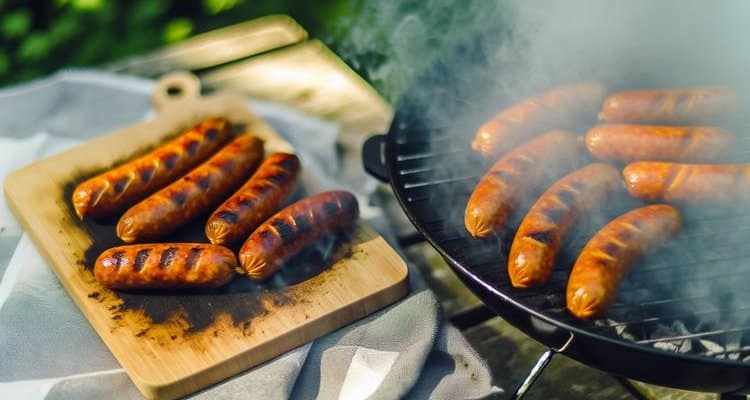
Rest smoked sausages for 3-5 minutes after removing them from the smoker. This brief period isn’t just tradition—it serves important purposes.
Temp carryover occurs during resting. The exterior of sausages is hotter than the interior when you pull them from the smoker. During rest, heat migrates inward, raising internal temp by 10-15°F. This means sausages pulled at 155°F will coast to 165-170°F without additional cooking.
Juice redistribution happens as muscle fibers relax after heat exposure. Cutting immediately causes juices to pour out; resting allows them to be reabsorbed, keeping sausages moist when you bite into them.
However, 10-15 minutes of resting (as recommended by the consensus review) allows sausages to cool below optimal serving temp and can cause casings to wrinkle as they shrink. For the best balance of juice retention and texture, rest for 10-15 minutes only when you plan to refrigerate sausages for later use. When serving immediately, stick to 3-5 minutes.
Serving Suggestions
Serve smoked sausage in a format that fits the meal and lets its smoke flavor remain noticeable:
- Classic buns: Pair links with toasted buns, yellow mustard, sauerkraut, and grilled onions.
- BBQ plate: Slice sausage on a bias and serve it with baked beans, coleslaw, potato salad, and cornbread.
- Mixed dishes: Add smoked sausage to jambalaya, red beans and rice, pasta, or breakfast scrambles for more depth than unsmoked sausage provides.
- Charcuterie board: Use sliced sausage as the centerpiece protein alongside cheese, crackers, pickles, and mustard.
Keep links whole for sandwiches, or slice them only when the plate, recipe, or board benefits from easier portions.
Immediate Consumption vs. Storage
Smoked sausage is best served hot, straight from the 3-5 minute rest. The texture is at its peak—casings are crisp, interior is juicy, and melted fat coats your palate for maximum flavor.
As sausage cools, fat begins to solidify and casings toughen slightly. While still delicious, cold or room-temp smoked sausage lacks the textural perfection of hot sausage.
If you must hold sausages before serving, keep them above 140°F in a warming drawer, low oven (170-200°F), or an insulated cooler. Don’t let them sit at room temp.
Proper Storage Methods
For refrigerator storage, let sausages cool for 10-15 minutes, then transfer to airtight containers or heavy-duty zip-top bags. Remove as much air as possible to prevent oxidation and off-flavors.
For freezer storage, vacuum sealing is ideal but not required. Wrap sausages tightly in plastic wrap, then place in freezer-grade bags with air pressed out. This double-layer protection prevents freezer burn.
Label everything with the date. Smoked sausage looks similar to fresh sausage in storage, and you won’t remember which is which after a week.
Thaw frozen smoked sausage safely in the refrigerator overnight, never at room temp. For faster thawing, use the defrost function on your microwave or submerge sealed bags in cold water, changing the water every 30 minutes.
Frequently Asked Questions
Can you smoke frozen sausage?
Technically yes, but it’s not recommended. Frozen sausage takes significantly longer to reach safe internal temperature (adding 60-90 minutes to cooking time) and often results in split casings because the frozen interior expands rapidly as it thaws in the heat. Thaw sausage in the refrigerator for 24 hours before smoking for best results. If you must smoke frozen sausage, expect extended cooking times and slightly reduced quality.
Do you need to flip sausages while smoking?
Yes, rotate and flip sausages every 45 minutes for even cooking and uniform color. While smoke circulates around all sides, most smokers have hot spots that cook one side faster. Flipping ensures both top and bottom develop the same golden-brown color and smoke penetration. Use long-handled tongs to quickly rotate without leaving the smoker lid open too long.
How do you keep sausages from drying out when smoking?
Three key strategies prevent dry sausage: maintain smoking sausage temperature at 225-250°F (never higher), limit smoke exposure to 1.5-2 hours maximum, and don’t overcook past 165°F internal temperature. Remove sausages at 155-160°F and let them coast to 165°F during resting. Using a water pan in your smoker also maintains humidity that prevents surface drying. Most importantly, never poke holes in the casings—those holes release the juices that keep sausage moist.
What’s the best temperature for smoking sausage, and can you smoke at 250°F?
The ideal smoking sausage temperature range is 225-250°F. Both 225°F and 250°F work excellently—the choice depends on your schedule and preferences. At 225°F, sausages cook more slowly and gently, with slightly longer smoke exposure. At 250°F, they cook faster (typically 15-20% reduction in time) with equally good results. The critical factor isn’t choosing exactly 225°F or 250°F—it’s maintaining consistent temperature within this range throughout the cook. For more guidance on temperature management, see our temperature control techniques guide.
How long does smoked sausage last in the refrigerator?
Properly stored smoked sausage lasts 3-4 days in the refrigerator when kept in airtight containers at 38-40°F. After this window, quality degrades and food safety becomes a concern. For longer storage, freeze smoked sausage in vacuum-sealed bags or freezer-grade containers for up to 2-3 months. Always label with the date and consume the oldest items first.
Should you poke holes in sausage before smoking?
Absolutely not. This is one of the most persistent and damaging myths about how to smoke sausage. Poking holes creates pathways for valuable juices and fats to escape, resulting in dry, flavorless sausage. Natural casings are designed to release steam gradually through their natural permeability. The real solution to preventing split casings is maintaining proper smoking sausage temperature (225-250°F), not poking holes that ruin the sausage.
Can you smoke pre-cooked sausage?
Yes, smoking pre-cooked sausage is an excellent beginner project. Pre-cooked varieties like kielbasa and hot dogs only need to reach 140°F internal temperature (versus 165°F for fresh sausage) and typically finish in just 30-45 minutes. They’re already safe to eat, so you’re simply reheating and adding smoke flavor. This makes them more forgiving and faster than fresh sausage, perfect for practicing your technique when learning how to smoke sausage.
What wood gives the best flavor for smoking sausage?
The best wood for smoking sausage depends on personal preference and sausage type. Hickory provides classic, bold BBQ flavor perfect for pork sausages. Oak offers medium-strength, versatile smoke that works with any variety. Apple and cherry deliver mild, slightly sweet smoke ideal when you want subtle enhancement without overpowering the sausage’s seasonings. For beginners, apple or oak are the safest choices—you can’t over-smoke with these mild woods. Avoid mesquite unless smoking heavily spiced sausage like chorizo, as its intensity can overwhelm. Our detailed comprehensive guide to smoking woods provides specific pairing recommendations.
How do you prevent sausage casings from splitting?
Preventing split casings requires three key practices: maintain smoking sausage temperature between 225-250°F (never spike above 275°F), never poke holes in the casings before smoking, and ensure sausages warm up for 30-60 minutes before entering the hot smoker. Rapid temperature changes cause casings to contract and split. If you struggle with splits despite proper temperature, try the ice water bath technique—plunge sausages in ice water for 20 seconds immediately after smoking to stop the cooking process and stabilize the casings.
Do you need a water pan when smoking sausage?
While not absolutely required, a water pan is highly recommended for beginners learning how to smoke sausage. The water pan serves two critical purposes: it acts as a heat sink that stabilizes temperature fluctuations, and it maintains humidity in the smoking chamber to prevent sausages from drying out during the long cook. Fill the pan with hot water before starting, and monitor the level periodically—refill with hot water if it drops below halfway during smoking.
Can you smoke different sausage types together?
Yes, you can smoke different sausage types together with some considerations. If mixing fresh and pre-cooked varieties, add pre-cooked sausages to the smoker 90-120 minutes after fresh sausages start, since they need far less time. If smoking different sizes together (thick bratwurst and thin breakfast links), place thinner sausages on cooler areas of the grate and monitor them separately—they’ll finish significantly earlier. All sausages of the same category (all fresh or all pre-cooked) and similar size can be smoked together without special considerations.
What should I do if my smoker temperature keeps fluctuating?
Temperature fluctuations are common, especially with charcoal and offset smokers. Minor swings of 10-15°F are normal and acceptable—sausages are forgiving within the 225-250°F range. For larger fluctuations, check your fuel supply (charcoal or wood), adjust vents to increase or decrease airflow, and consider using a water pan to help stabilize temperature. In windy conditions, position your smoker to block wind or create a windbreak. Electric and pellet smokers provide the most stable temperature control if fluctuations frustrate you.
Conclusion
Mastering how to smoke sausage is one of the most rewarding and beginner-friendly skills in BBQ. By following the techniques and smoking sausage temp guidelines in this comprehensive guide, you’re equipped to achieve restaurant-quality results on your first attempt.
Key Success Factors
Consistent smoked sausage comes down to five repeatable controls:
- Hold 225–250°F. Maintain this smoker range throughout the cook and use an instant-read thermometer instead of guessing.
- Leave 2–3 inches between links. Proper spacing prevents pale bald spots and allows smoke and heat to circulate.
- Limit active smoke to 1.5–2 hours. Additional wood after that window creates bitterness rather than more useful flavor.
- Never pierce the casings. Holes release the fat and juices that keep sausage moist.
- Rest for 3–5 minutes. Serve while the casing remains crisp instead of waiting long enough for it to shrivel.
Temperature, spacing, controlled smoke, intact casings, and a short rest are the nonnegotiable habits to carry into every batch.
Your Next Steps
Build confidence in a deliberate progression instead of changing every variable at once:
- Start with pre-cooked kielbasa. Its 30–45-minute reheating window teaches temperature control with less pressure than a long fresh-sausage cook.
- Get an accurate instant-read thermometer. Use it from the first cook to protect food safety and remove guesswork.
- Practice smoker control. Apply the techniques in our beginner’s guide to BBQ smoking until you can hold a stable temperature.
- Experiment with wood gradually. Begin with apple or oak, then try stronger hickory after you understand the baseline flavor.
- Advance to homemade sausage. Once store-bought links are consistent, consider making your own sausage at home for control over the ingredients and seasoning.
This progression isolates one new skill at a time while carrying temperature and smoke-management habits forward.
Final Encouragement
Smoking sausage is genuinely one of the easiest BBQ tasks for beginners to master. Unlike brisket or ribs that require 12+ hours of careful management, sausage is done in 2-3 hours with minimal intervention. The margin for error is larger than you think—as long as you maintain reasonable temp and don’t overcook, you’ll produce delicious results.
For beginners building skills, sausage provides immediately rewarding results that build confidence for tackling more complex BBQ projects. The techniques you learn about temp control, smoke management, and food safety when smoking sausage translate directly to every other BBQ endeavor.
Now that you understand how to smoke sausage from start to finish, fire up your smoker and put these techniques into practice. Your first batch of perfectly smoked sausage—with crispy golden-brown casings, juicy interiors, and incredible smoke flavor—is just one cook away.
Related BBQ Guides

Best Rib Racks for Smoking: Master Your Low-and-Slow Game in 2026
Discover the 6 best rib racks for smoking in 2025. Expert reviews of Weber, SOLIGT, and more to maximize your smoker capacity and achieve perfect results.

Crispy Garlic Parmesan Smoked Wings for BBQ Nights
Learn crispy garlic parmesan wings with smoky chicken, fresh garlic butter, and Parmesan. Get smoker temps, sauce timing, and serving tips for BBQ nights.

Smoked Beef Short Ribs: Complete Smoking Guide
Master smoked beef short ribs with our complete guide. Learn temps, timing, wood choice & probe-tender techniques for fall-off-the-bone results.