

You pull the chicken off the smoker and it looks perfect – dark golden bark, faint smoke rings. Then you slice in and it’s dry. Every bite is a disappointment. Chicken breast is the leanest muscle on the bird, which means it dries out faster and forgives less than thighs or brisket. This smoked chicken breast recipe fixes that with a three-part approach: a simple brine, a low 225°F smoke, and pulling the meat at 160°F so carryover finishes the job.
Why Chicken Breast Dries Out (and How to Fix It)
Lean muscle fibers shed moisture quickly once internal temperature climbs past 165°F – and they don’t forgive overcooking the way fattier cuts do. The solution isn’t a special trick or expensive equipment. It’s three simple habits working together:
- Brine first. Saltwater brine draws moisture into the muscle and seasons the meat from the inside out. Even two hours makes a measurable difference.
- Smoke at 225°F. Lower smoker temperature means slower moisture loss. At 250°F you can get away with it; above that, the margin for error shrinks fast.
- Pull at 160°F. Carryover cooking – the temperature rise that happens while the meat rests – takes chicken breast from 160°F to a safe 165°F while keeping it moist.
Follow all three and dry smoked chicken breast becomes a problem you used to have.
The Brine – Your Insurance Policy Against Dry Chicken
Brining is the single highest-impact step in this recipe. It works through osmosis: salt pulls liquid into the meat, and that extra moisture buffers the chicken against the drying heat of the smoker. You don’t need a complicated brine – simple works best.
Simple Brine Recipe
- 4 cups cold water
- 3 tablespoons kosher salt
- 1 tablespoon white sugar
Stir until the salt and sugar dissolve fully – no heating needed when using cold water and fine kosher salt. Submerge the chicken breasts completely and refrigerate for 2-4 hours. Don’t brine longer than 4 hours or the texture turns rubbery. If you want a subtle sweetness, swap half the water for unsweetened apple juice. After brining, remove the chicken, rinse lightly under cold water, and pat completely dry with paper towels. Dry surfaces are critical – surface moisture blocks the dry rub from adhering and slows smoke penetration.
Dry Rub for Smoked Chicken Breast
A good dry rub for chicken breast needs bold flavor because the smoke is mild by design. This blend balances heat, sweetness, and savory depth without overwhelming the meat.
The Rub Ingredients
- 1 tablespoon smoked paprika
- 1 teaspoon garlic powder
- 1 teaspoon onion powder
- 1 teaspoon brown sugar
- 1½ teaspoons kosher salt
- ½ teaspoon black pepper
- ¼ teaspoon cayenne pepper
The brown sugar serves two purposes: it caramelizes at low temperatures to form a light bark, and it balances the heat from the cayenne. Mix the rub in a small bowl, lightly coat the dried chicken breasts in a thin film of neutral oil (canola or avocado oil), then press the rub onto all sides. Let the rub rest on the chicken for at least 15 minutes before it goes on the smoker – this allows the salt to begin drawing moisture back up through the rub layer, locking it in place.
How to Smoke Chicken Breast Step by Step
What You Need
- Smoker (pellet, offset, charcoal, or electric – all work)
- Instant-read meat thermometer (mandatory – do not guess by time)
- Wood chips or pellets
- Butcher paper and butter (optional, for the moisture wrap)
Choosing Your Wood
Chicken breast has a mild flavor profile that gets overpowered by heavy woods. The best wood choices are fruitwoods and mild hardwoods:
- Apple – the classic choice; delivers a faint sweetness and light smoke color
- Cherry – adds a slightly deeper color and a mild, fruity smoke note
- Pecan – slightly richer than apple with a nutty warmth; excellent for chicken
- Hickory – use sparingly; a small amount adds depth but too much turns bitter on lean poultry
Avoid mesquite entirely on chicken breast. It’s the most aggressive smoke wood available and will overwhelm the meat before it’s cooked through.
Step-by-Step Smoking Instructions
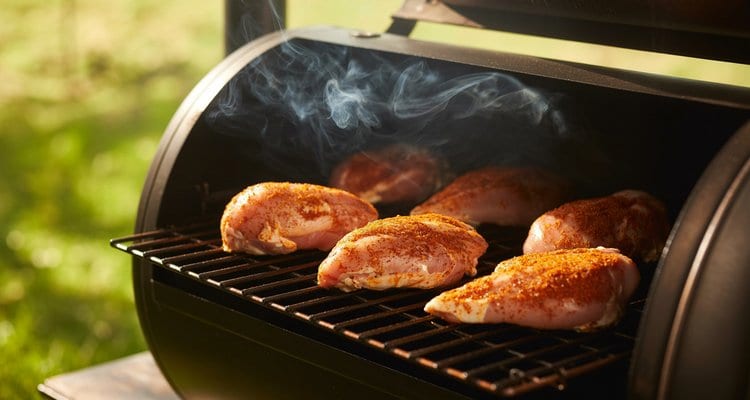
- Brine the chicken. Submerge in cold brine solution for 2-4 hours in the refrigerator.
- Pat dry and season. Remove from brine, rinse, pat completely dry with paper towels, coat in oil, then apply the dry rub on all sides.
- Preheat your smoker to 225°F. Give it at least 15-20 minutes to stabilize at temperature before loading the chicken.
- Place chicken directly on the grates. No foil, no pan – direct grate contact gives you better smoke penetration and bark development. Space the breasts apart so smoke circulates freely.
- Smoke until internal temp hits 160°F. For boneless skinless breasts in the 6-8 oz range, expect 60-90 minutes at 225°F. Insert the thermometer into the thickest part at a slight downward angle.
- Optional butcher paper wrap at 125°F. When the internal temperature hits 125°F, remove the chicken, lay each breast on a sheet of butcher paper, place two small pads of cold butter on top, and wrap tightly. Return to the smoker and increase temperature to 250°F. Cook until 160°F internal. The butcher paper breathes – unlike foil, it lets smoke continue penetrating while the butter protects the surface from drying.
- Rest for 10 minutes. Remove from the smoker, tent loosely with foil, and rest on a cutting board. Carryover cooking will bring the internal temperature to 165°F – safe per USDA guidelines – while the juices redistribute.
- Slice against the grain and serve.
- ThermoMaven instant-read meat thermometer — quickly check doneness while grilling
- Hotec stainless steel kitchen tongs — make turning and moving food easier
- Spice Guru BBQ rub set — several BBQ seasoning options for any cook
- ThermoMaven wireless meat thermometer — confirm doneness across various cuts, no guesswork
Smoked Chicken Breast Temperature Guide
Temperature is everything in smoked chicken breast. Here’s what to know before you start:
- Smoker temperature: 225°F – the gold standard for juicy results. Slow and low gives moisture time to stay in the meat.
- 250°F smoker – acceptable and slightly faster, but the margin for error narrows. Watch your thermometer more closely.
- Pull temperature: 160°F internal – not 165°F. The 10-minute foil rest carries it safely to 165°F with better texture than if you waited on the smoker.
- Thermometer placement – insert into the thickest part of the breast, angled slightly downward, avoiding the center if a bone is present.
The rule that saves most smoked chicken breast: time is a guide, temperature is the truth. A 10-oz breast and a 6-oz breast in the same batch will finish at completely different times. Always pull by temperature, not the clock. A quality instant-read meat thermometer is the single most important tool for this recipe – without one, you’re guessing.
Key Techniques for Juicy Smoked Chicken Breast
- Even thickness matters. If you have one large breast and several smaller ones, use the flat side of a meat mallet to gently pound the thick end of the large breast. Uniform thickness means even cooking – no overcooked thin edges while the thick center is still catching up.
- Dry completely before seasoning. This cannot be overstated. Surface moisture creates steam, which blocks smoke penetration and prevents the rub from forming a bark. If the rub isn’t sticking, the chicken isn’t dry enough.
- The butcher paper wrap trick. Unlike aluminum foil – which traps steam and completely blocks smoke – butcher paper is breathable. The butter pads melt into the surface of the chicken as it finishes cooking, adding richness and a moisture barrier without sacrificing the smoky crust. It’s optional but delivers noticeably juicier results.
- BBQ sauce goes on last. If you want a glazed finish, brush on BBQ sauce only in the final 10 minutes of cooking. Brown sugar and molasses in BBQ sauce burn at low temperatures – adding it earlier creates bitter, charred patches rather than a caramelized glaze.
- Meal prep uses. Smoked chicken breast stores well in an airtight container in the refrigerator for up to 4 days, and freezes for up to 3 months. Slice it for salads, shred it for tacos, or cube it for wraps – the smoke flavor holds up well in all applications.
Common Mistakes When Smoking Chicken Breast
- Skipping the brine. This is the most common reason smoked chicken breast is dry. Even a 2-hour brine makes a measurable difference. If time is short, a dry brine (salt only, rubbed directly on the meat and rested uncovered in the fridge for 1-2 hours) is a reasonable substitute.
- Pulling at 165°F on the smoker. If the thermometer reads 165°F before you remove it from heat, the actual temperature during the rest will exceed that. Pull at 160°F and trust the carryover process.
- Wrapping in aluminum foil during the smoke. Foil traps steam inside, creating a braising effect that softens the bark and blocks further smoke penetration. If you want to wrap, use butcher paper.
- Not patting dry before seasoning. Wet surface + dry rub = paste that steams off rather than forming a crust. Paper towels are your friend here.
- Using mesquite wood. Mesquite burns hot and produces an intense, almost medicinal smoke that overpowers lean chicken. If you have mesquite, save it for brisket.
- Saucing too early. The sugar in most BBQ sauces starts burning at temperatures as low as 300°F – and on the surface of chicken breast sitting at 225°F ambient heat, it can still scorch. Last 10 minutes only.
Electric Smokers, Trimming, and a Faster Brine
A few more practical adjustments depending on your equipment and how much time you have.
Smoking Chicken Breast in an Electric Smoker
Electric smokers hold a steadier, more humid environment than a pellet grill or offset, since there’s no live fire pulling in outside air. This actually works in your favor for chicken breast – the extra ambient moisture helps offset the breast’s tendency to dry out. Add wood chips to the smoker box as directed by your model, and rely on your meat thermometer rather than the built-in dial, since electric smoker gauges can run a bit optimistic.
Trim Before You Smoke
Trim off loose flaps of fat and any thin, tapered ends before smoking. An evenly shaped breast cooks more uniformly, since a thin tail end will finish (and can dry out) well before the thicker center reaches temperature.
A Faster, Sugar-Free Brine
If you don’t have hours to spare, a quick brine of 1/4 cup kosher salt dissolved in 4 cups of cold water for 20-30 minutes still meaningfully improves moisture retention, even without the sugar found in many standard brine recipes. It won’t season as deeply as an overnight brine, but it’s a meaningful improvement over skipping brining entirely when you’re short on time.
Smoking at 200°F
Some pitmasters smoke chicken breast at a very low 200°F ambient temperature for maximum smoke absorption. This works, but it significantly extends cook time and increases the window where the meat sits in the temperature danger zone before reaching a safe internal temperature – if you go this route, use a reliable thermometer and don’t leave the cook unattended for long stretches.
Frequently Asked Questions
Do you flip chicken breast when smoking?
No. A smoker circulates heat and smoke around the meat using convection airflow, not direct flame. The chicken cooks from all sides simultaneously. Flipping is only necessary when cooking over direct heat like a grill. Leave the chicken in place from start to finish – opening the lid to flip just drops your smoker temperature and extends cook time.
How long does it take to smoke chicken breast at 225°F?
For boneless skinless chicken breasts in the 6-8 oz range, expect 60-90 minutes at 225°F. Larger 10-12 oz breasts can take up to 2 hours. Use these numbers as a starting point only – always cook to an internal temperature of 160°F, not to a set time. Breast thickness, starting temperature (fridge-cold vs. room temp), and how well your smoker holds temperature all affect the actual cook time.
What wood is best for smoked chicken breast?
Apple and cherry are the most popular choices for chicken breast, and for good reason – both deliver a mild, slightly sweet smoke that complements the lean meat without overpowering it. Pecan is an excellent alternative with a slightly richer, nuttier profile. If you only have hickory, use a small amount mixed with apple or cherry to avoid bitterness. Avoid mesquite entirely for chicken breast.
How do I keep smoked chicken breast from drying out?
Three steps together give you the best protection: brine the chicken for 2-4 hours before smoking, smoke at 225°F rather than higher temperatures, and pull the chicken from the smoker at 160°F internal temperature, then rest for 10 minutes under foil. The optional butcher paper wrap at 125°F internal – with butter pads – adds another layer of moisture protection if you want belt-and-suspenders insurance.
Can I smoke chicken breast on a Traeger?
Yes – a Traeger or any pellet grill handles this recipe exactly the same way. Set the grill to 225°F. If your Traeger has a Super Smoke mode, activate it – it runs the auger at a lower rate to generate more smoke at low temperatures. Use apple, cherry, or pecan pellets. The same temperature rules apply: pull at 160°F, rest 10 minutes.
Should I wrap smoked chicken breast in foil or butcher paper?
If you wrap at all, use butcher paper. Foil creates a sealed, steam-filled environment that softens the bark and prevents further smoke absorption – it’s essentially braising rather than smoking. Butcher paper is porous, so moisture can escape slowly and smoke can still penetrate. For chicken breast specifically, the butcher paper wrap with butter pads (at 125°F internal) is the better method when you want extra juiciness without sacrificing smoke flavor.
Can I use bone-in chicken breast for this recipe?
Yes. Bone-in chicken breasts hold moisture better than boneless cuts because the bone conducts heat more slowly, extending the cooking time in a way that’s actually beneficial. Expect 30-45 additional minutes at 225°F. Apply the brine, rub, and temperature rules identically – pull at 160°F internal, measured away from the bone, and rest for 10 minutes. The bone also makes thermometer placement easier: insert the probe into the thickest part of the meat, angling it parallel to (not touching) the bone.
Can I smoke chicken breast in an electric smoker?
Yes, and it can actually work in your favor – electric smokers hold a steadier, more humid environment than a pellet grill or offset, which helps offset chicken breast’s tendency to dry out. Rely on a meat thermometer rather than the built-in dial, since electric smoker gauges can run a bit optimistic.
Is there a faster brine if I don’t have hours to spare?
Yes. A quick brine of 1/4 cup kosher salt dissolved in 4 cups of cold water for 20-30 minutes still meaningfully improves moisture retention, even without the sugar found in longer standard brine recipes.
Smoked Chicken Breast
Equipment
Ingredients
Brine
- 4 cups cold water
- 3 tablespoons kosher salt
- 1 tablespoon white sugar
Chicken
- 4 boneless skinless chicken breasts 6–8 oz each; pound to even thickness if needed
- 1 tablespoon neutral oil canola or avocado oil
Dry Rub
- 1 tablespoon smoked paprika
- 1 teaspoon garlic powder
- 1 teaspoon onion powder
- 1 teaspoon brown sugar creates light bark at low temps
- 1½ teaspoons kosher salt
- ½ teaspoon black pepper
- ¼ teaspoon cayenne pepper reduce or omit for milder heat
Optional Butcher Paper Wrap
- 4 sheets butcher paper one per breast; unbleached preferred
- 2 tablespoons unsalted butter cold, cut into thin pads
Notes
Related BBQ Guides

Smoked Beef Back Ribs: Ultimate Guide to BBQ Perfection
Master smoked beef back ribs with our complete guide. Learn prep, seasoning, smoking temps & time for tender, beefy perfection on any smoker.

Smoke a Perfect Turkey on Your Pellet Grill Every Time
Learn how to smoke a turkey on a pellet grill with our complete guide — temperature settings, wood pellet picks, cook time chart by weight, and tips for crispy

Turkey Brine Kits: Your Complete Guide for Juicy Birds
Compare top turkey brine kits tested for smoking and grilling. Expert ratings on flavor, moisture retention & ease of use for perfect results.