

Better backyard barbecue comes from a mix of grill control, thoughtful planning, and a relaxed atmosphere. These 15 tips cover the habits that improve the food, keep the cook organized, and make guests more comfortable.
Use the temperature charts, portion guide, cooking timeline, party checklist, common-mistake guide, and food-safety section as practical references before and during the cook.
1. Know Your Grill
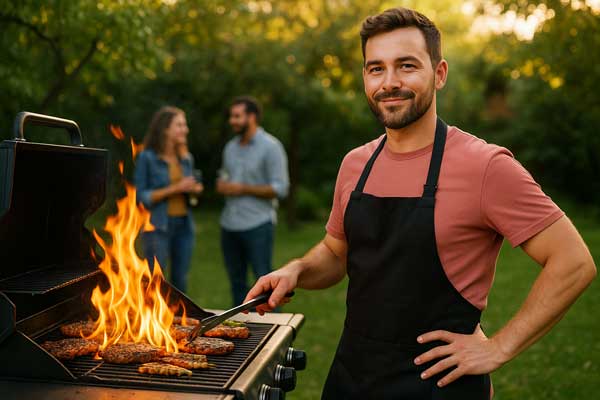
Learn how your grill behaves before tackling complex recipes. Answer three questions during a few short practice cooks:
- Where are the hot spots?
- How quickly does the grill heat up?
- How do the vents or burners change the temperature?
Using the grill five days in a row is a fast way to recognize its patterns and build confidence.
2. Clean Your Grill Properly
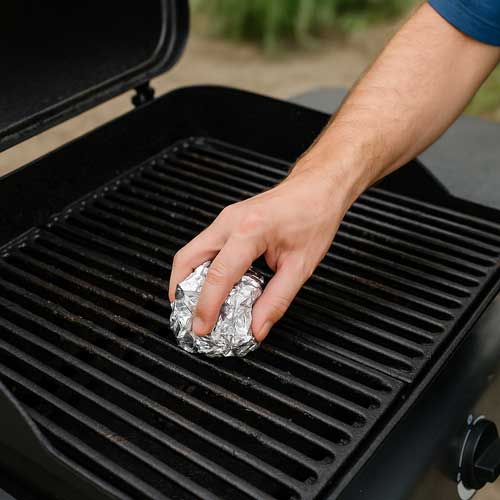
Clean grates prevent stale flavors and promote even cooking. After each cook:
- Leave the grill hot.
- Grip a ball of aluminum foil securely with long tongs.
- Scrub the grates until the cooking surface is clear.
This simple 15-minute maintenance protects both cooking performance and grill life. For deeper maintenance, see our guide to the best grill brushes.
3. Check Your Fuel Levels
Running out of fuel midway through a party can derail the entire meal. Before lighting the grill:
- Check the active supply of charcoal, propane, or wood pellets.
- Keep reserve fuel nearby when cooking for a larger group.
- Add fuel to the shopping list so restocking becomes routine.
Charcoal cooks can use an electric charcoal starter for fast lighting or a chimney starter for an evenly lit load without lighter fluid.
4. Start with the Right Cuts of Meat
Match the cut to the cooking method, especially while learning:
- Low and slow: Choose thicker, collagen-rich cuts such as pork shoulder or beef brisket.
- High-heat grilling: Start with thinner, forgiving cuts such as chicken thighs, sirloin steaks, or chicken breasts.
A butcher can help match a cut to your plan. Our BBQ Meat Selection Guide provides more detail.

5. Theme Your BBQ Party
A simple theme can coordinate the food, music, decorations, and games:
- Tropical luau
- Western cookout
- Superhero-themed gathering
- International BBQ night featuring Korean, Argentinian, or Caribbean flavors
Carry the idea through the invitations and offer costumes as an option rather than a requirement.
6. Season with Authority
Proper seasoning is one of the clearest differences between muted food and restaurant-quality flavor:
- Season confidently with salt and pepper before the meat reaches the grill.
- Apply dry rub at least 15 minutes ahead so it can begin adhering to the surface.
- Account for seasoning loss because some rub falls away during handling and cooking.
Build an even layer across the entire cut rather than concentrating seasoning in a few spots.

7. Master Temperature Control
Temperature control becomes easier when you separate the task by grill type and safety check:
- Gas grills: Learn to create direct and indirect heat zones.
- Charcoal grills: Arrange the coals for the cooking method and use the vents to control airflow. Opening the vents feeds the fire and raises heat; closing them reduces oxygen and lowers heat.
- Gas-grill ignition: Always open the lid before turning on and lighting the burners so gas cannot collect beneath it.
- Doneness: Use a meat thermometer instead of guessing because target internal temperatures vary by cut.
Learn more about BBQ temperature control and thermometer use.
8. Try New Meats and Recipes
Move beyond hamburgers and hot dogs by changing either the protein or the regional style:
- New proteins: Tri-tip, lamb chops, seafood, or gourmet hot dogs from a specialty butcher.
- International styles: Korean BBQ, Argentinian asado, or Caribbean jerk chicken.
- House flavor: Develop a signature sauce for the cookout.
Browse our Best BBQ Meat Recipes for more ideas.
9. Prepare Veggie Skewers
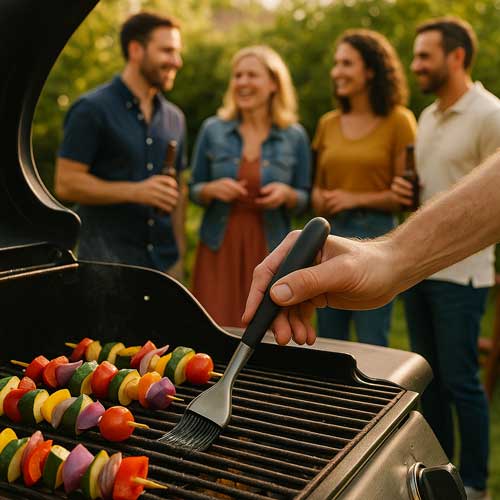
Vegetable skewers add color, cook quickly, and give vegetarian guests a substantial grill option. Good choices include:
- Bell peppers
- Zucchini
- Mushrooms
- Cherry tomatoes
- Onions
Brush with olive oil, season, and grill until charred at the edges but still slightly crisp. Watch them closely because they cook faster than meat.
10. Plan for Easy Side Dishes
Balance the grilled main course with a mix of hot and cold sides:
- Potato salad
- Coleslaw
- Grilled corn
- Baked beans
Preparing several sides a day ahead leaves the host free to concentrate on the grill.

11. Create a Drink Station
Set up drinks away from the cooking zone so guests can serve themselves without interrupting the cook. Stock it with:
- A large tub or cooler filled with ice
- A variety of beverages
- Plenty of cups
- Non-alcoholic choices such as lemonade or fruit-infused water
For adult gatherings, add a signature cocktail or cold beer while keeping the alcohol-free options equally visible.
12. Set Up Fun Games
Low-pressure activities help guests mingle while food is cooking:
- Cornhole
- Horseshoes
- Ladder ball
- An outdoor movie with a projector for an evening gathering
Choose games that fit the available space and do not interfere with the grill or serving paths.

13. Install Patio Heaters for Evening BBQs
Patio heaters can extend a gathering after sunset and make outdoor entertaining practical in cooler weather.
- Place heaters around the seating area so warmth is distributed instead of concentrated in one spot.
- Keep the cooking route clear so guests and equipment do not crowd the grill.
- Follow the heater’s clearance instructions around walls, furniture, and overhead coverings.
A deliberate layout lets guests spread out comfortably without creating another obstacle for the cook.
14. Use a Meat Thermometer
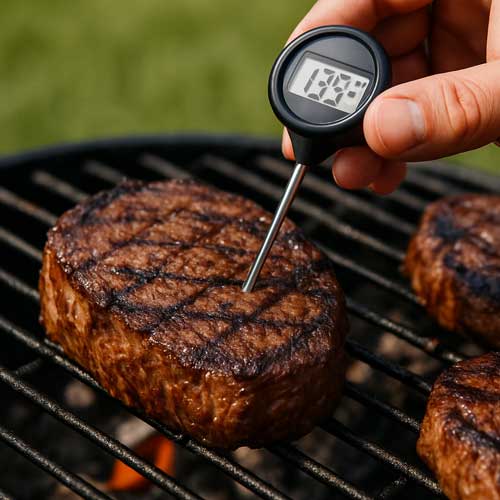
A reliable instant-read thermometer removes guesswork and helps balance food safety with the desired doneness:
- Probe instead of cutting so juices stay in the meat.
- Keep a temperature chart nearby until the targets become familiar.
- Check each protein against its own target rather than applying one temperature to everything.
Our recommended wireless meat thermometer provides remote monitoring without tethering you to the grill.
Regular cookouts create more opportunities to practice, but the larger reward is the time spent with friends and family. Focus on a welcoming gathering instead of chasing perfection.
If you are getting started, the BBQ & Grilling Guide for Beginners offers 25 additional tips.
Internal Meat Temperature Chart
Measure at the thickest part of the meat and keep the probe away from bone:
| Meat | Doneness | Target Temp | Notes |
|---|---|---|---|
| Chicken & Turkey | Safe minimum | 165°F | Thighs can go to 175-180°F for better texture |
| Pork Chops & Tenderloin | Medium | 145°F | Rest 3 min; slight pink is safe |
| Pork Shoulder & Ribs | Tender/pullable | 195-205°F | Collagen breaks down for tender meat |
| Beef Steak | Rare | 125°F | Cool red center |
| Beef Steak | Medium-Rare ★ | 130-135°F | Warm red center; most popular |
| Beef Steak | Medium | 140-145°F | Warm pink center |
| Beef Steak | Medium-Well | 150-155°F | Slight pink center |
| Beef Steak | Well Done | 160°F+ | No pink; firmer texture |
| Beef Brisket | Tender/sliceable | 195-205°F | Probe should slide in like butter |
| Ground Beef (Burgers) | Safe minimum | 160°F | Ground meat requires higher temp for safety |
| Lamb Chops | Medium-Rare | 130-135°F | Best served pink |
| Fish (Salmon, Tuna) | Medium | 125-140°F | Flakes easily; translucent center OK for sushi-grade |
| Shrimp | Done | 120°F | Pink and opaque; curled into C-shape |

Grilling Temperature Guide
Choose the heat level according to the food’s thickness and the kind of cooking it needs:
| Heat Level | Temperature | Best For |
|---|---|---|
| High Heat | 450-550°F | Steaks, burgers, thinner cuts, searing |
| Medium Heat | 350-450°F | Chicken pieces, pork chops, vegetables, fish |
| Low & Slow | 225-275°F | Brisket, pork shoulder, ribs, whole chicken |
Use high heat for fast browning, medium heat for controlled grilling, and low heat when tenderness depends on time.
Portion Planning Guide
Estimate the meat by guest count and adjust for the number of proteins, side dishes, and appetizers:
| Item | Per Adult | For 10 People | Notes |
|---|---|---|---|
| Burgers | 1.5-2 patties | 15-20 patties | 1/3 lb patties are standard |
| Hot Dogs | 2 dogs | 20 dogs | Kids eat 1-1.5 each |
| Baby Back Ribs | 1/2 rack | 5 racks | Full rack for big eaters |
| Spare Ribs | 3/4 lb raw | 7-8 lbs | Meatier than baby backs |
| Pulled Pork (raw) | 1/2 lb raw | 5 lbs raw | Yields ~50% cooked weight |
| Pulled Pork (cooked) | 1/3 lb cooked | 3.3 lbs cooked | For sandwiches; more if main dish |
| Brisket (raw) | 1/2 lb raw | 5 lbs raw | Yields ~50% cooked weight |
| Chicken Breast | 1 breast (6-8 oz) | 10 breasts | Boneless; adjust for bone-in |
| Chicken Thighs | 2-3 thighs | 20-30 thighs | Bone-in has better flavor |
| Steaks | 8-12 oz | 5-7.5 lbs | 1 steak per person unless sharing large cuts |
| Sausages/Brats | 1.5-2 links | 15-20 links | Mix varieties for interest |
Adjust the starting estimate:
- Add 10-15% for big eaters and seconds.
- Reduce each portion when serving multiple proteins.
- Plan on children eating about 50-75% of an adult portion.
- Scale back the main course when serving heavy appetizers.
The table provides a baseline; the menu and guest mix determine the final quantity.
Multi-Item Cooking Timeline
Work backward from serving time and start the longest-cooking item first. For a 6 PM meal of burgers, chicken, and vegetables:
Sample Timeline: Burgers, Chicken, and Veggies for 6 PM Dinner
- 5:00 PM: Preheat the grill to medium-high, about 400°F.
- 5:15 PM: Add bone-in chicken thighs to indirect heat; allow 25-35 minutes.
- 5:35 PM: Move the chicken to direct heat for crisp skin and add the vegetable skewers.
- 5:40 PM: Add the burger patties to direct heat; allow 8-10 minutes total.
- 5:45 PM: Flip the burgers, rotate the vegetables, and check the chicken temperature.
- 5:50 PM: Add cheese to the burgers if desired and remove the vegetables when charred.
- 5:55 PM: Remove the chicken at 165°F and burgers at 160°F, then rest for 3-5 minutes.
- 6:00 PM: Serve everything together.
The sequence protects the serving time while giving each item the heat and rest it needs.
Cooking Time Reference
Use these ranges to place other foods into the same backward-planning method:
| Item | Grill Time | Heat Level |
|---|---|---|
| Bone-in chicken thighs | 25-35 min | Medium indirect, finish direct |
| Chicken breasts (boneless) | 12-15 min | Medium-high direct |
| Burgers (1/3 lb) | 8-10 min | High direct |
| Hot dogs | 5-7 min | Medium direct |
| Steaks (1″ thick) | 8-12 min | High direct |
| Pork chops (1″ thick) | 10-14 min | Medium-high direct |
| Sausages/brats | 15-20 min | Medium indirect, finish direct |
| Veggie skewers | 8-12 min | Medium direct |
| Corn on the cob | 10-15 min | Medium direct, turn often |
| Shrimp | 4-6 min | High direct |
Treat these times as planning ranges and confirm doneness with temperature and texture.
BBQ Party Planning Checklist
Spread the work across the week so party day stays manageable.
1 Week Before
- Send invitations and get a headcount.
- Plan the proteins, sides, drinks, and dessert.
- Check propane, charcoal, or pellet supplies.
- Inspect the grill and clean it if needed.
- Order specialty meat from the butcher.
2-3 Days Before
- Shop for buns, condiments, and paper goods.
- Confirm dietary restrictions and the final headcount.
- Start marinades that require 24-48 hours.
- Clean outdoor furniture and arrange seating.
- Test lawn games and entertainment.
Day Before
- Buy fresh meat and produce.
- Prepare make-ahead sides such as potato salad, coleslaw, or baked beans.
- Mix dry rubs and sauces.
- Set up the drink station and fill coolers with ice.
- Charge wireless thermometers.
- Set out serving dishes and utensils.
Morning Of
- Take meat out of the refrigerator 30-60 minutes before cooking to remove the chill.
- Apply the dry rub.
- Prepare vegetable skewers and refrigerate them.
- Set up the condiment station.
- Confirm the ice supply.
- Give the grates a final cleaning.
1-2 Hours Before Guests Arrive
- Preheat the grill.
- Start long-cooking items such as chicken or ribs.
- Set out the cold sides.
- Put drinks on ice.
- Arrange the lawn games.
- Turn on the music.
Once guests arrive, only the time-sensitive grilling and serving tasks should remain.
Common BBQ Mistakes to Avoid
Most preventable grilling problems pair a visible symptom with a simple correction:
| Mistake | What Goes Wrong | Fix |
|---|---|---|
| Lifting the lid too often | Each opening loses heat and can add 5-10 minutes to the cook | Use a timer and open only to flip or check temperature |
| Saucing too early | Sugar burns before the meat cooks through | Apply sauce during the last 10-15 minutes or serve it on the side |
| Skipping the rest | Juices run onto the cutting board | Rest steaks 5 minutes, chicken 5-10 minutes, and large roasts 15-20 minutes |
| Overcrowding the grill | Poor airflow causes steaming instead of searing | Leave at least 1 inch between items and cook in batches |
| Flipping with a fork | Punctures release juices and feed flare-ups | Use tongs or a spatula |
| Cooking refrigerator-cold meat | The outside can overcook before the center reaches temperature | Let meat sit at room temperature for 30-60 minutes before grilling, longer for thick cuts |
| Ignoring carryover cooking | Temperature can rise another 5-10°F during the rest | Pull the meat 3-5°F before the target |
| Pressing burgers | Pressure squeezes juices and fat from the patty | Cook undisturbed and flip once |
Correcting these habits protects heat, moisture, browning, and serving time without adding complicated technique.
Food Safety Essentials
Keep the cooking area organized around temperature control and separation between raw and cooked food.
The Danger Zone: 40°F – 140°F
Bacteria multiply rapidly between 40°F and 140°F. Follow three rules:
- Do not leave perishable food out longer than 2 hours, or 1 hour when the outdoor temperature is above 90°F.
- Keep cold foods below 40°F and hot foods above 140°F.
- When in doubt, throw it out.
Safe Defrosting Methods
- Refrigerator: Allow about 24 hours per 5 pounds of meat.
- Cold water: Submerge sealed meat and change the water every 30 minutes.
- Microwave: Use only when cooking immediately afterward.
- Never: Defrost meat on the counter at room temperature.
Preventing Cross-Contamination
- Use separate cutting boards for raw meat and vegetables.
- Never return cooked meat to the plate that held it raw.
- Wash hands for 20 seconds after handling raw meat.
- Keep raw meat on the bottom shelf of the cooler so juices cannot drip onto other food.
- Use a clean plate and clean utensils for finished food.
Minimum Internal Temperatures (USDA)
- Poultry: 165°F.
- Ground meat: 160°F.
- Pork, lamb, and veal steaks or chops: 145°F plus a 3-minute rest.
- Beef steaks: 145°F for medium and food safety; lower whole-cut temperatures are a personal preference.
- Fish: 145°F, or until opaque and flaky.
Use separate tools and accurate temperature readings so safe handling remains part of the cooking process.
Frequently Asked Questions
How long should I preheat my grill before cooking?
- Gas grills: 10-15 minutes with all burners on high
- Charcoal grills: 20-30 minutes for coals to develop a gray ash coating
Proper preheating ensures clean grates, even cooking, and the perfect sear.
What’s the ideal temperature for grilling different meats?
- High heat (450-550°F): Steaks, burgers, thinner cuts
- Medium heat (350-450°F): Chicken pieces, pork chops, vegetables
- Low and slow (225-275°F): Brisket, pork shoulder, ribs
How often should I clean my grill?
- After every cook: Scrape grates while still warm
- Every 5-10 cooks: Deeper clean including flame tamers, grease tray, exterior
- Seasonally: Full inspection and deep clean at start and end of grilling season
Should I marinate meat before grilling?
- Most meats: 2-24 hours depending on thickness
- Delicate fish: No more than 30 minutes (acidic marinades break down texture)
How do I prevent food from sticking to the grill?
- Start with clean, well-oiled grates
- Ensure grill is fully preheated before adding food
- Pat meat dry before seasoning
- Don’t flip too early—food releases naturally when properly seared
- Use long-handled tongs rather than forks to preserve juices
How many people can a standard BBQ grill feed?
- 3-burner gas grill (~400 sq in): 6-8 people comfortably
- Larger gatherings (10+): Need a 4-5 burner grill or staggered cooking
- Pellet grills and smokers: Often handle more due to longer cook times and larger capacity
Why is resting meat after cooking so important?
Resting lets the juices that were pushed toward the center during cooking redistribute evenly throughout the meat. Cut into a steak or chicken breast right off the grill and you’ll lose those juices onto the cutting board instead of into every bite. A good rule of thumb is about 5 minutes for thinner cuts like burgers or chicken breasts, and 10-20 minutes for larger roasts, tented loosely with foil.
What do I do if a flare-up happens while grilling?
Move the food to a cooler part of the grill immediately rather than trying to extinguish the flames with the food still over them. Keep a spray bottle of water nearby for small charcoal flare-ups (never spray water into a gas grill’s burner area), and trim excess fat before cooking to reduce how much drips onto the heat source in the first place.
Can I fix meat that came out overcooked and dry?
You can’t undo overcooking, but you can improve the eating experience. Slice the meat thin against the grain to make it easier to chew, and toss or drizzle it with BBQ sauce, melted butter, or a pan sauce to add back moisture and flavor. It won’t be as good as a properly cooked piece, but it makes a real difference.
What do common BBQ terms like bark, fat cap, mopping, and injecting mean?
Bark is the dark, flavorful crust that forms on the outside of smoked meat from seasoning and smoke exposure. The fat cap is the layer of fat left on a cut like brisket or pork shoulder, which bastes the meat as it renders during a long cook. Mopping means brushing a thin liquid (broth, vinegar, or a thin sauce) over meat periodically while it cooks to add moisture and flavor. Injecting means using a syringe-style injector to push liquid marinade or seasoning directly into the interior of a large cut, which a surface rub alone can’t reach.
Conclusion
A more enjoyable barbecue rests on four foundations:
- Know and maintain the grill.
- Control heat and verify doneness.
- Plan the menu, timing, and serving area.
- Create space for guests to relax and connect.
Practice these habits consistently and each cookout becomes easier to manage, safer to serve, and more memorable.
Related BBQ Guides
Perfect Smoked Beef Sticks: A Complete Step-by-Step Guide
Master homemade smoked beef stick recipes with our guide. Learn to control ingredients, use curing salt safely, and follow our step-up smoking schedule.
Best BBQ Tool Magnets for Grill Carts That Stay Put
Compare the best bbq tool magnets for grill carts for secure griddle, smoker, and patio storage so your spatulas and tongs stay organized outdoors.

5 Secrets to a Perfectly Crispy Grilled Cheese
Make perfectly crispy grilled cheese every time. Learn the 5 secrets — from sourdough bread to mayo browning, cast iron & low-slow heat.