
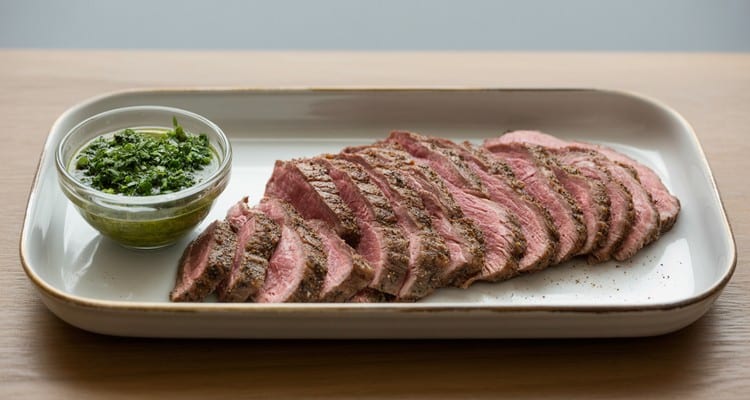
Smoked flank steak uses the reverse sear method to transform a traditionally tough cut into tender, deeply flavorful beef in under 2 hours. Smoke the steak at 225°F on a pellet grill for 45-60 minutes until the internal temperature reaches 115-120°F. Then, sear it in a screaming-hot cast-iron skillet for 1-2 minutes per side to build a caramelized crust. This finishes the steak at a perfect 130°F medium-rare. Many pitmasters prefer this temperature for tenderness, though cooks who want to follow federal food-safety guidance should take whole beef cuts to 145°F. Whether you slice it for smoked flank steak tacos, pile it into fajitas, or drizzle it with fresh chimichurri, this recipe delivers bold results without an all-day commitment. A 1.5-2 pound flank steak feeds 4-6 people with minimal hands-on time.
Why Flank Steak is Perfect for the Smoker
Flank steak’s loose, open grain structure absorbs wood smoke rapidly, developing meaningful smoke flavor in just 45-60 minutes, which is much faster than thicker cuts. Its flat, uniform shape also promotes even cooking at low temperatures, while the lean muscle fibers benefit from gentle indirect heat, preventing them from drying out when pulled at the correct internal temperature.
Flank steak comes from the abdominal muscles of the cow. The long, visible grain runs in one clear direction, which makes it easy to identify the correct slicing angle after cooking. Some pitmasters ask whether flank steak qualifies as a poor man’s brisket. Chuck roast is the traditional answer to that question because it has enough fat to handle brisket-style temperatures. Flank steak offers a different advantage – rich, beefy flavor with a quick-smoke approach that takes under 2 hours from start to finish.
Preparing Flank Steak: The Dry Brine Method
A dry brine using kosher salt is a simple yet powerful technique for tenderizing flank steak. Resting the salted meat for 2-24 hours in the refrigerator draws out moisture, which then dissolves the salt and is reabsorbed, seasoning the meat from within. This process also dries the surface, which is critical for achieving a perfect, crispy sear.

How a Dry Brine Works
The salt draws moisture to the surface, dissolves into the liquid, then gets reabsorbed into the meat. This process tenderizes the steak from within while drying the exterior for a superior sear and crust formation.
Step-by-Step Dry Brining Instructions
Dry brine the steak in three steps:
- Measure and season: Apply 3/4 teaspoon of kosher salt per pound evenly over both sides and the edges.
- Elevate the steak: Place it uncovered on a wire rack so refrigerator air can circulate underneath.
- Rest for 2–24 hours: Use the shorter end for convenience or the full overnight window for deeper seasoning and a drier surface.
Do not add marinade after dry brining; choose one preparation path before smoking to prevent over-salting.
- Traeger Signature Blend pellets — provide a balanced smoke profile for flank steak
- Western BBQ smoking wood chips variety pack — adds real wood smoke on charcoal or gas grills
- Hotec stainless steel kitchen tongs — turn and transfer the steak without piercing it
- ThermoMaven wireless meat thermometer — tracks the steak through smoking and searing
Flavor-Boosting Marinade for Smoked Flank Steak
A well-balanced marinade adds layers of flavor and helps tenderize the meat. Our recipe uses soy sauce for umami, orange juice for a touch of acidic sweetness, and garlic for pungent depth. The acidic components work to break down tough muscle fibers over 4-8 hours, resulting in a more succulent and flavorful final product.
Marinade Ingredients and Ratios
For one 1.5–2 pound flank steak, combine:
- 1/4 cup soy sauce
- 1/4 cup fresh orange juice
- 2 tablespoons olive oil
- 4 minced garlic cloves
- 1 teaspoon cumin
- 1/2 teaspoon red pepper flakes
The soy sauce supplies salt and umami, while orange juice adds acidity and sweetness.
How to Properly Marinate the Steak
Use the flavorful steak marinade in this order:
- Submerge the flank steak so the liquid contacts both sides.
- Refrigerate for 4–8 hours to build flavor without softening the exterior excessively.
- Pat the steak completely dry with paper towels before smoking so the surface can form bark.
Discard the used marinade or boil a separately reserved portion if you want a serving sauce.

Smoking on a Pellet Grill (Time and Temperature)
Set your pellet grill to 225°F and smoke the flank steak for 45-60 minutes until the internal temperature reaches 115-120°F. At 250°F, the steak reaches this target in approximately 30-40 minutes. Use a leave-in probe thermometer and cook to temperature rather than time for consistent results regardless of steak thickness.
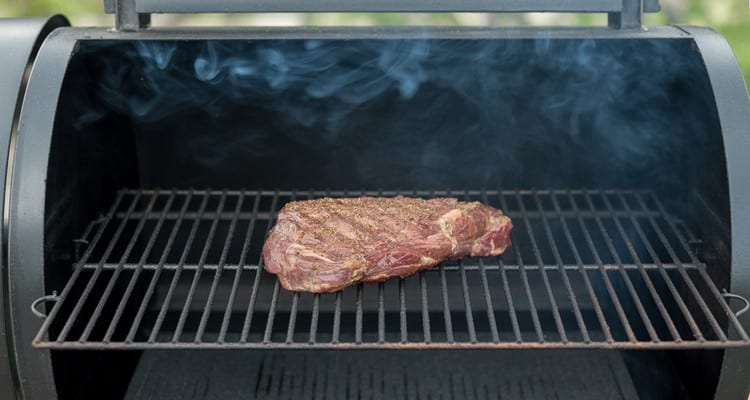
Setting Up Your Pellet Grill
Prepare the pellet grill before adding the steak:
- Set the controller to 225°F and allow the cooker to preheat fully.
- Confirm clean smoke and steady heat before opening the lid.
- Place the flank steak directly on the grates with its thickest end positioned in the most stable heat zone.
A settled cooking temperature makes the pull-temperature estimate more reliable.
Using a Probe for Perfect Doneness
Monitor the steak by temperature rather than the clock:
- Probe placement: Insert a leave-in thermometer into the thickest section without pushing the tip through the thin side.
- At 225°F: Expect a 1.5–2 pound flank steak to reach 115–120°F in about 45–60 minutes.
- At 250°F: Expect the same pull temperature in roughly 30–40 minutes.
Remove the steak at 115–120°F so the high-heat sear can finish it without overshooting the desired doneness.
What Are the Best Wood Pellets for Flank Steak?
Match the wood to the intensity you want:
- Oak: A balanced, beef-friendly smoke that works for most cooks.
- Hickory: A stronger savory profile that stands up to the meat’s flavor.
- Mesquite: The boldest choice; flank steak’s sub-hour smoke time limits the bitterness that can develop on longer cooks.
- Apple or cherry: Milder fruitwood options for a lighter finish.
The short cooking window makes flank steak unusually tolerant of assertive wood, but clean smoke still matters more than volume.
| Smoker Temp | Smoke Time | Pull Temp | Final Temp (after sear) | Total Time |
|---|---|---|---|---|
| 225°F | 45-60 min | 115-120°F | 130°F (medium-rare) | ~75 min |
| 250°F | 30-40 min | 115-120°F | 130°F (medium-rare) | ~55 min |
The Reverse Sear for a Perfect Crust
Remove the smoked flank steak from the grill at 115-120°F internal and immediately sear it in a screaming-hot cast-iron skillet with avocado oil or beef tallow for 1-2 minutes per side. Use a flat grill press to create even, all-over browning rather than diamond grill marks.
Pull the steak when internal temperature hits 130°F for medium-rare.
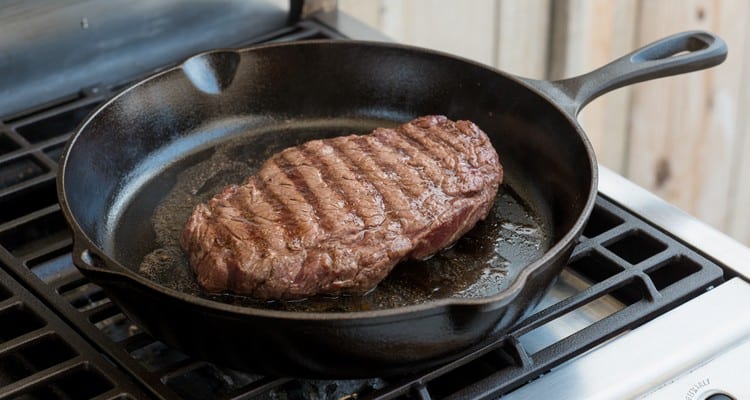
Choosing the Right Skillet and Oil
Set up the searing station before removing the steak from the smoker:
- Use cast iron for strong heat retention and full-surface browning.
- Preheat over high heat until the skillet just begins to smoke.
- Add 1 tablespoon of avocado oil or beef tallow, both of which tolerate temperatures above 450°F and suit high-heat searing techniques.
A fully heated pan shortens the sear and protects the already-smoked interior from overcooking.
Technique for an Even Sear
Sear quickly and maximize contact with the pan:
- Lay the smoked steak flat in the hot skillet.
- Set a flat grill press or heavy pan on top so the entire surface browns instead of forming only narrow grill marks.
- Sear for 1–2 minutes per side and turn only when the first side has developed a dark crust.
The goal is exterior browning, not additional low-temperature cooking.
Monitoring Final Temperature
Use the thermometer to coordinate the two cooking stages:
- Smoker pull point: 115–120°F.
- Expected sear rise: About 10–15°F.
- Medium-rare finish: Pull from the skillet at 130°F.
Check near the center of the thickest section because the thin edges will cook faster.
Why You Must Rest Smoked Steak Before Slicing
Resting the steak on a cutting board for a full 10 minutes is a non-negotiable step for a juicy result. This critical pause allows the muscle fibers, which tighten during cooking, to relax and reabsorb the flavorful juices.
Skipping the rest causes those juices to spill out onto the board as soon as you slice, leaving you with dry meat.
The Science of Resting Meat
During cooking, muscle fibers tighten and push moisture to the center. Resting allows the fibers to relax and reabsorb that moisture, ensuring a juicy, flavorful result.
The Secret to Tenderness: Slicing Against the Grain
Rest the smoked flank steak for 10 minutes, then slice strictly against the grain at a 45-degree bias into 1/4-inch strips. Cutting against the grain shortens the muscle fibers, making each bite tender rather than chewy.
How to Identify the Grain
Look for the parallel lines of muscle fibers running across the surface of the flank steak. This is the grain direction.
Proper Slicing Angle and Thickness
Slice strictly against (perpendicular to) those lines. Angling your knife at a 45-degree bias creates wider, more tender strips about 1/4-inch thick.
Pairing with Classic Chimichurri Sauce
Serve slices drizzled with fresh chimichurri, a vibrant, herb-based sauce that perfectly complements the rich, smoky beef.
Chimichurri Ingredients
For the chimichurri, gather:
- 1 cup fresh parsley
- 4 minced garlic cloves
- 1/4 cup olive oil
- 2 tablespoons red wine vinegar
- 1/2 teaspoon red pepper flakes
The herb-and-vinegar mixture adds brightness to the smoky beef.
Step-by-Step Sauce Preparation
Finish the sauce in two quick steps:
- Combine all ingredients in a bowl for a rustic texture or pulse briefly in a food processor for a finer sauce.
- Spoon over the sliced steak just before serving so the parsley stays fresh and vibrant.
Keep the sauce separate until carving so it does not soften the steak’s crust.
Ideas for Smoked Flank Steak Tacos and Fajitas
The rich, smoky flavor of the sliced flank steak makes it an ideal foundation for tacos and fajitas. Serve it on warm flour or corn tortillas for tacos, topped with cotija cheese and pickled red onions. For a classic fajita platter, pair the steak with sizzling grilled bell peppers and onions, served alongside guacamole and sour cream.
Building the Perfect Taco
Build each taco in layers:
- Warm flour or corn tortillas
- Thin slices of smoked flank steak
- Pickled red onions
- Cotija cheese
- Fresh cilantro
Keep the toppings light enough that the smoke and seared crust remain the main flavors.
Fajita Platter Components
Arrange the flank steak with:
- Sizzling grilled bell peppers and onions
- Warm tortillas
- Sour cream
- Guacamole
- Salsa
Serve the components separately so everyone can control the balance of steak, vegetables, and toppings.
Scoring, Wagyu Flank, and Reheating Leftovers
A few more techniques worth knowing, whether you’re working with a standard flank steak or something more special.
Scoring the Surface Before Marinating
Flank steak’s tight, fibrous muscle structure resists marinade penetration more than more tender cuts. Lightly scoring the surface in a shallow crosshatch pattern (just through the surface, not deep into the meat) opens up more surface area for the marinade or dry brine to work into the meat, and can also help it absorb smoke a bit more evenly.
Smoking Wagyu Flank Steak
Wagyu flank steak has noticeably more intramuscular fat than standard flank steak, which renders faster and can push the exterior toward overdone more quickly. Watch it more closely than a standard flank steak and consider pulling it slightly earlier, since the higher fat content continues to baste the meat even after it comes off the heat.
The Lime-Bed Technique
Some cooks smoke flank steak in a cast-iron skillet set on a bed of sliced limes. The limes physically cushion the thin cut from direct, intense heat while gently infusing a subtle citrus note into the smoke – a nice option if you want a milder, brighter finish rather than a heavy char.
Reheating Leftovers Without Overcooking
Since flank steak is easy to overcook past medium-rare, reheat leftover slices gently rather than in a microwave. A low oven (around 250°F) with a splash of beef broth in a covered dish, or a few quick minutes in an air fryer, warms the meat through without pushing it much past its original doneness.
Frequently Asked Questions
Is flank steak good for smoking?
Flank steak is excellent for smoking when followed by a reverse sear. Its loose grain structure absorbs smoke flavor rapidly, reaching the target pull temperature in just 45-60 minutes at 225°F. The key is pulling at 115-120°F internal and finishing with a hard sear to build crust without overcooking the lean meat past medium-rare.
How long to smoke flank steak at 225 degrees?
A standard 1.5-2 pound flank steak takes 45-60 minutes at 225°F to reach an internal temperature of 115-120°F, which is the pull point for the reverse sear phase. Total time from smoker to plate, including the 2-4 minute sear and 10-minute rest, runs about 75 minutes.
How long do steaks take to smoke at 250 degrees?
At 250°F, flank steak reaches the 115-120°F pull temperature in approximately 30-40 minutes. The higher smoker temperature reduces smoke time by about 15-20 minutes compared to 225°F while still producing good smoke penetration on this thin, porous cut of beef.
Is flank steak good for high cholesterol?
Flank steak is one of the leaner cuts of beef, containing approximately 8 grams of fat and 3.5 grams of saturated fat per 4-ounce serving. This makes it a better option than fattier cuts like ribeye when consumed in moderation as part of a balanced diet. Consult a healthcare provider for personalized dietary guidance.
What cut is a poor man’s brisket?
Chuck roast is the traditional poor man’s brisket because it has enough intramuscular fat to handle the 200-205°F internal temperatures that brisket-style cooking requires. Flank steak and skirt steak are not brisket substitutes, but they deliver rich, beefy BBQ flavor in a fraction of the time through the quick-smoke and reverse sear approach.
How should I store leftover smoked flank steak?
Refrigerate leftover sliced smoked flank steak in an airtight container within 2 hours of cooking. The USDA recommends consuming cooked beef within 3-4 days when stored at 40°F or below[USDA]. For longer storage, vacuum-seal and freeze for up to 3 months.
Should I score flank steak before marinating it?
Yes, lightly scoring the surface in a shallow crosshatch pattern helps the marinade or dry brine penetrate the tight, fibrous muscle structure more effectively than an unscored surface, and can help it pick up smoke a bit more evenly too.
How do I reheat leftover smoked flank steak without overcooking it?
Avoid the microwave. Reheat gently in a low oven (around 250°F) with a splash of beef broth in a covered dish, or use an air fryer for a few quick minutes – both warm the meat through without pushing it much past its original doneness.
Take Home Message
Smoked flank steak offers a quick and delicious way to enjoy a lean cut of beef with rich, smoky flavor. By employing a dry brine or marinade, precise temperature control on the smoker, and a high-heat reverse sear, you can transform this often-overlooked cut into a tender, juicy masterpiece. Remember to rest the steak and slice against the grain for optimal tenderness, making it perfect for tacos, fajitas, or simply drizzled with chimichurri.
Smoked Flank Steak
Equipment
- Pellet grill Traeger, Pit Boss, or any brand.
- Leave-in Probe Thermometer Essential for cooking to the correct temperature.
- Cast iron skillet For achieving a high-heat sear.
- Grill Press Optional, for creating an even crust.
Ingredients
For the Flank Steak
- 1.5-2 lb flank steak
Option 1: Dry Brine
- 3/4 tsp kosher salt per pound of steak
Option 2: Marinade
- 1/4 cup soy sauce
- 1/4 cup fresh orange juice
- 2 tbsp olive oil
- 4 cloves garlic minced
- 1 tsp cumin
- 1/2 tsp red pepper flakes
For Searing
- 1 tbsp avocado oil or beef tallow
Instructions
- Prep the Steak (Choose One Method): For a dry brine, apply 3/4 teaspoon of kosher salt per pound of steak evenly on all sides. Place on a wire rack in the refrigerator, uncovered, for at least 2 hours and up to 24. For a marinade, combine soy sauce, orange juice, olive oil, minced garlic, cumin, and red pepper flakes. Submerge the steak in the marinade and refrigerate for 4-8 hours.
- Pat Dry: Before cooking, remove the steak from the refrigerator. If you used the marinade, pat the steak completely dry with paper towels. This step is crucial for achieving a proper sear.
- Preheat Smoker: Set your pellet grill to 225°F.
- Smoke the Steak: Place the flank steak directly on the grill grates. Insert a leave-in probe thermometer into the thickest part of the meat. Smoke for 45-60 minutes, or until the internal temperature reaches 115-120°F.
- Prepare for Searing: As the steak approaches its target temperature, preheat a cast-iron skillet over high heat until it just begins to smoke.
- Sear the Steak: Remove the steak from the smoker. Add the avocado oil or beef tallow to the hot skillet. Carefully place the steak in the skillet and sear for 1-2 minutes per side. Use a grill press for an even, all-over crust.
- Check Final Temperature: Pull the steak from the skillet as soon as the internal temperature reaches 130°F for a perfect medium-rare.
- Rest and Slice: Transfer the steak to a cutting board and let it rest for 10 minutes. To serve, slice the steak thinly against the grain.
Notes
Related BBQ Guides
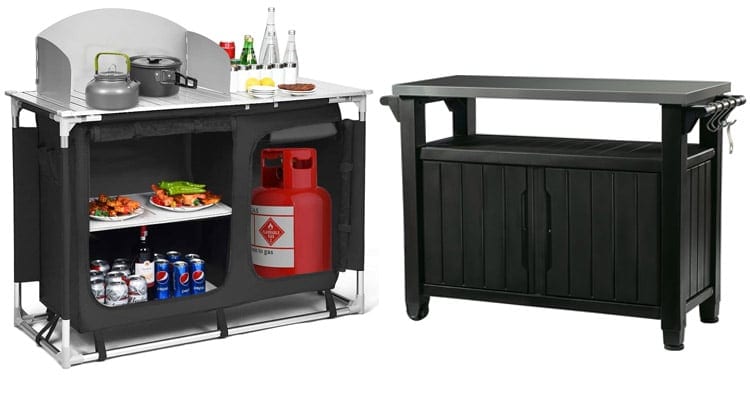
Transform Your Grilling Efficiency: Top Prep Tables for BBQ Excellence
Find the perfect outdoor prep table with storage for your BBQ needs. Expert reviews of grill stations & prep carts from Keter, Royal Gourmet & more.

Wet Aging Brisket: Science, Safety & Perfect Timing
Master wet aging brisket in cryovac packaging. Learn timelines, science, safety limits & how pack dates affect tenderness for perfect BBQ.

Vertical Charcoal Smokers: Your 2026 Guide to Authentic BBQ
Discover the top 7 vertical charcoal smokers for authentic wood-fired flavor. Compare bullet, drum & cabinet models with expert reviews.