

There’s something magical about pulling a perfectly smoked whole chicken off your pellet grill — golden-brown crispy skin crackling under your knife, juicy meat with a beautiful pink smoke ring, and that unmistakable wood-fired aroma that makes your neighbors jealous. If you’ve struggled with rubbery skin or dry breast meat in the past, this foolproof method will change everything.
Smoking a whole chicken on a pellet grill delivers restaurant-quality results with surprisingly little effort. The set-it-and-forget-it temperature control of modern pellet grills means you can achieve consistent results every time, whether you’re a backyard BBQ beginner or a seasoned pitmaster. If you’re new to pellet grilling or considering an upgrade, check out our pellet grill reviews to find the perfect smoker for your needs.
Why Are Pellet Grills Great for Whole Chicken?
Pellet grills are the secret weapon for smoking chicken because they solve the two biggest challenges: maintaining consistent low temperatures for smoke penetration, then cranking up the heat to crisp that skin. Traditional offset smokers require constant attention and fuel management. Pellet grills? Set your target temperature and walk away.
The automated auger system feeds hardwood pellets into the firepot at precisely the right rate, maintaining your chosen temperature within 5-10 degrees. This consistency is crucial for chicken, which needs gentle heat to stay juicy but high heat to render the fat and crisp the skin. You’ll get all the authentic wood-fired flavor without babysitting your grill for four hours.
Plus, pellet grills produce clean, flavorful smoke that enhances chicken without overwhelming it. The key is choosing the right wood pellets. More on that in a moment.
- Traeger Signature Blend pellets — imparting a versatile smoke profile to chicken
- ThermoMaven wireless meat thermometer — for accurate whole chicken doneness checks
- OXO poultry shears — help trim the backbone when spatchcocking
What Wood Pellets Work Best for Smoked Chicken?
Chicken’s mild flavor pairs beautifully with fruit woods and lighter smoking woods. For the best results, I recommend cherry or apple pellets, which add a subtle sweetness and gorgeous mahogany color without overpowering the poultry. Pecan is another excellent choice that bridges the gap between mild and bold. If you prefer stronger smoke flavor, hickory works well but use it sparingly — it can turn bitter with extended smoking. Mesquite is too aggressive for most chicken applications unless you’re going for Southwestern-style birds. For detailed guidance on pellet selection and quality, see our comprehensive best wood pellets guide. Pro tip: Many pitmasters blend pellets. Try 75% apple with 25% hickory for a perfectly balanced flavor profile that complements chicken without overwhelming it.
What Is the Dry Brine Method for Smoked Chicken?
Dry brining seasons the meat deeply while helping the skin dry out for maximum crispiness. Work through these preparation steps before the chicken goes on the pellet grill:
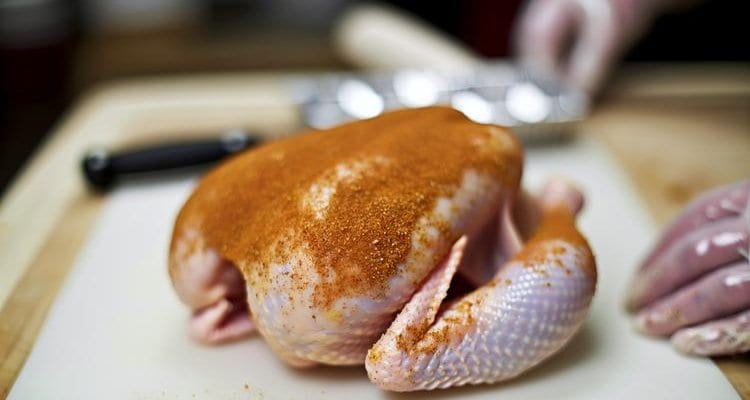
- Salt the whole chicken. Coat it inside and out with kosher salt, using about 1 tablespoon per pound.
- Refrigerate it uncovered. Leave the chicken in the refrigerator for 4 to 24 hours. The salt penetrates the meat while drawing moisture to the surface, where it evaporates.
- Dry and season the surface. Before smoking, pat the chicken completely dry with paper towels, then apply your favorite rub or simply use black pepper and a touch more salt.
- Secure the thinner parts. Truss the legs together and tuck the wing tips behind the back with butcher’s twine so they do not dry out before the thick breast catches up.
- Add aromatics if desired. Halved lemons, garlic cloves, or fresh herbs in the cavity will not penetrate the meat much, but they perfume the interior and improve the aroma when you carve.
The result is properly seasoned meat and a dry surface that is ready to hold smoke and crisp during the high-heat finishing stage.

How Do You Get Crispy Skin With Two-Stage Cooking?
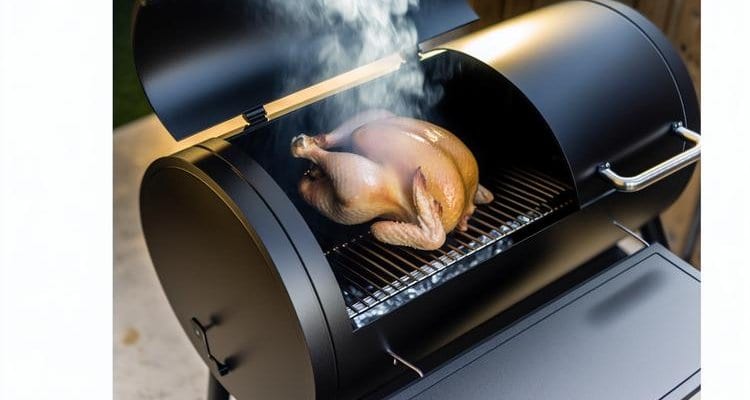
Here’s the game-changer most recipes don’t tell you: you need two distinct cooking stages. Stage one is all about smoke and tenderness at 225°F. Stage two is about transforming that soft, rubbery skin into crackling golden perfection at 350°F.
During the low-and-slow stage (about 2-2.5 hours), your chicken absorbs wood smoke while the meat gently cooks to juicy perfection. But at 225°F, the skin never gets hot enough to render its fat and crisp up. That’s why we finish with high heat.
When your chicken hits 155°F internal temperature in the breast, crank your pellet grill to 350°F. This final 30-45 minutes transforms the texture completely. The fat under the skin renders, the skin dehydrates and crisps, and you get that satisfying crunch we’re all chasing. Some pitmasters even finish at 400°F for the last 15 minutes — just watch it closely to prevent burning.
What Are the Timing and Temperature Guidelines for Smoked Whole Chicken?
Plan on 3 to 4 hours total cook time for a standard 4-5 pound whole chicken. Here’s the breakdown:
- Stage 1 (Low & Slow): 2 to 2.5 hours at 225°F until breast reaches 155°F
- Stage 2 (High Heat Crisp): 30 to 45 minutes at 350°F until breast reaches 165°F and thighs reach 175°F
- Rest: 10 to 15 minutes tented with foil before carving
- Smoke temp: 225°F
- Switch to high heat when breast hits: 155°F
- Crisp temp: 350-400°F
- Breast done: 165°F
- Thighs done: 175°F
Always use a reliable meat thermometer and check multiple spots. Insert your probe into the thickest part of the breast and the innermost part of the thigh, making sure not to hit bone. The breast is done at 165°F, but thighs benefit from going to 175°F where the connective tissue breaks down for maximum tenderness. For larger birds (6-7 pounds), add 30-60 minutes to your total time. Smaller birds (3-4 pounds) may finish 30 minutes faster. The temperature matters more than the clock.
How Long Should You Rest a Smoked Whole Chicken?
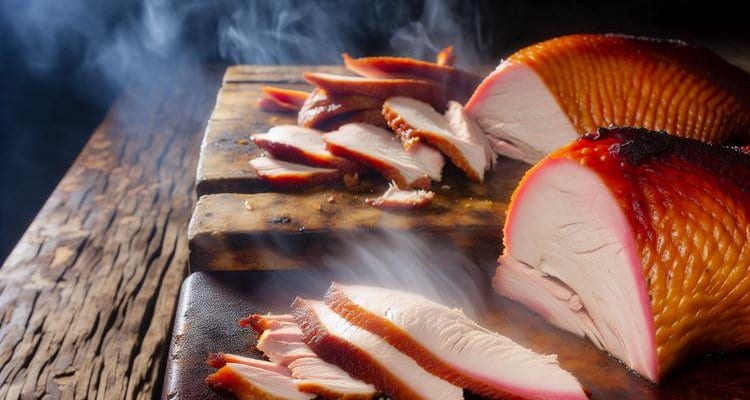
Rest the chicken 10 to 15 minutes, tented loosely with foil, before carving. Unlike a brisket or pork shoulder, a whole chicken doesn’t need a long rest — the muscle fibers are smaller and relax faster, so anything past 15 minutes just lets the skin go soft and the bird cool down too much.
Carve on a cutting board with a groove to catch juices, not directly on a serving platter. Remove the legs and thighs first by cutting through the joint where they meet the body, then separate the breast from the frame by cutting along the breastbone. Slice the breast meat against the grain for the most tender bite.
How Do You Fix Common Smoked Chicken Problems?
Match the symptom you see to the most likely cause and correction:
- Rubbery skin: This happens when you skip the high-heat finishing stage or don’t dry the skin thoroughly before smoking. Pat the bird completely dry, skip the oil because it steams the skin, and always finish at 350°F or higher.
- Dry breast meat: You’re overcooking. Pull the chicken when the breast hits 165°F, even if the thighs aren’t quite to 175°F yet. Carryover cooking during the rest will bring everything to temperature. If your pellet grill struggles with temperature fluctuations, consider adding a BBQ temperature controller for precise heat management.
- Not enough smoke flavor: Use quality pellets because cheap, filler-heavy pellets produce less smoke, and make sure the chicken’s skin is dry when it goes on the grill because moisture repels smoke. If your pellet grill has a “smoke” setting that feeds pellets more slowly, use it for the first hour.
Start with surface dryness and final temperature, then adjust pellet quality or smoke settings if the flavor still falls short.
How Do You Make Ahead and Store Smoked Whole Chicken?
Smoked chicken works well for meal prep when each stage is handled with the right timing:
- Prepare ahead: Dry brine the chicken up to 24 hours in advance; overnight is ideal.
- Refrigerate: Fully smoke and cool the chicken, then refrigerate it for up to 4 days.
- Reheat gently: Use a 325°F oven to preserve moisture, or shred the meat for tacos, salads, and sandwiches.
- Freeze for longer storage: Place smoked chicken in airtight containers or vacuum-sealed bags for up to 3 months, then thaw it overnight in the refrigerator before reheating.
- Restore the skin’s texture: The skin will not fully re-crisp during a standard reheat. For better leftovers, finish carved pieces skin-side down in a hot skillet for 2-3 minutes to bring back most of the crunch without drying out the meat underneath.
The smoke flavor often intensifies slightly during storage, so the meat can taste even better the next day even though the skin needs separate attention.
Try These Related Recipes
Once you’ve mastered this whole smoked chicken technique, branch out with our beer can chicken recipe, which uses a vertical roasting method for even more dramatic presentation and slightly different flavor. Both techniques deliver juicy, smoke-kissed chicken that’ll become a regular in your grilling rotation. If you’re cooking for a smaller group, smoked Cornish hens follow the same crispy-skin logic at single-serving size. The beauty of pellet grill chicken is how forgiving and consistent it is. Follow the two-stage method, trust your thermometer, and you’ll turn out perfect birds every single time. Your backyard BBQs will never be the same.
Frequently Asked Questions
How long does it take to smoke a whole chicken on a pellet grill?
Plan on 3 to 4 hours total for a 4-5 pound chicken. This includes 2 to 2.5 hours at 225°F for smoking, followed by 30 to 45 minutes at 350°F to crisp the skin. Larger birds may take up to 4.5 hours, while smaller 3-pound chickens can finish in about 2.5 to 3 hours total.
What temperature should I smoke a whole chicken?
Use a two-stage approach: smoke at 225°F until the breast reaches 155°F internal temperature, then increase to 350°F to finish. This method ensures juicy, smoke-infused meat with crispy golden skin. Pull the chicken when the breast hits 165°F and thighs reach 175°F.
How do you get crispy skin on smoked chicken?
Three keys to crispy skin: (1) Dry brine for 4-24 hours to dehydrate the skin, (2) Pat the bird completely dry before smoking and skip the oil, (3) Finish at high heat (350-400°F) for 30-45 minutes. The high heat renders the fat under the skin and creates that crackling texture.
What are the best wood pellets for smoking chicken?
Fruit woods like apple and cherry are ideal for chicken, providing subtle sweetness without overpowering the mild poultry flavor. Pecan is another excellent choice. Hickory works if you prefer bolder smoke, but use it sparingly. Avoid mesquite, which can be too intense for chicken.
Should I brine my chicken before smoking?
Yes, but use a dry brine instead of wet. Coat the chicken with kosher salt (1 tablespoon per pound) and refrigerate uncovered for 4-24 hours. Dry brining seasons the meat deeply while dehydrating the skin for better crisping. Wet brines add moisture but make crispy skin nearly impossible.
Is it better to smoke chicken at 225 or 250 degrees?
225°F gives more time for smoke absorption and a gentler cook, but 250°F finishes faster with less risk of rubbery skin sitting too long in the low-heat stage. Either works with this two-stage method since the high-heat crisp phase does the real skin work — pick 225°F if you have the time, 250°F if you’re tighter on schedule.
Should you wrap a whole chicken when smoking?
No. Wrapping is a brisket and pork shoulder technique for pushing through the stall on long cooks — a whole chicken cooks in 3-4 hours and doesn’t hit a real stall the same way. Wrapping a chicken traps steam against the skin and undoes the crisping work entirely.
How do you know when smoked whole chicken is done?
Check both the breast and thigh with a meat thermometer — breast at 165°F, thighs at 175°F. Juices should run clear, not pink, when you cut between the leg and body. Don’t rely on time alone; bird size and grill hot spots both shift the actual cook time.
Whole Smoked Chicken on Pellet Grill (Crispy Skin)
Equipment
- Pellet grill Traeger, Pit Boss, Camp Chef, or similar brand
- Instant-read meat thermometer essential for accurate doneness
- Wire rack and baking sheet for dry brining
- Paper towels
- Aluminum foil for resting
Ingredients
- 1 whole chicken 4-5 pounds
- 3 tablespoons kosher salt for dry brine
- 2 tablespoons BBQ rub of choice or make your own
- 1 tablespoon black pepper
- 1 tablespoon garlic powder
- 1 tablespoon paprika
- 1 teaspoon onion powder
- wood pellets apple, cherry, or pecan recommended
Instructions
- Pat the whole chicken completely dry with paper towels inside and out. Coat the entire chicken with kosher salt, using about 1 tablespoon per pound (3 tablespoons total for a 4-5 lb chicken). Place the chicken on a wire rack over a baking sheet, uncovered, in the refrigerator for 4-24 hours. This dry brine will season the meat deeply and dehydrate the skin for maximum crispiness.
- Remove the chicken from the refrigerator 30 minutes before smoking to bring it to room temperature. Pat the skin completely dry again with paper towels—this is crucial for crispy skin. Mix together your BBQ rub ingredients (or use your favorite store-bought rub). Generously apply the rub all over the outside and inside the cavity, pressing it into the skin. For maximum crispiness, skip the oil—it creates steam that prevents skin from crisping.
- Fill your pellet grill hopper with apple, cherry, or pecan pellets. Preheat the grill to 225°F. For maximum smoke flavor, use your grill's 'smoke' setting if available for the first hour.
- Place the chicken directly on the grill grates, breast side up. Close the lid and smoke at 225°F for 2 to 2.5 hours, or until the internal temperature of the breast reaches 155°F. Monitor the temperature using a reliable meat thermometer inserted into the thickest part of the breast without touching bone.
- When the breast reaches 155°F internal temperature, increase the pellet grill temperature to 350°F. Continue cooking for 30 to 45 minutes until the breast reaches 165°F and the thighs reach 175°F. The high heat will render the fat under the skin and create that crackling crispy texture. For extra crispy skin, you can increase to 400°F for the final 15 minutes—just watch closely to prevent burning.
- Remove the chicken from the grill when it reaches the target temperatures (165°F breast, 175°F thighs). Tent loosely with aluminum foil and let rest for 10 to 15 minutes. This allows the juices to redistribute throughout the meat. Carve and serve with your favorite BBQ sides.
Notes
Related BBQ Guides
Gas Grills Under $1000: Premium Features Without Premium Price
Looking for a top gas grill under $1000? We tested the best models to find the perfect balance of features, quality and value. See our top picks for 2026.
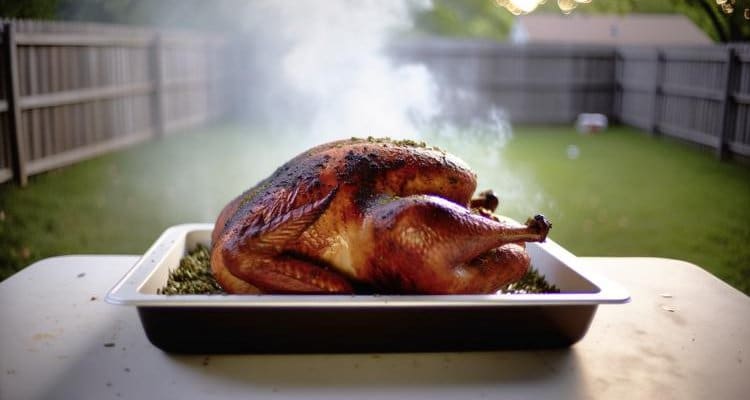
How to Smoke a Turkey: Complete Guide to Crispy Skin Perfection
This guide shows you how to smoke turkey from brine to carve, with the right wood, temp, and timing for juicy meat and perfectly crispy skin.

Jalapeño Poppers Perfected: Bacon-Wrapped ABT Recipe Guide
Make incredible Atomic Buffalo Turds (ABTs) with our easy recipe. Jalapeños stuffed with cream cheese & sausage, wrapped in bacon. Ready in 45 minutes!