
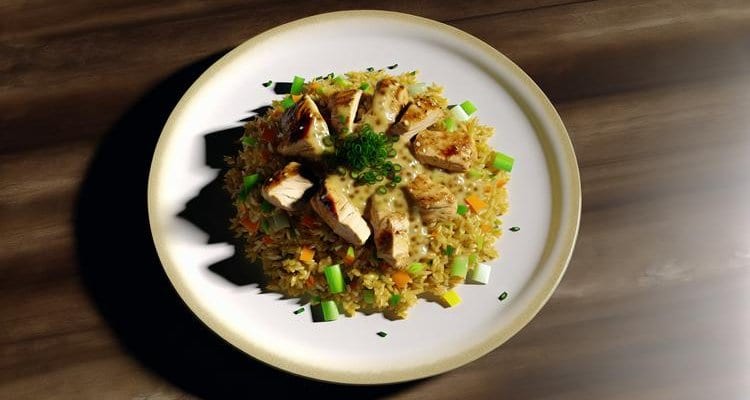
There’s something magical about hibachi-style cooking that transforms simple ingredients into an unforgettable meal. The sizzle of butter hitting a screaming-hot griddle, the aroma of garlic and ginger mingling with caramelizing soy sauce, and that signature show-stopping flair make hibachi restaurants a favorite for celebrations. But here’s the secret: you don’t need to wait for a special occasion or spend $30+ per person to enjoy restaurant-quality hibachi chicken and rice.
With a Blackstone griddle and 30 minutes, you can recreate that entire hibachi experience right in your backyard. This Blackstone hibachi chicken and rice recipe delivers everything you love about hibachi restaurants: tender, caramelized chicken glazed with a sweet-savory sauce, perfectly seasoned fried rice with colorful vegetables, and that famous yum yum sauce that makes everything taste incredible. The best part?
The massive cooking surface of the Blackstone griddle gives you the intense heat that makes authentic hibachi cooking possible at home. Unlike a traditional grill or stovetop, the flat-top surface lets you manage multiple components simultaneously while achieving that signature char and caramelization.
Why does this recipe work so well on a Blackstone griddle?
Traditional hibachi-style restaurant cooking uses a teppanyaki grill—a large, flat surface that maintains consistent high heat. A Blackstone provides a home version of that professional setup, with three practical advantages:
- Zone cooking capability: Multiple burners create distinct heat zones. Keep fried rice warm over medium-low heat while searing chicken over high heat, then toss the components together for serving. That multi-zone approach is impossible on a regular grill and cramped on a stovetop.
- Superior heat retention: The thick steel surface holds heat like a professional teppanyaki grill, producing the intense sear that caramelizes the chicken’s honey-soy glaze. Applying these grilling juicy chicken techniques on the griddle supports restaurant-quality results.
- Massive cooking area: Hibachi meals combine protein, rice, vegetables, and sauces. Depending on the Blackstone model, its 28-36 inch surface provides room to cook everything simultaneously without crowding, which is critical for proper browning and the fried rice’s coveted “wok hei” flavor.
Together, heat zones, thermal mass, and surface area let you sear, hold, and combine the full meal on one cooker.
Hibachi vs. Teppanyaki: What is the Difference?
Many people use the terms “hibachi” and “teppanyaki” interchangeably, but they actually refer to two distinct Japanese cooking styles. Traditional hibachi cooking utilizes an open-grate grill fueled by charcoal, designed to cook small items directly over high flames. On the other hand, teppanyaki translates to “cooking on an iron plate,” which is exactly what you do on a flat-top griddle. Your Blackstone is a teppanyaki-style cooker, making it the perfect tool to replicate the theatrical, high-heat stir-frying of your favorite Japanese steakhouse.
- Hotec stainless steel kitchen tongs — makes turning and moving food on the grill simple
- TrendPlain oil sprayer — evenly coats food before grilling
- MEATER Plus smart Bluetooth wireless meat thermometer — verify internal temperature for consistent doneness
What are the essential tips for perfect hibachi chicken?
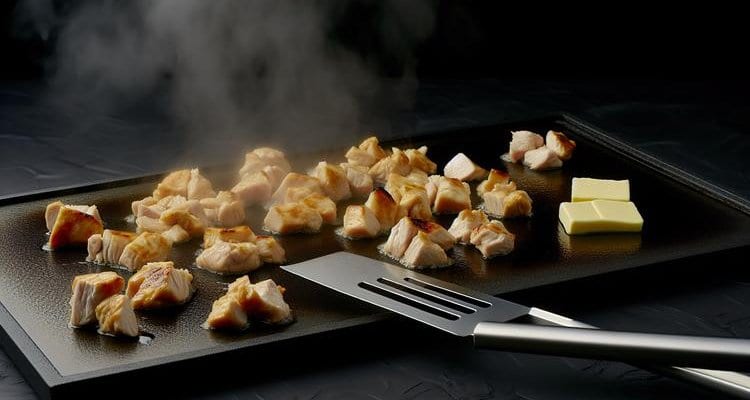
Five techniques keep the chicken browned, juicy, and ready at the same time as the rice:
- Cut uniform 1-inch cubes: Consistent sizing promotes even cooking and maximizes the surface area available for a caramelized crust. Because the chicken cooks in just 6-8 minutes, uniform pieces keep some from overcooking while others remain underdone.
- Use day-old rice: Fresh rice is too moist and can turn mushy on the griddle. Refrigerated rice dries slightly, allowing the grains to separate and crisp. In a hurry, spread fresh rice on a baking sheet and refrigerate it for 30 minutes.
- Do not crowd the griddle: Leave space between chicken pieces when they first hit the surface. Crowding causes steaming instead of searing. The chicken should sizzle loudly; if it does not, the griddle is not hot enough.
- Master butter basting: Apply these grilling techniques by adding cold butter cubes to the chicken. The butter boosts flavor, helps the sauce emulsify, and creates the rich sheen associated with hibachi restaurants.
- Control the zones: Good temperature control keeps one section at 400-450°F for searing chicken and another at 300-325°F for holding rice and vegetables warm, preventing the rice from burning while the protein finishes.
Managing size, moisture, spacing, butter, and heat together produces the best balance of caramelization and even cooking.
The Secret Ingredient: Homemade Garlic Butter
If you have ever watched a hibachi chef, you know that butter is the lifeblood of the griddle. To get that authentic restaurant flavor, prepare a quick batch of garlic butter beforehand. Simply whip one stick of softened unsalted butter with three minced garlic cloves, half a tablespoon of soy sauce, and a squeeze of fresh lemon juice. Keep this mixture griddleside to melt over your chicken, rice, and vegetables as they cook. It adds an incredible depth of flavor and that signature glossy finish.
How do you cook hibachi on a Blackstone griddle?
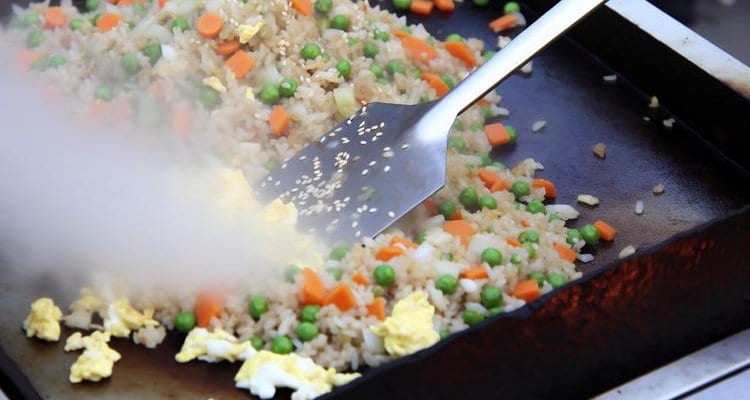
Coordinate the meal in three stages so each component finishes hot without crowding the cooking surface:
- Preheat distinct zones: Set a high-heat area at 400-450°F for searing chicken and a medium zone at 300-325°F to hold the fried rice and vegetables at serving temperature.
- Begin with the fried rice: Break up clumps of cold rice before they reach the griddle, then spread the rice in an even layer for maximum surface contact. A longer, gentler cook creates crisp edges while keeping the grains fluffy.
- Sear and finish the chicken: Add the uniform 1-inch cubes and let a caramelized crust form before moving them. They cook in just 6-8 minutes. Finish with the butter baste for a glossy, restaurant-style surface.
Once the chicken is cooked and the rice is crisp, bring the zones together for final seasoning and serving.
How to Cook the Vegetables and Fried Rice on the Griddle
To round out your meal, dedicate a zone of your Blackstone to the classic hibachi vegetables and fried rice. Start by dicing zucchini and onions into uniform pieces. Toss them onto a medium-hot zone with a tablespoon of your garlic butter and a splash of soy sauce, cooking for 5 to 6 minutes until tender-crisp. For the fried rice, push your day-old rice to the side, melt a little more butter, and crack two eggs directly onto the griddle surface. Scramble them quickly with your spatula, then fold them into the rice along with a handful of peas, carrots, and green onions. Drizzle with soy sauce and sesame oil, tossing continuously until the rice is hot and slightly crispy.
Frequently Asked Questions
What temperature should my Blackstone be for hibachi chicken?
Preheat your Blackstone to 400-450°F for the chicken searing zone. Use an infrared thermometer to verify temperature, or test with a few drops of water-they should skitter and evaporate immediately. For the rice-holding zone, maintain 300-325°F. If your Blackstone has separate burner controls, set the chicken zone to medium-high and the rice zone to medium-low. The high heat is essential for caramelizing the honey-soy glaze and creating that restaurant-quality char on the chicken.
Can I use fresh rice instead of day-old rice?
Day-old refrigerated rice works best because the grains have dried slightly, preventing mushiness and allowing proper crisping. Fresh rice contains too much moisture and will steam rather than fry, resulting in a gummy texture. If you must use fresh rice, spread it in a thin layer on a baking sheet and refrigerate uncovered for at least 30 minutes to remove excess moisture. For best results, cook rice the night before and refrigerate overnight.
How do I make authentic yum yum sauce?
Classic yum yum sauce (also called white sauce or sakura sauce) combines 1 cup mayonnaise, 2 tablespoons melted butter, 1 tablespoon tomato paste, 1 teaspoon sugar, 1 teaspoon garlic powder, ½ teaspoon paprika, and a pinch of cayenne. Whisk together until smooth, then add water 1 tablespoon at a time until you reach desired consistency-it should be pourable but not runny. Refrigerate for at least 30 minutes before serving to let flavors meld. The sauce keeps for up to one week refrigerated.
What vegetables work best for hibachi-style cooking?
Traditional hibachi vegetables include zucchini, onions, mushrooms, and carrots. Cut zucchini into thick half-moons or spears so they don’t overcook. Slice onions into ½-inch thick strips. Quarter mushrooms if large. Cut carrots into thin coins or julienne strips for faster cooking. The key is cutting vegetables into similar-sized pieces for even cooking. Add heartier vegetables (carrots, onions) first, then tender vegetables (zucchini, mushrooms) a few minutes later.
How do I prevent chicken from sticking to my Blackstone?
Proper preheating is critical-the griddle must reach full temperature before adding food. Apply a thin layer of high-smoke-point oil (avocado, vegetable, or peanut oil) using a paper towel or oil bottle. Once the chicken hits the griddle, resist the urge to move it for the first 2 minutes. The chicken will naturally release when a proper sear forms. If it’s sticking, it’s not ready to flip. Using metal spatulas with a beveled edge also helps cleanly release food without tearing.
Can I make this recipe without a Blackstone griddle?
While a Blackstone delivers the most authentic results, you can adapt this recipe for a large cast-iron griddle or multiple large skillets on your stovetop. The challenge is managing all components simultaneously-you’ll need at least two 12-inch skillets or one large griddle pan. The cooking techniques remain the same, but you’ll lose some of the zone-cooking flexibility and total cooking area. A traditional grill won’t work well because the grates prevent proper rice frying and sauce management.
How long can I store leftover hibachi chicken and rice?
Store leftover hibachi chicken and rice in separate airtight containers in the refrigerator for up to 3 days. Keep the yum yum sauce in its own container for up to one week. To reheat, add the rice to your Blackstone or a large skillet over medium heat with a splash of water or chicken broth to restore moisture. Add the chicken once the rice is hot, stirring frequently until everything is heated through (about 5-7 minutes). Alternatively, microwave in 1-minute intervals, stirring between each, until steaming hot.
What is the difference between hibachi and teppanyaki?
While often used interchangeably in the United States, traditional hibachi uses an open-grate grill with charcoal, whereas teppanyaki uses a solid, flat-top iron griddle. Because your Blackstone is a flat-top griddle, you are technically cooking teppanyaki-style. This is the ideal setup for tossing rice, eggs, and chopped meats without losing them through grates.
Can you cook hibachi noodles on a Blackstone griddle?
Yes, pre-cooked yakisoba or udon noodles cook beautifully on a flat-top. Simply toss them on a medium-hot zone of your Blackstone with a tablespoon of butter, garlic, soy sauce, and a splash of teriyaki sauce, then stir-fry for 3 to 4 minutes until heated through and slightly caramelized.
Blackstone Hibachi Chicken and Rice with Yum Yum Sauce
Equipment
- Blackstone griddle or flat top grill Preheated to 400-450°F for chicken zone, 300-325°F for rice zone
- Two metal spatulas Beveled edge preferred for easy food release
- Infrared thermometer For accurate griddle temperature verification
- Medium mixing bowl For preparing hibachi sauce
- Whisk For sauce preparation
Ingredients
For the Hibachi Chicken
- 1.5 pounds boneless skinless chicken breast cut into 1-inch cubes
- 1/4 cup soy sauce
- 3 tablespoons honey
- 3 tablespoons brown sugar packed
- 2 tablespoons minced garlic about 4-5 cloves
- 1 teaspoon minced fresh ginger
- 3 tablespoons butter divided
- 1 tablespoon vegetable oil for griddle
For the Fried Rice
- 4 cups cooked white rice day-old and refrigerated (best texture)
- 2 tablespoons butter
- 1 tablespoon sesame oil
- 2 large eggs lightly beaten
- 1 cup frozen mixed vegetables peas, carrots, corn
- 3 tablespoons soy sauce
- 2 stalks green onions sliced, for garnish
- 1 teaspoon sesame seeds for garnish
For the Hibachi Vegetables
- 2 medium zucchini cut into thick half-moons
- 1 medium onion cut into 1/2-inch strips
- 8 ounces mushrooms quartered
- 1 tablespoon butter
- 1 tablespoon vegetable oil
- 1 teaspoon garlic powder
- 2 tablespoons soy sauce
- salt and pepper to taste
For the Yum Yum Sauce
- 1 cup mayonnaise
- 2 tablespoons melted butter
- 1 tablespoon tomato paste
- 1 teaspoon sugar
- 1 teaspoon garlic powder
- 1/2 teaspoon paprika
- 1/4 teaspoon cayenne pepper optional, for heat
- 2-3 tablespoons water to thin sauce to desired consistency
Instructions
- Prepare yum yum sauce: In a medium bowl, whisk together mayonnaise, melted butter, tomato paste, sugar, garlic powder, paprika, and cayenne. Add water 1 tablespoon at a time until sauce reaches pourable consistency. Refrigerate while preparing meal.
- Prepare hibachi sauce: In a medium bowl, whisk together soy sauce, honey, brown sugar, minced garlic, and minced ginger until smooth. Set aside.
- Cut chicken breast into uniform 1-inch cubes. Pat dry with paper towels and set aside. Refrigerate until ready to cook.
- Preheat your Blackstone griddle with two distinct heat zones: medium-high heat (400-450°F) for the chicken zone, and medium-low heat (300-325°F) for the rice zone. Verify temperature with infrared thermometer.
- Start with fried rice: Add butter and sesame oil to the medium-low zone. Add day-old rice and break up clumps with spatula. Spread into thin layer and cook 3-4 minutes without stirring to develop light crust.
- Push rice to one side. Add beaten eggs to empty space and scramble until just set. Mix scrambled eggs into rice. Add frozen vegetables and cook 2 minutes, stirring occasionally.
- Add soy sauce to rice mixture and toss to combine. Push rice to cooler edge of griddle to keep warm while cooking protein.
- Cook vegetables: On medium heat zone, add 1 tablespoon each butter and oil. Add onions and mushrooms first, cook 3 minutes. Add zucchini, garlic powder, soy sauce, salt and pepper. Cook 3-4 minutes until tender-crisp. Move to rice zone to keep warm.
- Cook chicken: Add vegetable oil to the hot zone (400-450°F). Place chicken cubes in single layer with space between pieces. Do not move for 2 minutes to develop golden sear.
- Flip chicken pieces and add 2 tablespoons butter. Continue cooking 2-3 minutes, tossing occasionally, until chicken reaches 165°F internal temperature.
- Pour prepared hibachi sauce over chicken. Toss continuously for 2-3 minutes until sauce thickens and caramelizes, coating chicken with glossy glaze.
- Plate the meal: Divide fried rice among 4 plates. Top with hibachi chicken and vegetables. Garnish with sliced green onions and sesame seeds. Serve immediately with yum yum sauce on the side.
Notes
- Lower Sodium Option: To reduce sodium content, substitute low-sodium soy sauce for regular soy sauce in both the hibachi sauce and fried rice. This can reduce total sodium by approximately 40%.
- Day-Old Rice is Essential: Fresh rice is too moist and will turn mushy. Day-old refrigerated rice has dried out slightly, allowing proper crisping and grain separation.
- Zone Cooking Mastery: Maintain distinct temperature zones—hot (400-450°F) for searing chicken, medium-low (300-325°F) for holding rice and vegetables warm without burning.
- Don't Crowd the Chicken: Leave space between pieces when searing. Crowding causes steaming instead of the caramelized crust you want.
- Uniform Cuts: Cut chicken into consistent 1-inch cubes for even cooking. Smaller pieces overcook, larger pieces remain underdone.
- Sauce Timing: Add hibachi sauce only in the final 2-3 minutes. Adding too early causes burning from the sugar content.
- Butter Basting: The cold butter creates instant flavor boost and helps sauce emulsify for restaurant-quality sheen.
- Cook rice 1-2 days in advance and refrigerate
- Prepare yum yum sauce up to 1 week ahead
- Mix hibachi sauce up to 3 days in advance
- Cut vegetables and chicken morning-of, refrigerate until cooking
Related BBQ Guides

Best Dyna-Glo Grills and Smokers
Discover the best Dyna-Glo grills for 2026! Our comprehensive Dyna-Glo grill reviews cover gas, charcoal, and smoker models to help you find your perfect match.

Small Gas Grills: Your Guide to Big Flavor in Compact Form
Discover the best small gas grills of 2026, tested for heat and portability. Compare top picks for balconies, tailgating, and small yards. Find yours.
Top Grill Station Mats for Ultimate Grease Protection
Compare the best grill station mats for grease protection with our expert reviews. We tested top fiberglass and rubber options to keep your deck pristine.