

Mastering fire management on an offset smoker is the defining skill of real barbecue. Unlike pellet grills or gas cookers, an offset smoker demands active participation – you control the fuel, the airflow, and the heat. Get that balance right, and you produce clean smoke at a steady 225-275°F for hours. This guide covers how to build a proper fire, control temperature with damper adjustments, adapt your technique to different firebox sizes, and use automated fan controllers for precision during long cooks.
How Does Offset Smoker Airflow and Heat Dynamics Work?
An offset smoker works by convection: heat and smoke travel from the firebox through the cooking chamber and exit the smokestack. The intake damper on the firebox controls oxygen supply to the fire, while the exhaust damper on the smokestack controls draft speed and smoke flow.
The Science of the Draw
Hot air rises and exits through the smokestack, creating a natural draft that pulls fresh air through the firebox intake. This convection cycle is the engine of your offset smoker. A strong, consistent draw produces clean smoke and even heat distribution
What is the Function of a Smoke Collector?
Many high-end and custom offset smokers feature a smoke collector (or plenum) at the base of the smokestack. Instead of the chimney attaching directly to the top of the cook chamber, the collector acts as a wide transition box that pulls exhaust air evenly from across the entire width of the cooking grates. This design eliminates hot spots and dead zones near the exhaust end, ensuring a smoother, more uniform draft across your meat.
across the cooking grate.
Offset Smoker Firebox Size
A larger firebox allows a bigger coal bed and better oxygen flow without suffocating the fire. Smaller fireboxes require more precise, frequent adjustments because they hold less thermal mass. The firebox-to-chamber ratio directly affects how stable your pit temperature stays between wood additions.
The Role of the Offset Smoker Damper
Offset smokers may use three airflow controls, each with a different job:
- Firebox intake damper: Regulates how much oxygen reaches the coals, controlling fire intensity. Use this as the primary control for pit temperature.
- Smokestack exhaust damper: Controls draft, or how quickly smoke and heat travel through the cooking chamber. Keep it fully or nearly fully open in most situations; restricting the exhaust traps stale smoke and can produce a bitter, acrid flavor.
- In-line throat damper or baffle: On some advanced offsets, this adjustable plate sits where the firebox meets the cooking chamber. It can restrict or redirect the immediate blast of radiant heat to protect food closest to the firebox, but it must be adjusted carefully to avoid choking the draft.
For routine temperature changes, work from the intake while allowing the exhaust to maintain a clean draw.
- Grill Armor extra-long heat-resistant gloves — protects hands around hot grates, pans, and smoker parts
- ThermoMaven bristle-free grill brush — safely cleans grates without leaving bristles
- Ammzo digital meat thermometer — checks doneness without guessing
How to Build a Fire in an Offset Smoker
Start with a full chimney of lit charcoal to build thermal mass and preheat the heavy steel. Once the pit stabilizes at your target temperature, transition to seasoned hardwood splits for sustained heat and smoke flavor. Pre-warm wood splits on top of the firebox so they ignite instantly.
Establishing the Charcoal Base
Fill a chimney starter with lump charcoal or quality briquettes. Light it and wait 15-20 minutes until the coals are fully ashed over. Pour the lit charcoal into the firebox and spread it into an even bed.
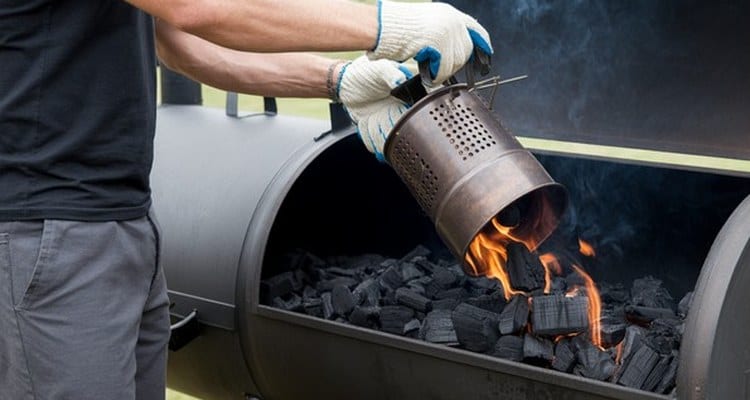
Close the firebox door and let the pit come up to temperature with just the charcoal fire. This process heats the heavy steel of the cooking chamber, which acts as thermal ballast to reduce temperature swings. Once stable, verify the grate-level temperature reads at least 225°F before adding meat. This keeps the cooking environment safely above the 140°F threshold[FSIS].
Adding Wood for Flavor and Heat
Once the pit stabilizes near your target (225-275°F), add your first split of seasoned hardwood. Place wood splits on top of the firebox 15-20 minutes before you need them – the radiant heat pre-warms them so they ignite immediately when added to the coals.
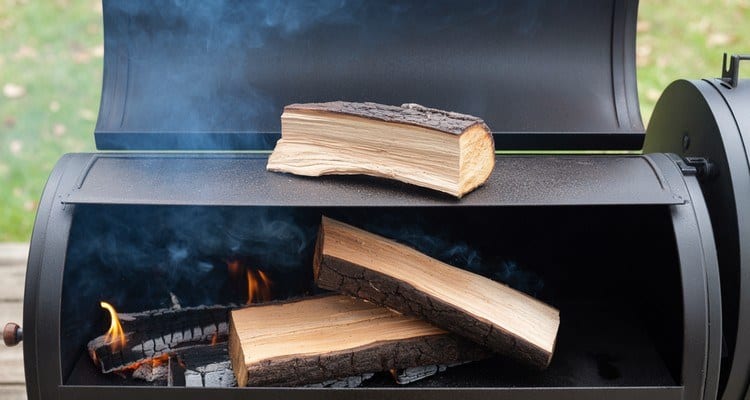
Pre-warmed wood catches fire cleanly instead of smoldering. Smoldering wood produces thick white smoke that deposits creosote and bitter compounds on the meat. Your goal is thin blue smoke or nearly invisible heat waves rising from the smokestack.
Offset Smoker Fuel Timing Reference
Use this as a starting point, then adjust based on your smoker’s metal thickness, weather, and coal bed size. Add fuel before the fire collapses rather than waiting for a large temperature drop.
| Smoker Setup | Fuel Add Interval | Split Size | Watch For |
|---|---|---|---|
| Small backyard offset | 30-45 min | Small splits or chunks | Fast drops after lid openings |
| Standard 1/4-inch offset | 45-60 min | Wrist-size splits | 10-15°F downward drift |
| Cold or windy cook | 25-45 min | Smaller, more frequent splits | Wind feeding the intake |
Use the interval as an early cue, then let grate temperature, coal-bed condition, and smoke color determine the actual moment to add fuel.
Small Offset Smoker Fire Management
Smaller offset smokers have thinner metal walls and less cooking-chamber volume, so their temperatures change faster. Manage that lower thermal mass with four habits:
- Use smaller fuel: Choose smaller wood splits or chunks instead of full-size splits.
- Feed the fire more often: Make smaller additions rather than overloading the firebox.
- Plan for shorter intervals: Expect to add fuel every 30-45 minutes instead of every 45-60 minutes.
- Protect the coal bed: Keep it consistent and avoid letting the fire die too far between additions.
Small, frequent corrections keep a compact offset steadier than large, reactive fuel additions.
Using a Water Pan as a Temperature Buffer
If you struggle with rapid temperature fluctuations, place a heavy-duty water pan inside the cooking chamber directly next to the firebox opening. The water acts as thermal ballast, absorbing intense radiant heat and releasing it gradually. Because water boils at a constant 212°F, the resulting steam helps cap extreme temperature spikes while adding moisture to the cooking environment during long cooks.
How to Control Offset Smoker Temperature
Control your offset smoker temperature primarily through the firebox intake damper while keeping the exhaust wide open. Open the intake to raise heat, close it partially to lower heat. Target 225-275°F for low-and-slow smoking and monitor with a calibrated thermometer at grate level.
For food safety, keep hot foods out of the USDA danger zone of 40-140°F where bacteria multiply rapidly[USDA].
Adjusting the Intake and Exhaust
Keep the exhaust damper wide open to maintain clean airflow. Use the firebox intake damper to dial in your target pit temperature. Small adjustments – 1/4 inch at a time – prevent overshooting in either direction. After each adjustment, wait 10-15 minutes for the temperature to stabilize before making another change. Offset smokers respond slowly to damper changes because of the thermal mass in the steel and the coal bed.
Maintaining a Clean Burning Fire
The goal is thin blue smoke or nearly invisible heat waves from the smokestack. Thick, billowing white smoke means the fire is smoldering and oxygen-starved. Open the intake damper or crack the firebox door briefly to feed oxygen to the coals.

A clean-burning fire produces the mild, sweet smoke flavor that defines great barbecue. Dirty smoke deposits creosote on the meat, creating a bitter, acrid taste that no sauce can fix.
Offset Smoker Fire Management Checklist
- Keep exhaust open: Let stale smoke leave the cooking chamber instead of trapping it around the meat.
- Make small intake changes: Move the intake damper in small increments and wait 10-15 minutes before adjusting again.
- Pre-warm the next split: Warm wood on top of the firebox so it lights quickly and burns clean.
- Protect the coal bed: Add fuel before the fire collapses into ash and loses thermal mass.
- Trust smoke color: Thin blue smoke or nearly invisible heat waves matter more than a fixed wood schedule.
Troubleshooting Temperature Spikes and Drops
| Problem | Likely Cause | Fix |
|---|---|---|
| Pit temp too high | Fire too large or intake too open | Close intake damper 1/4 turn; open firebox door briefly |
| Pit temp too low | Coal bed dying or ash buildup | Poke coals to clear ash; add a small split; open intake |
| Thick white smoke | Smoldering wood, low oxygen | Open intake fully; crack firebox door for 30 seconds |
| Temperature won’t come down | Air leaks in firebox or door seals | Seal leaks with gasket tape; reduce coal bed size |
| Wide temperature swings | Thin metal, small firebox | Use smaller splits; add fuel more frequently |
Make one correction at a time and allow the pit to respond before changing another variable; stacked adjustments make the original cause harder to identify.
Why is Smoke Leaking from My Firebox? (Backdrafting)
If you notice smoke blowing backward out of your firebox intake vents or door seals instead of drafting forward through the smokestack, your smoker is experiencing backdrafting. This is caused by a weak draft velocity, often due to a cold cooking chamber, wind blowing directly into the smokestack, or a blockage. To fix backdrafting, ensure your smokestack damper is fully open, shield the exhaust from strong headwinds, and preheat your cooking chamber thoroughly before adding cold wood splits.
Should You Use an Offset Smoker Temperature Control Fan?
An offset smoker temperature control fan is an automated draft system that reads pit temperature via a digital probe and adjusts a small fan on the firebox intake to maintain your target. These controllers take the guesswork out of overnight cooks and long brisket sessions by automating airflow adjustments.
What is a Smoker Fan Controller?
A fan controller consists of a digital thermometer probe, a control unit, and a small blower fan that mounts over the firebox intake. The control unit reads the pit temperature and triggers the fan to blow precise amounts of oxygen onto the coal bed to maintain your set temperature.
Benefits and Value Positioning
Fan controllers automate the most tedious part of offset smoking – checking and adjusting dampers every 15-30 minutes. They are especially valuable during overnight cooks when maintaining consistent heat for 12-16 hours would otherwise require multiple wake-ups. The value lies in reduced fuel consumption, consistent pit temperature within ±5°F of your target, and peace of mind for beginners still learning manual damper control. Experienced pitmasters also use them to free up time during competition cooks.

Frequently Asked Questions
How often should I add wood to my offset smoker?
Should I leave the exhaust damper wide open?
Why can’t I get my smoker temperature down?
How do I know when my fire needs more fuel?
What type of wood is best for offset smokers?
Can I use only charcoal in an offset smoker?
How do I manage an offset smoker in cold or windy weather?
What is the ideal coal bed size for a standard offset smoker?
How do I keep a cheap offset smoker at a steady temperature?
Cheap offset smokers often suffer from thin steel and loose seals, which cause rapid heat loss. To stabilize temperatures, seal the cooking chamber and firebox lids with high-temperature felt gasket tape, place a heavy water pan near the firebox throat to act as a thermal buffer, and feed the fire with smaller, more frequent wood additions rather than large splits that cause massive temperature spikes.
Related BBQ Guides
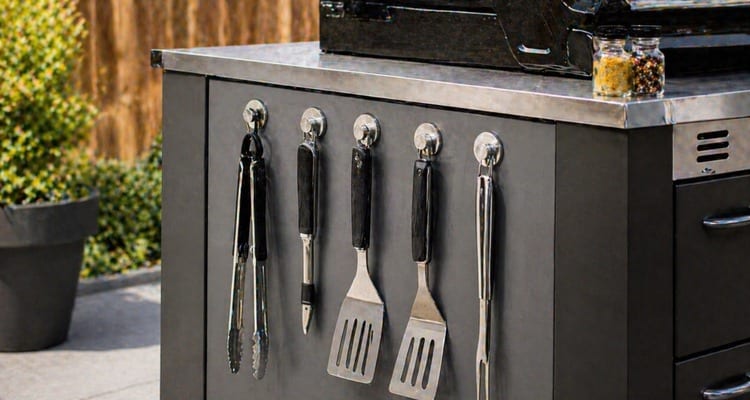
Best BBQ Tool Magnets for Grill Carts That Stay Put
Compare the best bbq tool magnets for grill carts for secure griddle, smoker, and patio storage so your spatulas and tongs stay organized outdoors.
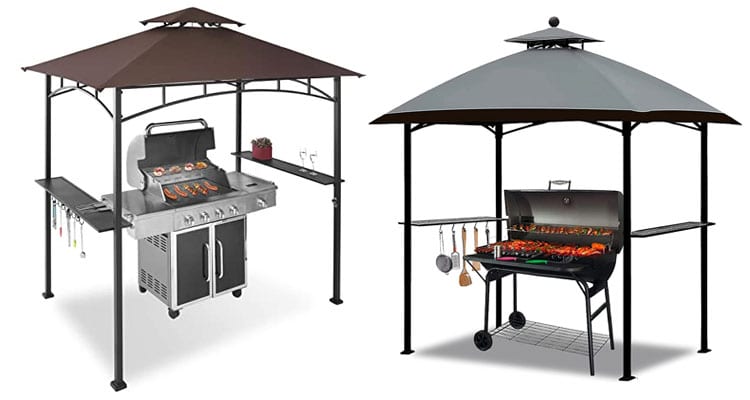
Grill Gazebos: Top Shelters for Year-Round BBQ Protection
Protect your grill & cooking space. Compare durability, size & weather resistance of top grill gazebos for 2026.

Light Your Charcoal Grill Right: The Complete Method
Master how to start a charcoal grill with our step-by-step guide. Covers chimney starter, lighter fluid, vent control, and coal arrangement.