

Injecting a brisket delivers flavor and moisture deep into the muscle where surface rubs cannot reach. A quality injection keeps the flat juicy through a 10-14 hour smoke at 225-250°F on your smoker or pellet grill. This guide covers injection liquids, a proven technique, and timing to help you achieve tender, flavorful results.
Why Inject a Brisket?
Injecting a brisket pushes seasoned liquid directly into the muscle fibers, compensating for the 30–40% moisture loss that occurs during a long low-and-slow smoke. The technique is especially useful for the lean flat, which dries out faster than the fattier point.
Injection addresses four limitations of a long brisket cook:
- Dense muscle: The brisket cut from a cow needs 10–14 hours at 225–250°F to break down its collagen.
- Evaporation: Seasoned liquid placed inside the beef helps replace moisture lost during that extended cook.
- Shallow surface seasoning: Rub penetrates only about 1/4 inch, while injection carries dissolved seasoning into the interior.
- A leaner flat: Salt in the injection acts as a brine, helping muscle proteins retain moisture where intramuscular fat is limited.
Used with a quality brisket rub, an even injection keeps the texture juicier from edge to edge and adds savory depth throughout.
- ThermoMaven wireless meat thermometer — wirelessly monitor long cooks keeping the pit sealed
- Traeger Signature Blend pellets — adds balanced smoke to many backyard meals
What Should I Inject My Brisket With?
The three most popular brisket injection bases are beef broth, melted beef tallow, and commercial blends. Beef broth provides a savory foundation, tallow adds rich moisture to lean cuts, and commercial products offer convenience with pre-balanced seasoning profiles for consistent BBQ results.
Beef Broth Brisket Injection
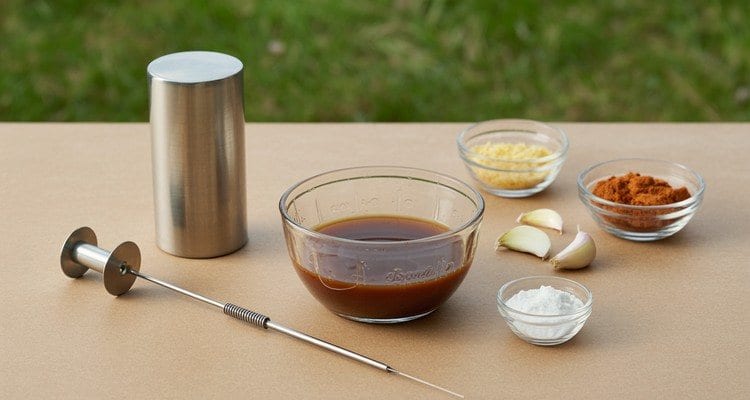
Beef broth is the standard base for a simple brisket injection recipe. It enhances the natural beef flavor without overpowering the meat. Use low-sodium broth so you control the final salt level, and consider a high-quality beef bone broth for added collagen and a richer mouthfeel.
Inject Brisket with Tallow
Melted beef tallow creates a rich, buttery injection that adds internal fat to leaner cuts. Keep homemade beef tallow warm at 110-120°F during injection so it stays liquid and flows through the needle. This method is especially effective for USDA Select or Choice grade briskets with less marbling.
Commercial vs. Homemade Injection Liquids
Commercial blends like Meat Church and Butcher BBQ offer convenience with pre-measured seasoning ratios. Many contain phosphates, which help the meat retain moisture but can sometimes result in a slightly different texture. Homemade injections give you complete control over ingredients and flavor intensity.
Simple Brisket Injection Recipe
A proven homemade brisket injection combines 2 cups low-sodium beef broth, 2 tablespoons Worcestershire sauce, 1 tablespoon melted butter, and 1 teaspoon each of garlic powder and onion powder. Heat to dissolve seasonings, then cool to room temperature before injecting.
| Base Liquid | Flavor Profile | Best For | Prep Difficulty |
|---|---|---|---|
| Beef Broth | Savory, natural beef | All brisket cuts | Easy |
| Beef Tallow | Rich, buttery | Lean flats, Select grade | Moderate |
| Butter and Broth | Creamy, balanced | Competition brisket | Easy |
| Apple Juice and Broth | Sweet, tangy | Sweet rub pairings | Easy |
| Commercial Blend | Pre-balanced, consistent | Quick prep, competition | None |
Prepare the liquid before loading the injector:
- Heat the ingredients in a saucepan until the butter melts and the seasonings dissolve.
- Strain through a fine mesh sieve to remove particles that could clog the needle.
- Cool to room temperature before injecting the brisket.
Brisket Injection Amounts by Size
Use the lower end of the range for well-marbled Prime briskets and the higher end for lean flats or Select-grade packers. Stop early if liquid starts pooling under the meat or rushing back out of the same injection site.
| Raw Brisket Size | Suggested Injection | Best Focus Area | Rest Time |
|---|---|---|---|
| 5-7 lb flat | 6-10 oz | Entire flat | 4-8 hours |
| 8-10 lb trimmed packer | 10-16 oz | Flat first, point second | 6-10 hours |
| 11-14 lb whole packer | 14-24 oz | 60% flat, 40% point | 8-12 hours |
Injection Recipe Variations
Once you master the basic recipe, you can experiment with other flavor profiles. For a spicy kick, add 1 teaspoon of your favorite hot sauce or 1/4 teaspoon of cayenne pepper. For a sweeter, tangier flavor, substitute 1/2 cup of the beef broth with apple juice and add 1 tablespoon of apple cider vinegar.

Choosing the Right Meat Injector
Choose an injector by matching its construction and needles to the liquid you plan to use:
- Stainless-steel construction: It is more durable, easier to sanitize, and less likely to retain odors or crack under pressure than plastic.
- Multiple side ports: This needle style distributes thin liquids such as beef broth along the injection track as you withdraw.
- A wider single opening: Use this needle for thicker mixtures containing melted tallow or fine spices to reduce clogs.
- Fully removable parts: After every use, disassemble the injector, wash all pieces in hot soapy water, and clean the barrel and needles with a small brush.
The right needle prevents clogging, but thorough cleaning protects both food safety and the life of the tool.
How to Inject Brisket: Step-by-Step Guide
Injecting brisket requires a clean meat injector, cooled liquid, and a fully trimmed brisket. Use a 1-inch grid pattern across the meat, inserting the needle at a slight angle while slowly depressing the plunger and withdrawing to distribute liquid evenly throughout the muscle fibers.
Step 1: Prep the Meat and Liquid
Set up the brisket and injection before making the first puncture:
- Trim first: Remove excess hard fat and reduce the fat cap to about 1/4 inch.
- Contain runoff: Place the brisket in a large aluminum pan or on a rimmed baking sheet.
- Check liquid temperature: Cool a heated broth-based injection before use, or keep tallow warm enough—110–120°F—to remain liquid.
Step 2: The Grid Technique
Work systematically so the liquid spreads through the muscle instead of collecting in pockets:
- Visualize a 1-inch grid across the brisket and inject at each grid point.
- Insert the needle at a slight angle to reduce immediate seepage back through the puncture.
- Press slowly while withdrawing so liquid follows the full needle track instead of pooling in one spot.
- Use about 1–2 ounces per point and move from one end of the brisket to the other. Some liquid seeping back out is normal.
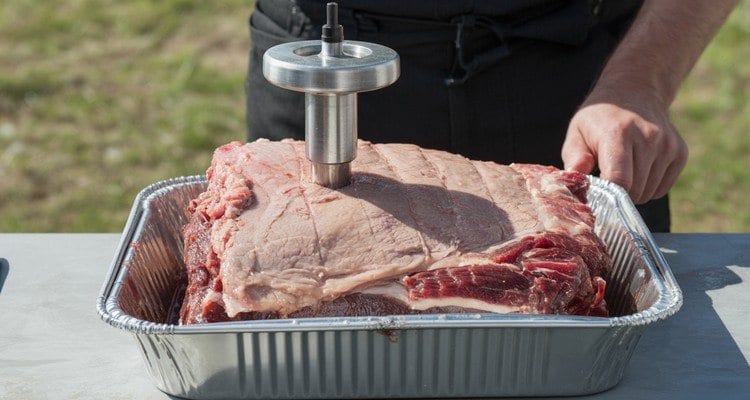
Slow withdrawal is what turns each puncture into an even channel of seasoning.
Step 3: Focus on the Flat
Allocate the injection according to how the two brisket muscles cook:
- Use about 60% in the flat because it is leaner and dries out faster.
- Use the remaining 40% in the point, which has more internal fat.
- Insert with the grain so the liquid moves naturally between muscle fibers for better distribution.
This split adds the most help where the brisket needs it without oversaturating the fattier point.
Troubleshooting Common Injection Problems
Even with a good technique, you might encounter clogs, leaking, or uneven pockets when you inject a brisket. Most problems come from coarse seasonings, injecting too fast, or pushing too much liquid into one spot. Strain the liquid, work slowly, and adjust needle size before cooking.
- Clogged Needle: This usually happens when the spices in your injection recipe are not fully dissolved or are too coarse. Always strain your liquid through a fine mesh sieve. If clogs persist, switch to a wider-gauge needle.
- Liquid Pockets: If you inject too much liquid in one spot, it can create a pocket that results in a mushy texture. To avoid this, depress the plunger slowly and steadily while withdrawing the needle. This ensures the liquid is distributed along a channel, not a single point.
- Excessive Leaking: Some leakage is unavoidable, but a large amount means you are injecting too quickly. Slow down your pace. After injecting, let the brisket rest for a few minutes, then pat the surface dry with paper towels before applying your rub.
Timing Your Injection and Rub
Inject your brisket 4-12 hours before cooking for optimal flavor absorption, and always inject before applying the rub. The injection process causes liquid to seep across the surface, which would wash off any previously applied seasoning.
Should You Rub or Inject First?
Always inject first, then apply your rub. Liquid seeps from needle holes across the surface during injection. If you applied the rub first, this seeping would dissolve and wash away your seasoning. After injecting, pat the brisket dry with paper towels. Apply your binder (mustard or olive oil), then your BBQ rub. This ensures both the internal injection and external seasoning work together.
Brisket Injection Day Checklist
- Trim first: Shape the brisket and reduce the fat cap before any liquid goes into the meat.
- Strain the liquid: Remove coarse spices so the injector needle does not clog halfway through the flat.
- Inject in a pan: Use a rimmed pan to catch runoff and keep the prep area easier to sanitize.
- Pat dry before rub: Dry the surface after injection so binder and seasoning stick evenly.
- Rest cold: Hold the injected brisket in the refrigerator at 40°F or below until it is time to smoke.
How Long Before Cooking Should I Inject Brisket?
Inject 4-12 hours before placing the brisket on the smoker or pellet grill. This window allows the liquid to distribute through muscle fibers and salt to season the meat from the inside. Refrigerate the injected brisket at 40°F or below during this rest[USDA].
Do Pitmasters Inject Brisket?
Many competition pitmasters inject their briskets to guarantee consistent moisture and flavor for judging. While traditional Central Texas BBQ relies on salt, pepper, and smoke alone, modern competitors use custom injection recipes to ensure the flat stays juicy through long cooks on the smoker.
In competition, judges evaluate a single slice. Injection helps ensure every bite delivers maximum juiciness and a complex flavor profile. This practice has become popular with backyard cooks as well, especially when smoking Select or Choice grade briskets with less marbling than Prime.
Frequently Asked Questions
Can I inject a brisket right before smoking?
Should I avoid acidic ingredients or fruit enzymes in a brisket injection?
Yes — avoid highly acidic liquids (like straight citrus juice or vinegar in large amounts) and enzymatic tenderizers derived from pineapple or papaya. These can over-tenderize the meat from the inside out, breaking down the texture into an unpleasant mushy consistency rather than a clean, tender bite. Stick to broth, stock, butter, and moderate amounts of Worcestershire or soy sauce for flavor without the texture risk.
Do I need to inject a Wagyu brisket?
Generally, no. Wagyu brisket carries so much intramuscular marbling that it self-bastes during the cook, and injecting it typically doesn’t add much benefit — some pitmasters feel it can even dilute the beef’s natural richness. Injection is far more useful on leaner Select or Choice grade briskets that don’t have that built-in fat advantage.
How much injection liquid do I need per pound of brisket?
Can you over-inject a brisket?
What size needle works best for brisket injection?
Does injecting brisket affect the smoke ring?
Can I inject a frozen brisket?
Is brisket safe for people watching cholesterol?
Should I inject both the flat and the point?
Related BBQ Guides

Buffalo Sauce Mastery: Perfect Wings Every Time
Master authentic buffalo sauce in minutes. Our tested recipe delivers tangy heat, buttery richness & perfect wing-coating texture every time.

Ceramic Cookware Sets: Your Nonstick Safety Guide
Discover our top 10 ceramic nonstick cookware sets with safety ratings, durability tests & PFOA-free features. Expert reviews for 2026.

Electric Grills: Top Smokeless Options for Indoor & Outdoor Cooking
Looking for the best electric grill? We tested top models to find the best options for indoor and outdoor use. See our top picks for 2025.