
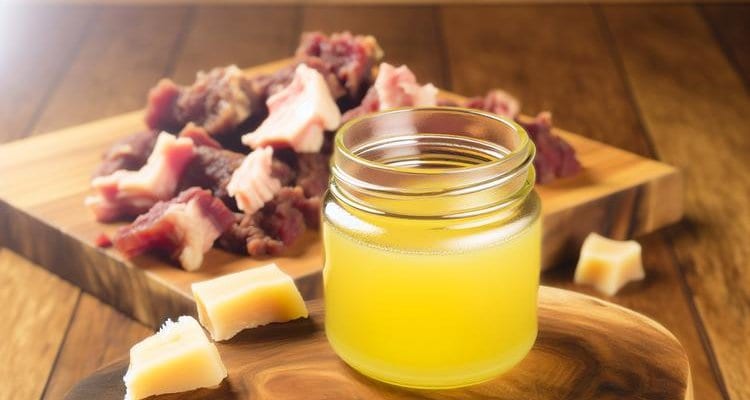
You’re trimming a brisket and a pound of creamy white fat is piling up on the board. Most pitmasters toss it – but not anymore. Rendering that fat into beef tallow takes about three hours and gives you a jar of pure, beefy gold that makes everything you cook taste better. This guide covers how to make beef tallow two ways – stovetop and oven – plus straining, storage, and exactly how to use it in your BBQ.
What Is Beef Tallow?
Beef tallow is the pure, clarified cooking fat produced by slowly melting beef fat trimmings and straining away the solids. Its defining characteristics are:
- Texture and appearance: At room temperature, tallow is a firm, creamy white or pale yellow solid. When heated, it becomes a clear, golden liquid.
- Flavor: It smells and tastes distinctly beefy and savory, unlike lard from pork or schmaltz from chicken.
- Fat composition: It is dominated by oleic, stearic, and palmitic acids.
- High-heat performance: Its smoke point is around 420°F, making it more heat-stable than butter at about 350°F and many vegetable oils.
That combination of heat stability and concentrated beef flavor is what makes tallow especially useful on a grill, griddle, or smoker.
- Stock Your Home aluminum pans — catches grill drips and holds cooled rendered fat
- TrendPlain glass oil sprayer — applies a thin, even coat of oil or tallow
- Grill Armor extra-long heat-resistant gloves — keeps your hands safe near grates and hot surfaces
Why Pitmasters Love Beef Tallow
Beef tallow has become a staple in serious BBQ kitchens for a handful of practical reasons:
- Brisket basting: Central Texas pitmasters have used tallow to coat briskets before wrapping for decades. When you wrap a brisket in butcher paper at the stall, brushing on melted tallow keeps the bark from going soft, adds a glossy sheen, and infuses extra beefy richness into the flat.
- Griddle cooking: Tallow is one of the best fats for flat-top cooking. It handles high heat without smoking out, and it seasons cast iron and griddle surfaces better than most oils.
- Smash burgers: A small amount of tallow on the griddle before pressing your burger gives you that steakhouse crust – beef fat on beef, the flavor is unmistakable.
- It’s free: If you’re already trimming briskets, you’re generating the raw material at zero cost. A 12-pound brisket yields roughly 1.5-2 lbs of trimmings, which renders into nearly a pint of tallow.
- Long shelf life: Properly rendered and strained tallow keeps for months without refrigeration – a true pantry staple for BBQ cooks.
What You Need to Make Beef Tallow
Best Fat Sources for Rendering
Not all beef fat renders equally. The best results come from fat that is firm and waxy – avoid soft, web-like fat (sometimes called leaf fat from around organs), which can produce a slightly softer tallow with more off-flavors. Before rendering, inspect the fat for any greenish or fuzzy mold spots, a sour or ammonia-like smell, or a slimy texture — any of these mean the fat has started to spoil and should be discarded rather than rendered, since rendering doesn’t make spoiled fat safe to use.
| Fat Source | Availability | Tallow Quality | Best For |
|---|---|---|---|
| Brisket fat cap | Free from brisket trimming | Excellent – firm, waxy, high yield | BBQ basting, griddle cooking |
| Beef suet (kidney fat) | Butcher shops, specialty stores | Best – purest, whitest tallow | Long-term storage, frying |
| Chuck roast trimmings | From butchering chuck cuts | Good – slightly lower yield | General BBQ use |
Equipment Checklist
- Heavy-bottomed stockpot or Dutch oven (stovetop method)
- Roasting pan or oven-safe pot (oven method)
- Fine mesh strainer
- Cheesecloth or paper towels (for straining)
- Glass mason jars or wide-mouth containers – never plastic (hot tallow can warp plastic and may leach chemicals)
- Ladle
- Sharp knife and cutting board for cubing fat
How to Make Beef Tallow on the Stovetop
The stovetop is the most hands-on method and the fastest for smaller batches – typically 2 to 3 hours for up to 3 lbs of fat. This is called “wet rendering” because you start with a small amount of water in the pot. The water prevents the fat from scorching before it begins to liquefy, then it evaporates harmlessly as rendering progresses.
- Cube the fat into 1-inch pieces. Smaller pieces mean more surface area and faster rendering. Remove any large pieces of meat – small traces are fine, but excess meat increases impurities.
- Add fat and water to a cold pot. Use about ¼ cup of water per pound of fat. Starting cold helps the fat melt gradually without browning.
- Heat on LOW – around 200-225°F. Patience is essential. Medium or high heat will scorch the fat and discolor your tallow brown. You want a very gentle, lazy bubble.
- Stir occasionally every 20-30 minutes. As the fat renders, golden liquid will pool at the bottom. The solid pieces will shrink into cracklings.
- Render for 2-3 hours until cracklings sink and tallow runs clear. The tallow is done when the cracklings have settled to the bottom and the liquid fat is a clear golden-yellow – no cloudiness.
- Remove from heat and let cool 10 minutes. Don’t skip this – pouring boiling tallow into glass jars risks thermal shock.
- Strain through cheesecloth or fine mesh into glass jars. Pour slowly; let the cheesecloth do the work. Squeeze lightly to extract every drop.
- Cool at room temperature, then seal and store. The tallow will turn from golden liquid to a creamy white or ivory solid as it cools.

Don’t throw away the cracklings. Drain them on a paper towel, hit them with coarse salt, and eat them warm – they’re essentially beef chicharrones and one of the best free snacks in BBQ.

How to Make Beef Tallow in the Oven
The oven method is hands-off and ideal for large batches – 5 lbs or more. The consistent, ambient heat reduces the risk of scorching.
- Preheat your oven to 225°F. Low and slow applies here just as much as it does in your smoker.
- Cube the fat into 1-inch pieces and spread in a single layer in a roasting pan or oven-safe Dutch oven. Leave the pan uncovered.
- Place in the oven and check every 45 minutes. Stir gently with a heatproof spoon to ensure even rendering.
- Render for 3-4 hours. The tallow is done when the liquid fat runs clear and golden, and the cracklings are golden-brown and have sunk below the fat line.
- Remove and strain while still warm – tallow firms up quickly as it cools. Pour through cheesecloth into mason jars and seal once cooled to room temperature.
On the smoker: You can also render tallow in your smoker at 225-275°F using a cast-iron skillet or disposable aluminum pan. The process is identical to the oven method, but the tallow picks up a subtle smoke flavor – outstanding for brisket basting or smoked smash burgers. Expect 3-4 hours at 250°F.
How to Make Beef Tallow in a Slow Cooker
A slow cooker is the most hands-off rendering option. Use this sequence:
- Cut the fat into small, even pieces so it renders at a consistent rate.
- Add the fat and a splash of water to prevent scorching before the fat releases its own liquid.
- Cook on LOW for 6–8 hours with the lid slightly ajar so moisture can escape.
- Strain the liquid tallow using the same method as the stovetop or oven versions.
The trade-off is time: it is slower than the stovetop and roughly comparable to the oven, but it requires the least attention of the three.
Stovetop vs. Oven – Which Method Is Better?
| Method | Time | Hands-On Level | Best Batch Size | Best For |
|---|---|---|---|---|
| Stovetop | 2-3 hours | Medium (stir every 20-30 min) | Up to 3 lbs | Smaller batches, faster turnaround |
| Oven | 3-4 hours | Low (check every 45 min) | 5 lbs or more | Large batches, set-and-forget |
| Smoker/Grill | 3-4 hours at 250°F | Low (same as oven) | Any size | Smoke-flavored tallow for BBQ |
How to Strain and Store Beef Tallow
Straining Methods
How well you strain your tallow directly affects shelf life and clarity. The finer the filtration, the longer it stores without going rancid.
- Cheesecloth over fine mesh strainer: Best option. Catches even the finest particles and produces the clearest, most shelf-stable tallow.
- Paper towel over mesh strainer: A solid budget option that works well for BBQ-use tallow. Slower than cheesecloth but effective.
- Fine mesh strainer alone: Quickest method, leaves trace particles. Fine for tallow you’ll use within a few weeks, but reduces long-term shelf life.
Beef Tallow Storage Guide
| Storage Method | Container | Shelf Life | Notes |
|---|---|---|---|
| Room temperature | Glass jar with lid | Up to 1 month | Only if very well strained and kept away from light |
| Refrigerator | Sealed glass jar | 3-6 months | Best standard storage; keeps firm and stable |
| Freezer | Ice cube tray → freezer bag | 12-24 months | Freeze in cubes for easy portioning; thaw as needed |
Signs your tallow has gone bad: Rancid smell (sour, off, or like old frying oil), dark discoloration, visible mold, or a slimy texture. When in doubt, toss it – fresh brisket fat is always right around the corner.
How Pitmasters Use Beef Tallow
Brisket Basting and Butcher Paper Wrapping
This is tallow’s most famous BBQ application. Use it during the wrapped phase:
- Wait for the stall, usually around 160–165°F internal.
- Set the brisket on butcher paper and brush or pour 2–3 tablespoons of melted tallow over the flat and point.
- Seal the wrap and continue cooking so the tallow bastes the meat, enriches drier areas, and adds concentrated beef flavor without softening the bark as much as foil can.
Many Central Texas BBQ joints keep tallow warm on the smoker specifically for this purpose.
Griddle and Cast Iron Seasoning
Tallow can replace vegetable oil when seasoning a flat-top griddle or cast iron skillet. Its roughly 420°F smoke point supports this three-pass process:
- Apply a very thin layer of tallow across the clean cooking surface.
- Heat the surface until the fat smokes, allowing it to polymerize into a durable nonstick layer.
- Let the surface cool, then repeat the application and heating cycle two or three times.
Thin, repeated coats build a harder and more even seasoning layer than one heavy application.
Smash Burgers and High-Heat Cooking
A small amount of tallow adds beef flavor and high-heat performance across several cooking jobs:
- Smash burgers: Add about 1/2 teaspoon per burger ball before smashing to build a steakhouse-style crust.
- Cast iron steaks: Use tallow as the searing fat when you need high heat.
- Roasted vegetables: Coat vegetables before smoking for richer browning and flavor.
- Campfire eggs: Use it as a durable cooking fat over live fire.
- Crispy fries: Put a rendered batch to work beyond the smoker with classic beef-fat frying.
The beef-on-beef pairing is especially noticeable on burgers, where vegetable oil cannot provide the same savory character.
Common Mistakes When Rendering Beef Tallow
- Using too high heat: This is the most common error. High heat scorches the fat proteins, turning your tallow dark and giving it a burnt, bitter taste. Always render on LOW.
- Not cubing the fat small enough: Large chunks dramatically slow rendering time and can cause uneven heat distribution. Aim for 1-inch cubes or smaller.
- Skipping the water on the stovetop: The initial water prevents early scorching. Don’t skip it – it evaporates completely before straining.
- Not straining thoroughly: Meat particles left in the tallow accelerate rancidity. Double-strain through cheesecloth if you want tallow that stores longer than a few weeks.
- Using plastic containers: Hot tallow can warp plastic, and some plastics leach chemicals at elevated temperatures. Glass mason jars only.
- Discarding the cracklings: Those crispy brown bits are pure beefy flavor. Salt them while hot and eat them – they won’t keep well, so enjoy immediately.
Frequently Asked Questions
How long does it take to render beef tallow?
Is beef tallow considered meat, or is it just fat?
Tallow is pure rendered fat, not meat — it contains no muscle tissue or protein once it’s been melted down and strained. It comes from an animal (cattle), so it’s not suitable for vegetarian or vegan diets, but nutritionally and texturally it behaves like a cooking fat rather than a meat product.
Why does food cooked in tallow feel greasy or waxy once it cools?
Beef tallow has a relatively high melting point, so it re-solidifies quickly once food drops below serving temperature, leaving a coating that can feel waxy or Chapstick-like in the mouth. Serve tallow-cooked food hot, and avoid tallow for dishes you plan to eat cold or at room temperature.
How much tallow does 10 pounds of fat make?
Can I use brisket fat trimmings to make tallow?
What temperature should I render beef tallow at?
How do I know when beef tallow is done rendering?
Can I store beef tallow at room temperature?
How long does homemade beef tallow last?
What’s the difference between suet and brisket fat for tallow?
Does beef tallow go bad?
Can I reuse beef tallow after basting a brisket?
Is rendering beef tallow difficult for beginners?
Why does my tallow have a yellow color?
Related BBQ Guides

Smoked Beef Back Ribs: Ultimate Guide to BBQ Perfection
Master smoked beef back ribs with our complete guide. Learn prep, seasoning, smoking temps & time for tender, beefy perfection on any smoker.
Smoked Mac and Cheese: Creamy, Smoky Perfection
Master smoked mac and cheese with our tested recipe. Rich cheese sauce, perfect smoke ring, and a golden crust — ready in under 2 hours on any smoker.

Store-Bought BBQ Sauces That Actually Taste Amazing
Find the best BBQ sauce for ribs, brisket, and chicken. Compare 7 top store-bought brands, regional styles, and sugar-conscious picks for 2026.