

Your last cookout tasted slightly off, and you noticed black flakes on the chicken. That bitter residue comes from months of built-up grease and carbonized food stuck to your grill grates. Learning how to clean a charcoal grill properly takes about 20 minutes and makes a noticeable difference in flavor, safety, and equipment longevity.
Why Regular Grill Maintenance Matters
Regular grill maintenance prevents grease fires, removes bitter carbon buildup that affects food flavor, and extends the lifespan of your charcoal grill by stopping corrosive ash from rusting the bowl and blocking airflow through the vents.
A consistent cleaning routine protects three parts of the cooking experience:
- Grill body: Ash absorbs airborne moisture and becomes a corrosive paste that can rust through the bottom of the bowl.
- Food flavor and safety: Grease on the grill grates can cause flare-ups and acrid smoke that transfers old residue to the next cook.
- Temperature control: Routine scraping with a good grill brush keeps the intake and exhaust vents clear enough for precise airflow adjustments.
Removing ash and grease regularly prevents small maintenance problems from becoming rust, blocked vents, or unwanted flavors.
- ThermoMaven bristle-free grill brush — safely clean grates without loose bristles
Essential Charcoal Grill Cleaning Tools
The essential charcoal grill cleaning tools include a bristle-free grill brush or wooden scraper, a putty knife for interior carbon, microfiber cloths, mild dish soap, and heavy-duty aluminum foil as a safe DIY abrasive for stuck-on residue.
- Bristle-Free Grill Brush or Wooden Scraper: The CDC documented cases of ingested wire bristles causing injuries ranging from throat punctures to gastrointestinal perforations requiring emergency surgery[CDC]. Bristle-free alternatives eliminate this risk entirely.
- Putty Knife or Plastic Scraper: Scrapes peeling carbon (often mistaken for peeling paint) from the inside of the lid and bowl.
- Microfiber Cloths and Sponges: For wiping down the exterior without scratching enamel finishes.
- Mild Dish Soap or Degreaser: Cuts through stubborn grease on grates and the bowl interior.
- Heavy-Duty Aluminum Foil: Crumpled into a ball, it works as a safe abrasive that conforms to grate shapes.
How to Clean a Charcoal Grill: Step-by-Step Guide
Clean a charcoal grill by first emptying the cold ash catcher, then burning off grate residue at high heat for 10-15 minutes, scrubbing grates with a bristle-free brush, scraping the interior bowl and lid, and wiping down the exterior with soapy water.
Step 1: Emptying the Ash Catcher
Wait until the coals are completely extinguished and cold before handling ash. This typically takes 24 hours after your last cook.
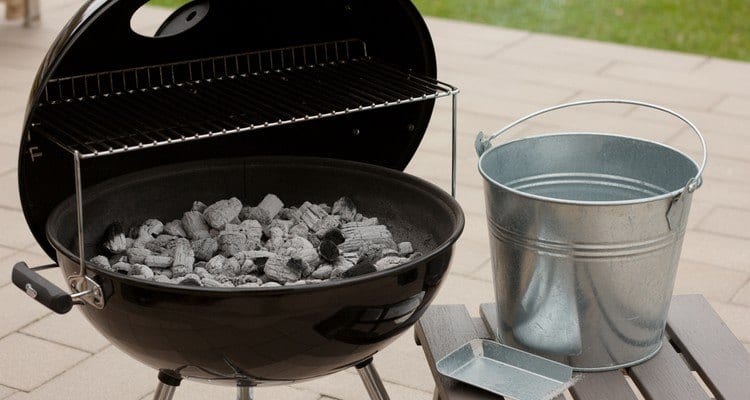
Sweep the ashes through the bottom vents into the catcher, then dispose of them in a metal container—not plastic or cardboard. Ash from natural lump charcoal without additives can be composted or spread in garden beds as a soil amendment.
Step 2: Cleaning the Grill Grates
For the burn-off method, light a chimney of charcoal, place it in the grill, close the lid, and heat the grates at 400–500°F for 10–15 minutes. The heat turns leftover food into brittle ash. Scrub the hot grates with a bristle-free brush or wooden scraper while the residue remains loose.
Step 3: Scrubbing the Interior Bowl and Lid
Black flakes inside the lid are carbonized grease and smoke, not peeling paint from the enameled charcoal grill. Remove the buildup gently with a plastic scraper or crumpled aluminum foil, wash the interior with warm soapy water and a sponge, rinse thoroughly, and let it air-dry.
Step 4: Wiping Down the Exterior
Wash the outside of the kettle or barrel with warm soapy water, then dry it immediately with a microfiber cloth to prevent water spots and surface rust on exposed metal.
| Task | Frequency | Time Required | Why It Matters |
|---|---|---|---|
| Brush grill grates | After every cook | 2-3 minutes | Prevents flavor transfer and buildup |
| Empty the ash catcher | After every cook | 1-2 minutes | Prevents rust and maintains airflow |
| Burn-off method on grates | Every 3-4 cooks | 15-20 minutes | Deep-cleans carbonized residue |
| Scrub interior bowl and lid | 1-2 times per season | 20-30 minutes | Removes carbon flakes and grease |
| Wipe down exterior | 1-2 times per season | 5-10 minutes | Prevents rust and keeps finish intact |
After every cook, prioritize the grates and ash catcher; reserve the longer burn-off, interior, and exterior work for the intervals shown.
Alternative Cleaning Methods Without a Wire Brush
The safest alternatives to a wire grill brush include the onion method, which uses natural acidity and enzymes to loosen grease on hot grates, and the aluminum foil trick, which provides abrasive scrubbing power without shedding dangerous metal bristles.
The Traditional Onion Cleaning Method
Cut a white onion in half and pierce it with a long grilling fork, or hold it firmly with tongs. Rub the cut side face-down over the hot grates with steady pressure. Its moisture, acidity, and enzymes loosen grease and residue without creating a wire-bristle contamination risk.
The Aluminum Foil Trick
Crumple heavy-duty aluminum foil into a tight ball, hold it with long-handled tongs, and scrub the grates while they are still warm.
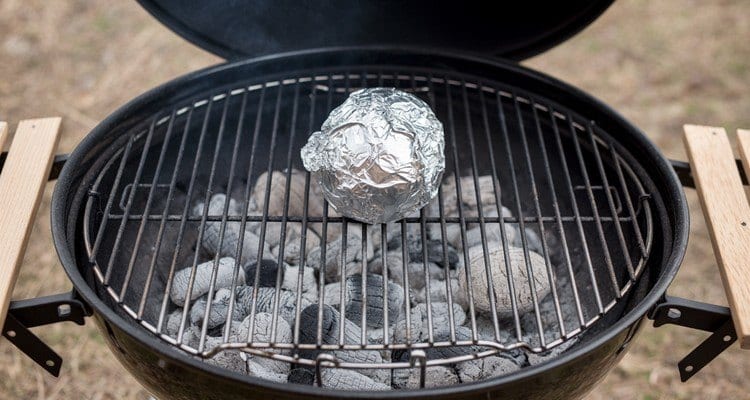
The foil conforms to the grate bars and supplies abrasive cleaning power without shedding small wire pieces into food.
What Cleaners to Use and Avoid
Dawn dish soap and Dawn Powerwash are both safe and effective degreasers for charcoal grill cleaning. Avoid bleach, toxic oven cleaners not formulated for grills, and abrasive steel wool on porcelain-enameled surfaces, which can permanently scratch the finish.
Dawn Dish Soap and Dawn Powerwash
Dawn dish soap works as a food-safe degreaser on grill grates and exterior surfaces. Dawn Powerwash can spot-treat heavy grease on cold grates or the bowl exterior. Rinse every soaped surface thoroughly before cooking again.
What Not to Clean Your Grill With
- Bleach or unapproved oven cleaner: Avoid products not specifically labeled for grills. When using an approved cleaner, rinse every surface completely.
- Abrasive steel wool: Do not use it on porcelain enamel because it scratches and damages the protective finish.
How to Clean Charcoal Stains
For charcoal dust or grease on concrete, mix baking soda and white vinegar into a paste. Apply it to the stain, wait 10–15 minutes, and scrub with a stiff brush. Use a commercial driveway degreaser for stubborn marks.

More Maintenance and Safety Tips
Cleaning Your Chimney Starter
Don’t neglect the chimney starter itself — it’s exposed to the same heat and ash as the grill and rusts just as easily. Empty it completely after each use, and every few weeks, scrub the interior with a wire brush to knock loose flaking rust and residue before it builds up and clogs the airflow holes that get your charcoal going.
Never Use Acetone on a Grill
Acetone is not a safe grill cleaner. It’s highly flammable and gives off toxic fumes, and any residue left behind risks contaminating food the next time you cook. Stick to cleaners actually formulated for grills or food-safe degreasers — never solvents from the garage or workshop.
Shaping a Wooden Scraper to Your Grates
A wooden grill scraper works best once it’s broken in. Press a fresh scraper against your hot, empty grates for a minute before your first real cleaning — the heat chars and shapes the wood’s edge to match your grate pattern, so it grips and clears grime from the ridges more effectively afterward.
Never Pour Water on Hot Coals
Resist the urge to douse hot charcoal with water to speed up cooldown. The sudden temperature change can warp a metal grill bowl or crack a porcelain-enameled one from thermal shock, plus it creates a cloud of steam and ash. Let coals burn out and cool naturally, or smother them by closing the vents.
Off-Season Storage and Covers
Once you’re done cleaning for the season, store the grill under a proper weather-resistant cover, ideally somewhere dry like a garage or covered patio rather than fully exposed outdoors. Damp climates in particular accelerate rust on both the grill body and grates during long stretches of non-use.
Using Heavy-Duty Commercial Degreasers Safely
For years of built-up grease, a commercial-grade grill degreaser cuts through what dish soap can’t, but treat it with respect. Wear protective gloves and work in a ventilated area, follow the dwell time on the label rather than guessing, and rinse thoroughly afterward — any leftover residue can affect the taste of food at your next cook.
Frequently Asked Questions
What is the best way to clean your charcoal grill?
Do you need to clean a charcoal barbecue after every use?
Why is the onion method a traditional grill cleaning technique?
Can I use Dawn dish soap to clean my grill?
Can I use Dawn Powerwash to clean my grill?
What should you not clean your grill with?
How do you clean the inside of a grill lid?
Can you compost charcoal ash?
How long should coals cool before cleaning?
How often should you replace grill grates?
Related BBQ Guides

Hibachi Grills: Authentic Japanese-Style Cooking at Home
Discover the best hibachi grills for 2026, from traditional cast iron models to portable options. Compare features, prices & reviews to find your perfect hibachi

Complete Outdoor Kitchen Planning: Budget to Build
Plan your outdoor kitchen from budget to build. Expert guidance on layouts, utilities, permits, materials & modular options for lasting results.
Best Smoker Caster Wheel Kits for Easy Grill Mobility
Compare the best smoker caster wheel kits for safer grill mobility, stronger locking wheels, and better patio control before your next upgrade.