

It’s 6am Saturday. Your guests arrive at noon. A traditional brisket takes 14 hours – that ship sailed yesterday. The hot and fast brisket method was built for exactly this situation. Cook at 300-325°F instead of 225°F, wrap at the right time, and you’ll have a tender, juicy brisket on the table in 5 to 6 hours without sacrificing the bark or the smoke.
What Is Hot and Fast Brisket?
Hot and fast brisket uses a 300–325°F smoker instead of the traditional 225–250°F range. It produces a smoked, probe-tender brisket in roughly half the conventional cooking time because collagen breakdown depends on both time and temperature.
The method works through three controls:
- Higher heat: Elevated temperatures accelerate the conversion of collagen to gelatin, making a roughly 6-hour cook possible instead of 14 hours at 225°F.
- Timely wrapping: Foil or butcher paper protects the bark and controls moisture once the exterior has set.
- Probe-tender finish: Texture, rather than the clock alone, determines when the brisket is ready.
Competition pitmasters—most famously Myron Mixon—helped popularize the method by cooking briskets at 300°F in foil. The approach works on any smoker that can hold 300–325°F consistently, including pellet grills, offset smokers, kamado grills, and charcoal kettles. Pellet grills simplify temperature control, while offsets require more active fire management.
- Bryco Goods pink butcher paper — preserves more bark texture during the wrapped finish
- Spice Guru BBQ rub set — provides seasoning options for building the brisket bark
- ThermoMaven wireless meat thermometer — tracks the fast cook without repeated lid openings
What are the differences between hot and fast vs. low and slow brisket?
Both methods produce excellent brisket. The differences come down to time, bark development, and how much monitoring the cook requires.
| Factor | Hot and Fast (300-325°F) | Low and Slow (225-250°F) |
|---|---|---|
| Cook Time | 5-6 hours | 12-18 hours |
| Bark Development | Good – needs active management | Deep, well-developed |
| Smoke Ring | Lighter but visible | Prominent |
| Tenderness | Very good with proper rest | Maximum |
| Forgiveness | Lower – more active monitoring | Higher – more forgiving |
| Best For | Same-day cooks, time-constrained | Competition, special occasions |
Neither method is inherently inferior. Low and slow develops a somewhat deeper smoke ring and bark, while a carefully managed hot-and-fast brisket can still deliver excellent backyard results.
What do you need before cooking brisket hot and fast?
Set up the cook around four essentials:
- Whole packer brisket: Start with the flat and point together. USDA Choice is the minimum grade recommended for high heat; Prime or Wagyu adds a larger moisture buffer. Avoid a trimmed flat for a first attempt because it has less fat protection at 300°F.
- Consistent trim: Reduce the fat cap to ¼ inch and remove dense hard fat. Thick patches will not render fully during the shorter cook and can block bark formation.
- Simple seasoning: Apply equal parts coarse kosher salt, coarse black pepper, and garlic powder. Season at least 1 hour ahead, or refrigerate uncovered overnight for dry brining and stronger bark.
- Stable heat and two temperature readings: Use a smoker that holds 300–325°F and a leave-in thermometer that can monitor both the brisket and chamber. Pellet grills are easiest to control, kamados hold steady once adjusted, and offsets need the most fire management.
Starting with a full packer and stable chamber temperature gives the lean flat its best protection during the compressed cooking window.
How do you cook hot and fast brisket step-by-step?
Step 1 – Prep and Season
Trim the cold brisket straight from the refrigerator – cold fat is firmer and easier to trim cleanly. Get the fat cap to ¼ inch, remove all hard fat deposits, and square up the edges to promote even airflow. Apply mustard as a binder (any yellow mustard works – you won’t taste it after the cook), then coat the entire surface generously with your SPG rub. Season at least 1 hour before cooking, or overnight for maximum bark development.
Step 2 – Fire Up to 300-325°F
Bring your smoker to a stable 300-325°F before placing the brisket on. Consistent temperature matters more than hitting an exact number – swinging between 280°F and 340°F is harder on the brisket than holding a steady 310°F. For wood, oak is the standard for beef brisket at any temperature.
It provides a clean, medium smoke flavor that doesn’t overpower the beef. Add cherry for a richer color on the bark and a slightly sweeter flavor note. Hickory works but can become heavy if used alone – pair it with oak for a balanced smoke profile. Avoid mesquite for a long cook; it turns bitter and masks the natural beef flavor.
Direct vs. Indirect Heat Setup for High Heat
When cooking hot and fast, setting up your cooker correctly is vital to prevent scorching. For offset smokers, pellet grills, and kamados, an indirect setup using deflector plates or a heat shield is standard. However, if you are running a drum smoker or charcoal kettle for a “fast and direct” style cook, you must elevate the cooking grate as far from the coals as possible. In direct-heat setups, place the brisket fat-side down to act as a natural heat shield, and consider placing a drip pan filled with water directly beneath the meat to catch drippings and diffuse the intense upward heat.
Step 3 – The First Phase (0 to 160-170°F)
Manage the first 2.5–3 hours in four steps:
- Place the brisket fat side down so the cap shields the lean flat from stronger bottom-up heat at 300°F and above.
- Check the surface after about 2 hours. Lightly spritz dry patches with water, apple juice, or apple cider vinegar.
- Compare the flat and point. If the flat runs more than 30°F hotter, lower the smoker to 275°F for 30–45 minutes before wrapping.
- Rotate 180 degrees halfway through when the cooker has a known hot spot. On direct heat without a deflector, you may flip fat side up for the final hour before wrapping to prevent scorching.
The goal is an evenly set bark and a controlled flat-to-point temperature difference before the wrap.
Step 4 – Wrap the Brisket (The Critical Move)
Wrap at 160–170°F, once the bark is dark, firm, and no longer tacky when pressed.
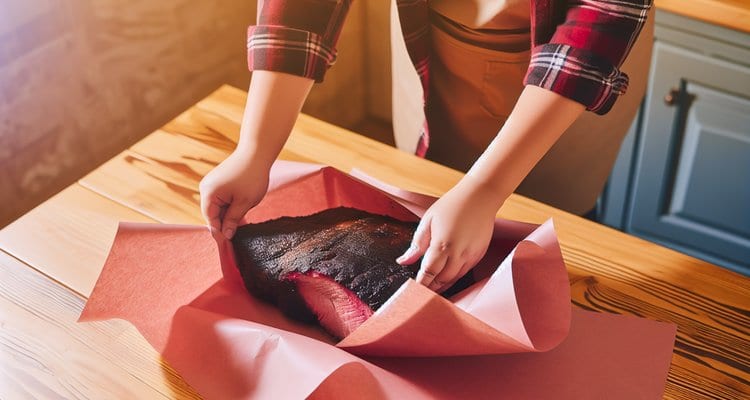
The wrap controls the high-heat finish in three ways:
- Protects the bark from burning as the cook continues at 300°F.
- Limits evaporative cooling through the 150–170°F stall.
- Traps moisture to accelerate collagen breakdown.
Foil is the safer choice for a first hot-and-fast cook because it creates a tightly sealed, high-humidity environment. Before sealing, add 2–3 tablespoons of beef tallow or butter. Pink butcher paper preserves bark texture better but commonly adds 30–45 minutes to the finish.
Should you use butcher paper or foil for hot and fast brisket?
Both wrapping materials are legitimate choices. The right pick depends on your priorities.
| Feature | Pink Butcher Paper | Aluminum Foil |
|---|---|---|
| Bark Preservation | Better – stays firm | Softer bark |
| Moisture Retention | Good | Excellent |
| Cook Time After Wrap | +30-45 min longer | Faster finish |
| Steam Effect | Moderate – paper breathes | High – fully sealed |
| Difficulty | Moderate | Easy |
| Best For | Bark lovers, experienced cooks | Moisture focus, first-timers |
Choose foil for the fastest, most forgiving finish; choose butcher paper when preserving a firmer bark matters more than the extra 30–45 minutes.
Step 5 – Finish to Probe Tender
Return the wrapped brisket to the smoker at 300°F for approximately 1.5–2 hours. Begin checking in the 203–208°F range, then confirm three things:
- Probe the thickest part of the flat. A thermometer or skewer should enter with no resistance, like room-temperature butter.
- Keep cooking if the probe drags. Temperature is a guide, not an automatic pull signal.
- Expect some briskets to reach 206–210°F before the connective tissue is fully tender.
Pull the brisket only when the probe feel confirms the finish.
Finishing Hot and Fast Brisket in the Oven
After wrapping at 160–170°F, the brisket is no longer absorbing smoke. If fuel is low or simpler temperature control would help, move the wrapped meat to a baking sheet in a 300°F oven and continue until probe tender.
Step 6 – The Rest (Don’t Cut This Short)
Rest the brisket for at least 1 hour; 2 hours is better for a hot-and-fast cook:
- Keep the brisket wrapped after it reaches probe tenderness.
- Cover it with a thick towel and place it in a dry cooler.
- Allow carry-over heat to settle. Internal temperature may rise another 5–10°F after the brisket leaves the smoker.
- Wait before slicing so the muscle fibers relax and the juices, fat, and gelatin redistribute.
Cutting early sends moisture onto the board instead of keeping it in each slice.
How to Store and Reheat Leftover Brisket
Store sliced or unsliced brisket tightly wrapped in an airtight container or vacuum-seal bag:
- Refrigerator: Keep for up to 4 days.
- Freezer: Keep for up to 3 months.
- Covered skillet: Reheat slices over medium-low heat with beef broth or BBQ sauce for 3–5 minutes.
- Oven: Heat wrapped portions at 250°F until they reach 165°F internally.
Gentle, covered reheating protects the moisture gained during the rest.
The Foil Pan Braising Method (The Pan Wrap)
For a softer bark and forgiving texture, use a foil pan instead of a tight wrap:
- Place the brisket in an aluminum half-pan.
- Add 1 cup of beef broth, consommé, or beer.
- Seal the pan tightly with heavy-duty aluminum foil.
- Finish at 300°F or above until the brisket is probe tender.
The sealed pan creates a compact braising chamber that accelerates connective-tissue breakdown, trading some bark firmness for a juicy, pull-apart result.
How long does hot and fast brisket take to cook by weight?
Use these as planning guidelines only. Actual cook times vary based on your smoker’s airflow, ambient temperature, and the individual brisket. Probe tender is the only reliable finish signal.
| Brisket Weight | Time to Wrap (~160°F) | Time After Wrap | Estimated Total |
|---|---|---|---|
| 8-10 lbs | 2-2.5 hours | 1.5-2 hours | 4-5 hours |
| 12-14 lbs | 2.5-3 hours | 2-2.5 hours | 5-6 hours |
| 14-16 lbs | 3-3.5 hours | 2.5-3 hours | 6-7 hours |
Add 1–2 hours of rest to the total planning window for every brisket size, and use probe tenderness—not the estimate—as the finish signal.
How do you tell when hot and fast brisket is done?
Confirm all three doneness signals before pulling the brisket:
- Internal temperature: Start checking the flat at 203–208°F. Some leaner Choice-grade flats need 208–210°F, so treat the number as a starting range.
- Probe test: A thermometer probe or thin metal skewer should slide into the thickest part of the flat with no tug or resistance. If it catches, cook another 30 minutes and test again.
- Jiggle test: The flat should move with a soft, loose jiggle rather than feeling firm and stiff.
When the temperature is in range, the probe glides freely, and the flat jiggles, move the wrapped brisket to the cooler for its rest.
What are the most common hot and fast brisket mistakes?
A compressed cook leaves less room for correction. Watch for these five failure points:
- Inconsistent smoker temperature: Avoid swings between 260°F and 350°F. Stabilize the cooker before loading, check every 30–45 minutes, and use a water pan to buffer charcoal or offset heat.
- Insufficient trimming: Reduce the cap uniformly to ¼ inch so thick fat does not insulate the surface and block bark.
- Pulling by temperature alone: A brisket at 205°F that resists the probe still needs more time.
- Shortening the rest: Rest at least 1 hour and preferably 2; a 30-minute rest often produces drier slices.
- Ignoring the flat-point difference: Monitor both muscles. At a 30°F or larger gap, lower the smoker to 275°F for 30–45 minutes before wrapping.
Stable heat, an even trim, probe-based doneness, and a full rest provide the margin that hot-and-fast cooking removes from the clock.
Frequently Asked Questions
How long does hot and fast brisket take?
A typical 12-14 pound packer brisket cooked hot and fast at 300°F takes 5-6 hours of cook time, plus 1-2 hours of rest. Total time from fire-up to slicing is roughly 7-8 hours – about half the time of a traditional low and slow cook.
What temperature do you smoke brisket hot and fast?
The standard hot and fast range is 300-325°F. Most pitmasters settle on 300°F as the target because it’s hot enough to reduce cook time significantly but low enough to give you a workable window before the bark overcooks. Some cook at 325°F for even faster results with very close monitoring.
Should I use butcher paper or foil for hot and fast brisket?
Foil is the safer choice for hot and fast brisket, especially for first-timers. It creates a sealed, high-humidity environment that accelerates collagen breakdown at the elevated temperature and reduces the risk of the flat drying out. Pink butcher paper produces better bark texture but adds 30-45 minutes to the finish time and requires tighter execution.
Can you smoke brisket at 350°F?
Yes, but 350°F significantly compresses your margin for error. At that temperature, the transition from “almost done” to “overcooked” happens fast. Competitive pitmasters sometimes go above 325°F using foil wraps and precise thermometer monitoring. For backyard cooks, 300-325°F is the better range – faster than low and slow with a more manageable window.
Why is my hot and fast brisket tough?
Tough hot and fast brisket almost always means undercooking – not overcooking. The brisket didn’t reach full probe tenderness before you pulled it. Higher cook temperatures don’t eliminate the need for connective tissue breakdown; they just accelerate it. If your brisket is tough, return it to the smoker wrapped and cook another 30-60 minutes, then probe test again.
What internal temperature is hot and fast brisket done?
Target 203-208°F as your starting check range, but use probe tenderness – not temperature alone – as your pull signal. Hot and fast briskets often need to reach 206-210°F before the probe slides in freely, because the shorter cook time at high heat sometimes requires slightly higher internal temps to achieve full collagen conversion.
How long should I rest hot and fast brisket?
Minimum 1 hour, ideally 2 hours. The rest for a hot and fast brisket is more important than for a low and slow cook because carry-over cooking continues longer after a higher-temperature cook. Wrap the brisket in its foil or butcher paper, wrap that in a thick towel, and place it in a dry cooler. It holds safely for up to 4 hours this way.
Does hot and fast brisket have a good smoke ring?
You’ll get a smoke ring, but it’s typically thinner than a low and slow cook. Smoke ring formation requires time for the chemical reaction between smoke particles and myoglobin in the meat. A 6-hour cook produces a lighter ring than a 14-hour cook – but it’s still present and visible when you slice. For maximum smoke ring on a hot and fast brisket, start your cook on a cold brisket straight from the refrigerator.
Is hot and fast brisket as good as low and slow?
Executed well, a hot and fast brisket is excellent BBQ. It won’t have the identical depth of bark or smoke ring of a 14-hour low and slow cook – but the difference is smaller than most people expect, especially when using foil wrap. For a weekend cook where you want great brisket without staying up all night, hot and fast is a legitimate method, not a shortcut.
Can I cook a brisket flat hot and fast?
You can, but it requires extra care. Flats are leaner than packer briskets and have less fat protection against high heat. Keep your smoker at the lower end of the range (300°F, not 325°F), use foil wrap (not butcher paper), and monitor internal temperature closely. Wrap early – around 155-160°F – and add beef tallow or butter inside the foil to compensate for the reduced fat content.
Should I inject a hot and fast brisket?
Injecting is optional but can add insurance moisture and flavor for hot and fast cooks. A simple injection of beef broth, tallow, or a commercial brisket injection applied the night before the cook helps compensate for any moisture loss from the elevated temperature. Competition pitmasters who run hot and fast frequently inject – it’s a hedge against dryness rather than a requirement.
Will brisket cook faster if you cut it in half?
Yes, cutting a large brisket in half by separating the flat and the point will significantly reduce the overall cooking time. Because you are reducing the thickness and thermal mass of each piece, heat penetrates to the center much faster, though you must monitor the leaner flat closely to prevent it from drying out.
Can you partially cook a brisket and finish later?
It is highly discouraged to partially cook a brisket and finish it later due to food safety risks. Pausing the cook allows the meat to drop into the bacterial “danger zone” (40°F to 140°F), which can lead to foodborne illness. Always commit to a continuous cook until the brisket is fully done.
Is it possible to cook a brisket in 2 hours?
No, it is not possible to cook a whole brisket to probe tenderness in just two hours, even at extremely high temperatures. Brisket requires a minimum amount of time for the tough connective tissue (collagen) to melt into gelatin, a process that cannot be rushed in under four to five hours without burning the exterior.
Related BBQ Guides

Perfect Brisket Smoke Rings: Master the Science
Get a perfect smoke ring on brisket every time. Learn the chemistry, technique & temperature control for that signature pink band.
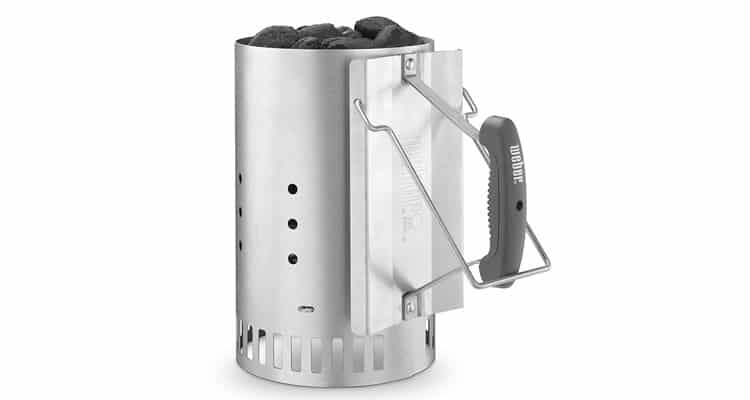
Master Charcoal Lighting: How Weber’s Chimney Transforms Your Grilling
Discover why the Weber Rapidfire Chimney Starter is essential for every charcoal griller. Fast lighting, no chemicals, and perfect results every time.
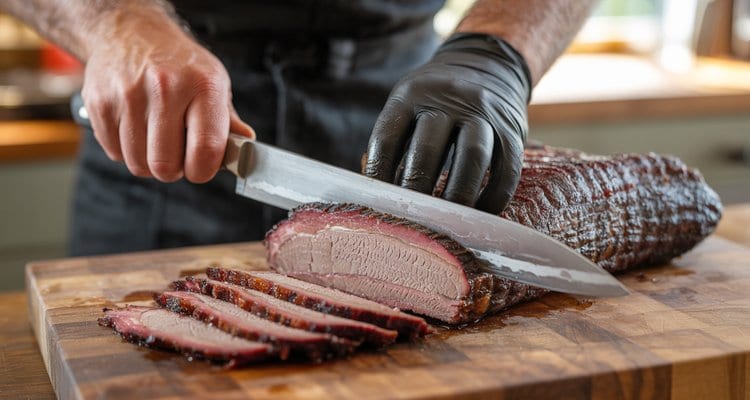
Master Brisket Slicing: Perfect Cuts Every Time
Learn how to cut a brisket the right way, from a whole packer to just the flat or point, with grain direction and slice thickness explained.