

Slicing a smoked brisket often reveals a signature pink band just below the bark. That smoke ring may look impressive, but it adds absolutely no flavor.
This guide focuses on three practical outcomes:
- Understand the chemistry that creates the pink band.
- Control the variables that make a prominent ring more likely.
- Keep appearance in perspective while prioritizing tenderness, moisture, and flavor.
Learning the process builds better fire- and temperature-management skills even when the ring itself is not the goal.
What is a Smoke Ring?
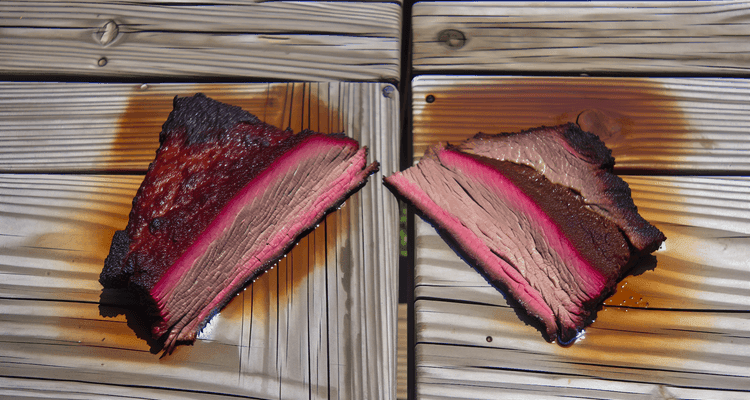
A smoke ring is the pink or red band that appears just below the surface of smoked meat. Its defining characteristics are:
- Typical depth: About 1/8 inch to 1/2 inch.
- Most visible meats: Beef and pork, especially brisket and pork shoulder.
- Less visible meats: Poultry, because it contains less myoglobin.
- Actual cause: A reaction between gases from wood combustion and proteins in the meat—not the amount of visible smoke.
Heavy visible smoke does not guarantee a ring, and a prominent ring can form with very little visible smoke.
The Flavor Myth
Let’s address the biggest misconception in BBQ right now: a smoke ring does not add flavor to your meat. Read that again. Despite what the Instagram photos suggest, this pink band is purely cosmetic. It’s a biological marker of how the meat cooked, nothing more. Some of the best smoked brisket you’ll ever taste comes from restaurants that don’t chase smoke rings at all. The meat’s tenderness, juiciness, and actual smoke flavor come from proper temperature control, quality wood selection, and cooking time-not from that pretty pink line.
Cultural Significance in Competition BBQ
Interestingly, many BBQ competitions specifically instruct judges to ignore the smoke ring when scoring appearance. Why? Because it can be faked using curing salts containing sodium nitrite. A pitmaster can create a “perfect” smoke ring using Morton Tender Quick without ever lighting a fire. This is why serious judges focus on bark quality, moisture, tenderness, and flavor-the attributes that actually matter.
- Bryco Goods pink butcher paper — wraps brisket after the smoke-ring formation window
- Traeger Signature Blend pellets — provides a balanced hardwood smoke profile
- TempPro TP20 500-foot dual-probe wireless meat thermometer — monitors both meat and smoker temperatures
What Is the Science Behind Smoke Ring Formation?
Understanding the chemistry of smoke ring formation transforms you from someone following recipes to someone who understands BBQ at a fundamental level. Let’s break down exactly what’s happening inside that meat.
Understanding Myoglobin
Myoglobin is an oxygen-storing protein found in muscle tissue. It’s what makes raw meat appear red or pink-not blood, which was removed during slaughter. Think of myoglobin as tiny oxygen tanks embedded throughout the muscle fibers, ready to supply oxygen when the animal’s muscles need it. Different meats contain vastly different amounts of myoglobin:
- Beef has the highest myoglobin content, especially in hard-working muscles like the brisket
- Pork has moderate levels, making it the second-best candidate for smoke rings
- Chicken has very low myoglobin, particularly in breast meat, resulting in minimal smoke ring potential
Fresh meat contains more myoglobin than aged meat. Younger animals have less than older animals. And muscles that worked hard during the animal’s life contain more than fatty, sedentary muscles. This is why a beef brisket-a hard-working chest muscle from a mature animal-showcases the most dramatic smoke rings.
The Chemical Reaction
Smoke-ring formation follows this sequence:
- Wood or charcoal combustion releases nitric oxide (NO) and carbon monoxide (CO).
- The gases dissolve into moisture on the surface of cold meat and penetrate its outer layer.
- NO and CO encounter myoglobin. Without those gases, myoglobin bonds with oxygen and changes from red to brown as the meat cooks.
- NO forms nitrosomyoglobin, a compound that remains pink after cooking because NO binds to myoglobin approximately 100,000 times more strongly than oxygen.
- CO forms carboxymyoglobin through a similar process, but its bond is only about 2 times stronger than oxygen.
That difference in bond strength makes nitric oxide the primary driver of the smoke ring.
Is the Smoke Ring Carcinogenic or Unsafe?
A common concern among health-conscious backyard cooks is whether the chemical reaction that creates the pink smoke ring poses any health risks. Because the ring is formed by nitric oxide (NO) and carbon monoxide (CO) binding to myoglobin, some worry about carcinogens. However, the smoke ring itself is completely safe to eat. The trace amounts of NO and CO absorbed by the meat are extremely minute and do not produce harmful compounds. While heavy wood smoke contains polycyclic aromatic hydrocarbons (PAHs) which are studied for health risks, the pink coloration of the ring is simply a natural protein reaction, not a chemical hazard.
Why the Smoke Ring Stops Growing
Here’s the critical limitation: myoglobin denatures (breaks down) when meat reaches approximately 140°F to 170°F internal temperature. Once denatured, the myoglobin turns brown permanently and can no longer form the pink nitrosomyoglobin compound. This creates what I call the “window of opportunity”-the time between when your meat goes on the smoker and when it hits 140°F internally. Everything you do to create a smoke ring must happen within this window. After that, the ring is set, and no amount of additional smoke will make it deeper or more prominent.
| Temperature Range | Myoglobin State | NO/CO Activity | Smoke Ring Status |
|---|---|---|---|
| 32-140°F | Red/Pink (active) | High absorption | Actively forming |
| 140-170°F | Transitioning | Declining | Formation slowing |
| 170°F+ | Brown (denatured) | Minimal | Formation stopped |
The useful formation window closes as myoglobin denatures, so early temperature control matters most.
What Factors Influence Smoke Ring Formation?
Creating a prominent smoke ring isn’t about luck-it’s about understanding and controlling specific variables. Let’s examine each factor that affects whether you’ll get that Instagram-worthy pink band.
Fuel and Wood Selection
Not all fuels produce equal amounts of nitric oxide. The nitrogen content of your fuel determines how much NO will be available to create the smoke ring.
| Wood Type | NO Production | Smoke Ring Potential | Best Use |
|---|---|---|---|
| Hardwood (Oak, Hickory) | High | Excellent | Primary fuel or chunks |
| Charcoal Briquettes | Very High | Excellent | Base fuel + wood |
| Green Wood | High | Excellent | When available |
| Seasoned Hardwood | Medium-High | Very Good | Most common |
| Fruit Woods | Medium | Good | Flavor + moderate ring |
| Sawdust | Low | Poor | Smoke flavor only |
Here’s a surprising fact: charcoal briquettes actually produce more nitrogen compounds than wood because of their manufacturing process. If you’re serious about maximizing smoke ring depth, using charcoal as your base heat source with hardwood chunks added for smoke is more effective than burning pure wood. For a deeper dive into charcoal grilling techniques, check out our comprehensive guide. Green (unseasoned) wood contains more nitrogen than seasoned wood because nitrogen compounds evaporate as wood dries. This is why some competition pitmasters seek out fresh-cut wood. However, green wood is harder to burn cleanly, so this is an advanced technique. Sawdust creates plenty of visible smoke but doesn’t combust long enough to produce significant NO, which is why sawdust-based smoke systems produce weak smoke rings despite heavy smoke output.
Meat Selection and Preparation
The meat you choose determines your smoke ring ceiling. You simply cannot get a thick pink ring on chicken breast-the myoglobin content isn’t there.
| Meat Type | Myoglobin Level | Smoke Ring Potential | Notes |
|---|---|---|---|
| Beef Brisket | Very High | Excellent | Best showcase |
| Beef Ribs | Very High | Excellent | Ideal candidate |
| Pork Shoulder | High | Very Good | Prominent ring |
| Pork Ribs | High | Very Good | Reliable results |
| Pork Loin | Medium | Good | Thinner ring |
| Chicken | Low | Fair | Minimal ring |
| Turkey Breast | Very Low | Poor | Limited potential |
Fat cap thickness matters significantly. NO and CO cannot effectively penetrate thick layers of fat to reach the myoglobin in the underlying meat. If you want a pronounced smoke ring, trim your fat cap to 1/8″ or less. Brisket with a 1/4″ fat cap will develop a ring on the lean side but minimal ring under the fat cap. Fresh meat contains more myoglobin than frozen and thawed meat, though the difference is subtle. What matters more is keeping the meat cold when it goes on the smoker, which we’ll discuss next. Understanding beef grades and quality can also help you select meat with optimal myoglobin content.
Temperature Control
Keep the meat below 140°F for as long as practical to extend the window for NO absorption:
- Start cold: Put the meat on directly from the refrigerator at around 35°F instead of letting it reach room temperature. This can add an hour or more in the smoke-ring formation zone.
- Hold 225-250°F: This is the preferred smoker range because higher heat shortens the absorption window.
- Optional competition start: Some teams begin at 180-200°F for the first hour.
- Avoid hot-and-fast cooking when ring depth is the goal: Temperatures of 275-300°F can still produce excellent BBQ, but the ring is usually thinner because the meat crosses 140°F faster.
Temperature control affects appearance, not whether the finished brisket can be tender and flavorful.
Moisture Management
NO and CO must dissolve into surface moisture before they can penetrate the meat. Maintain that moisture through four controls:
- Use a water pan, especially during the first 2-3 hours, to create humidity that condenses on the surface.
- Wait about 90 minutes before spritzing so the bark begins to set.
- Spritz lightly every 45-60 minutes with water or another mild liquid when the surface looks dry.
- Avoid acidic spritzes such as vinegar, which can inhibit the reaction, and avoid spraying heavily enough to wash off the rub.
A slightly tacky surface is ideal. Because nitric oxide is highly water-soluble, that thin liquid layer carries dissolved gas into the outer meat; a dry, leathery surface acts as a barrier and limits ring depth.
Timing: The Critical First Three Hours
If you take away one thing from this article, let it be this: the first three hours determine your smoke ring. After that, you’re just cooking meat. During hours 1-3, your meat is climbing from refrigerator temperature (35°F) to around 140°F. This is when NO and CO can penetrate and bind with active myoglobin. The ring you see when you slice that brisket 14 hours later was formed entirely during those first three hours. This is why some pitmasters worry obsessively about smoke management early in the cook but become more relaxed later. Once the meat hits 170°F internal, adding more wood won’t deepen the ring-it only adds flavor.
How wrapping Affects Smoke Ring Development
The timing of when you wrap your meat—often called the “Texas Crutch”—has a definitive impact on your smoke ring. Wrapping a brisket in aluminum foil or butcher paper creates an impenetrable physical barrier that completely blocks any further gas penetration. If you wrap your brisket too early (for instance, before the internal temperature reaches 140°F), you will prematurely halt the smoke ring’s development. To ensure a deep, prominent ring, always wait to wrap until the meat has fully transitioned past the 140°F to 150°F mark and your bark has fully set.
How Do You Get the Perfect Smoke Ring on a Brisket?

Now that you understand the science, let’s put it into practice. This step-by-step guide gives you the best chance of creating a prominent smoke ring using proven techniques.
Before You Start: Preparation
- Select the meat. Beef brisket and pork shoulder have high myoglobin content and long cooking times that showcase the ring.
- Trim the fat cap to 1/8 inch. Aggressive trimming trades some moisture protection for better gas penetration. The lean side of a brisket will naturally show a stronger ring than the fat-cap side.
- Keep the meat cold. Store it in the refrigerator until it goes on the smoker instead of warming it on the counter. Some competition teams partially freeze brisket for maximum effect.
- Apply the rub lightly. A thick seasoning crust can impede NO and CO penetration, so use enough for flavor without creating a heavy barrier.
These preparation choices keep myoglobin accessible during the early formation window.
Setting Up Your Smoker
- Choose the fuel. Use charcoal briquettes as the base heat source and add hardwood chunks such as oak, hickory, or mesquite. This combination produces more NO than pure wood or lump charcoal. See the wood selection for smoking guide for more detail.
- Fill a water pan completely. The added humidity helps NO and CO dissolve into and penetrate the surface.
- Preheat to 225-250°F. Consistency matters more than one exact number, but staying below 250°F extends the formation window.
- Prepare 4-6 fist-sized hardwood chunks. Add them throughout the first 3 hours to maintain steady smoke production.
This setup combines predictable heat, available combustion gases, and surface moisture.
The Smoking Process: Hour by Hour
| Hour | Meat Temp Range | Smoker Temp | Action Required | Smoke Ring Status |
|---|---|---|---|---|
| 1 | 32-60°F | 225-250°F | Add wood chunks, no spritz | Actively forming |
| 2 | 60-100°F | 225-250°F | Optional light spritz | Actively forming |
| 3 | 100-140°F | 225-250°F | Monitor bark, light spritz | Formation slowing |
| 4-6 | 140-170°F | 225-250°F | Maintain temp | Formation stopped |
| 7+ | 170-205°F | 225-250°F | Cook to doneness | Ring is set |
Hour 1: Place your cold meat directly on the grates. Add 2-3 hardwood chunks to your charcoal. Maintain 225°F smoker temperature. Don’t open the lid unless absolutely necessary-you want steady heat and smoke. Your meat temp will be climbing from 32°F to around 60°F.
NO and CO absorption is at maximum during this hour. Hour 2: Your bark is beginning to form but isn’t set yet. You can do a very light spritz with water if the surface looks dry, but it’s usually not necessary this early. Add 1-2 more wood chunks if your smoke has thinned out.
Meat temp: 60-100°F. NO and CO absorption remains high. Hour 3: Now your bark is setting up nicely. Give it a light spritz if the surface looks dry-just enough to add moisture without washing off the bark. The meat is approaching the critical 140°F threshold.
Smoke ring formation is slowing down. This is your last chance to maximize penetration. Hours 4-6: Smoke ring formation has stopped. The myoglobin has denatured and turned brown throughout most of the meat, except for that pink band you’ve created. Now you’re just focusing on cooking the meat to your target internal temperature.
You can wrap in butcher paper during this phase without affecting the existing ring. Learn more about using butcher paper for BBQ to get the best results. Hours 7+: For brisket, you’re in the home stretch, pushing toward 195-205°F internal temperature. The smoke ring was set hours ago. Focus on achieving probe-tender doneness and proper resting for maximum juiciness.
Which Smoking Methods Build the Best Smoke Ring?
Different smoking setups produce different results. Here’s how various methods compare for smoke ring creation.
Traditional Wood Smoking
Burning split hardwood logs produces maximum NO and delivers the most authentic BBQ experience. Oak, hickory, and mesquite are traditional choices. The challenge is maintaining consistent temperature-wood fires require constant attention and skill. Best for: Experienced pitmasters who understand fire management and value traditional methods. Smoke ring potential: Excellent, assuming you can control temperature fluctuations.
Charcoal + Wood Chunks (Recommended)
This is the method I recommend for most home cooks. Charcoal briquettes provide stable, predictable heat while wood chunks contribute NO and flavor. You get the best of both worlds: temperature control and smoke ring formation. For a beginner’s guide to smoking, this method offers the highest success rate. Best for: Beginner to intermediate pitmasters seeking reliable results. Smoke ring potential: Excellent. The briquettes’ high nitrogen content actually boosts NO production.
The Smoker ‘Ring of Fire’ (Snake) Method
For kettle grills and bullet smokers, the “Ring of Fire” or snake method is an exceptional charcoal configuration for maximizing smoke ring depth. By laying out charcoal briquettes in a semi-circle or “snake” around the outer edge of your grate and lighting only one end, you create a slow-burning fuse. This configuration maintains a highly consistent, low-temperature combustion (around 225°F) over many hours. Because the fuel burns gradually, it releases a steady, continuous stream of nitric oxide at a low temperature, giving the cold meat maximum exposure time to absorb the gases before the internal temperature climbs past the 140°F threshold.
Water Pan Method
This isn’t a separate fuel method but rather a technique you add to any setup. Placing a water pan in your smoker increases humidity, which enhances NO and CO condensation on the meat surface. Best for: Anyone seeking a deeper smoke ring, regardless of smoker type. Smoke ring potential: Adds 20-30% to ring depth in my experience.
Cold Start Technique
Some advanced pitmasters start with partially frozen or very cold meat (below 32°F if partially frozen). This extends the time the meat spends below 140°F, potentially adding depth to the smoke ring. Best for: Advanced users comfortable with longer cook times. Smoke ring potential: Can add 1/16″ to 1/8″ of additional ring depth, but requires several extra hours of cooking.
| Method | Pros | Cons | Smoke Ring Potential | Skill Level |
|---|---|---|---|---|
| Pure Wood | Maximum NO, authentic | Hard to control temp | Excellent | Advanced |
| Charcoal + Wood | Easy control, reliable | Less traditional | Excellent | Beginner-Int |
| Pellet Smoker | Convenient, consistent | Lower NO production | Good | Beginner |
| Electric + Wood Chips | Easy to use | Minimal NO from element | Fair | Beginner |
| Gas + Wood Chips | Temperature control | Low NO from gas | Fair | Beginner |
Charcoal with wood chunks offers the strongest balance of ring potential, temperature control, and accessibility for most home cooks.
Why Is Your Smoke Ring Not Forming?
Even with perfect technique, smoke rings can be elusive. Here’s how to diagnose and solve common problems.
| Problem | Likely Cause | Solution |
|---|---|---|
| No smoke ring at all | Electric smoker with no wood, or meat started too warm | Use wood chunks/chips, start with cold meat |
| Very thin smoke ring (< 1/8″) | Too hot too fast, thick fat cap | Lower smoker temp, trim fat to 1/8″ |
| Uneven smoke ring | Uneven heat distribution, inconsistent moisture | Rotate meat, ensure even spritzing |
| Ring disappeared after slicing | Only appeared to be weak ring, or lighting issue | Actually may still be there, check under good light |
| Pink throughout (not just ring) | Used curing salt (nitrites) | This is not a true smoke ring |
| Dry bark preventing ring | Rub too thick, no moisture | Apply thinner rub, use water pan |
| Ring stopped too early | Meat heated too quickly | Start with colder meat, lower smoker temp |
Diagnose the missing condition—cold meat, combustion gases, moderate heat, or moisture—before changing the entire cook.
The Seven Most Common Mistakes
- Starting with room-temperature meat: This can shorten the smoke-ring window by 60 minutes or more. Start cold.
- Leaving a thick fat cap: Fat contains no myoglobin and blocks NO and CO from reaching the meat. Trim aggressively.
- Using no wood or too little wood: Gas and electric heat sources produce minimal NO on their own, so actual wood is necessary.
- Smoking at 275°F or higher: Faster heating reduces the available formation time.
- Letting the surface dry out: NO and CO need moisture to dissolve and penetrate; use a water pan and controlled spritzing.
- Applying the rub too thickly: A heavy crust blocks gas penetration during the critical first hours.
- Running an electric smoker without wood: The heating element produces no NO or CO. Add chips or chunks when using an electric smoker.
Most failures trace back to shortening the cold, moist, gas-exposure window.
How Do Experts Maximize the Smoke Ring?
Want to take your smoke ring game to the competition level? These advanced techniques can add that extra depth and visual impact.
Competition-Level Techniques
Start with partially frozen meat. Some championship teams freeze their brisket for 2-3 hours before smoking. The partially frozen surface stays below 140°F for an extra 1-2 hours, allowing deeper NO penetration. This requires extending your total cook time significantly.
Use charcoal briquettes for the nitrogen boost. Lump charcoal burns cleaner, but briquettes contain more nitrogen compounds due to their manufacturing process. For smoke rings, briquettes win. Add celery seed to your rub. Ground celery seed contains natural nitrites that enhance the pink color.
Add 1 teaspoon per batch of rub. It’s not “cheating” like using curing salts, but it’s a gray area in some competition circuits. Maintain surface moisture religiously. Have a spray bottle ready from hour 1. Every time you open the smoker to add wood or check temperature, give the meat a light mist.
Control temperature precisely. A good dual-probe thermometer helps you track both smoker temperature and meat internal temperature. When you see the meat approaching 130°F, you know you have maybe 20-30 minutes left for ring formation.
Maximizing Ring Depth
The difference between a 1/8″ smoke ring and a 1/2″ smoke ring often comes down to these factors:
- Trim fat cap to bare minimum (even less than 1/8″ if you’re confident in moisture management)
- Cold meat (35°F) into low initial temp (200-225°F) for first 2 hours
- Heavy initial smoke (3-4 wood chunks in the first hour alone)
- Water pan filled throughout the entire cook
- Avoid wrapping until after 140°F internal (wrapping earlier cuts off NO/CO access)
What NOT to Do
Don’t use curing salts (Morton Tender Quick, Prague Powder #1) to fake a smoke ring. Yes, they work. Yes, they create a beautiful pink ring. But it’s not a true smoke ring-it’s a curing ring. Most BBQ enthusiasts consider this cheating, and competition judges often recognize the difference.
Don’t judge meat quality by smoke ring. I’ve said it throughout this article, but it bears repeating: a thick smoke ring does not equal better BBQ. Focus on tenderness, moisture, and flavor. If you nail those three and get a great smoke ring, consider it a bonus.
Don’t sacrifice flavor for appearance. Smoke ring formation requires specific techniques (like cold meat and low temps) that extend cooking time. If that doesn’t fit your schedule or style, don’t stress about it. Great BBQ doesn’t require a smoke ring.
Don’t obsess. The smoke ring has become overly fetishized in BBQ culture. Some of the world’s best pitmasters don’t chase it. Your guests will remember the flavor and texture far longer than they’ll remember whether there was a pink line beneath the bark.
Frequently Asked Questions
Does a smoke ring add flavor to the meat?
No. This is the most common misconception about smoke rings. The smoke ring is purely cosmetic-a chemical reaction that preserves the pink color of myoglobin. It adds zero flavor. You can have incredibly flavorful smoked meat with no smoke ring, and bland meat with a perfect ring. The smoke flavor you taste comes from compounds in the smoke that interact with the fat and surface of the meat, not from the pink nitrosomyoglobin band.
What exactly causes a smoke ring to form?
Nitric oxide (NO) and carbon monoxide (CO) from burning wood react with myoglobin in the meat, forming nitrosomyoglobin which stays pink even when cooked. This reaction only occurs before the meat reaches 140-170°F internal temperature. The NO binds about 100,000 times stronger to myoglobin than oxygen does, which is why the pink color persists through cooking while the rest of the meat turns brown.
Can you get a smoke ring with an electric smoker?
It’s difficult but not impossible. Electric heating elements produce no NO or CO, so you must use wood chips or chunks to generate these gases. The smoke ring will be minimal compared to charcoal or wood-fired smokers. To maximize your chances: add moisture with a water pan, use plenty of wood chips/chunks, start with very cold meat, and maintain low temperatures (225°F) for as long as possible.
Why doesn’t my meat have a smoke ring?
Common causes: (1) Started with warm meat instead of refrigerator-cold, (2) Smoked too hot/fast, pushing through the 140°F threshold quickly, (3) Thick fat cap blocking NO/CO penetration, (4) No wood used (gas or electric with no wood chips), (5) Electric smoker without wood chips, (6) Rub applied too thick, (7) Dry meat surface with no moisture for NO/CO to dissolve into.
Can you fake a smoke ring?
Yes, unfortunately. Curing agents like Morton Tender Quick or Prague Powder #1 contain sodium nitrite which creates a pink ring without smoke. This is why competition judges often ignore smoke rings-they can be chemically produced. Some pitmasters also add ground celery seed to rubs, which contains natural nitrites. While less egregious than curing salts, it’s a gray area in competitions.
What’s the best wood for creating smoke rings?
Hardwoods like oak, hickory, and mesquite produce the most nitric oxide. Charcoal briquettes actually produce even more nitrogen compounds than wood. Green (unseasoned) wood produces more NO than dried wood, though it’s harder to burn cleanly. Avoid sawdust-it creates smoke but combusts too quickly to produce significant NO. For maximum smoke ring: charcoal briquettes as base fuel + oak or hickory chunks for smoke. For more information on wood selection, check out our guide to choosing the best wood pellets.
At what temperature does the smoke ring stop forming?
Generally around 140°F for most meats, though some research suggests up to 170°F for beef. Once myoglobin denatures (turns brown permanently), it can’t form new nitrosomyoglobin. This is why the first 2-3 hours are critical-that’s when your meat is climbing from refrigerator temperature (35°F) to the denaturation threshold (140-170°F). Everything after that is just cooking to your target doneness.
Should I start with cold meat from the refrigerator?
Yes! Cold meat stays below 140°F longer, giving NO and CO more time to penetrate and react with myoglobin. Meat straight from the fridge (35°F) vs. room temperature meat (70°F) can mean an extra 45-60 minutes in the smoke ring formation zone. Some competition pitmasters even start with partially frozen meat for maximum smoke ring depth, though this requires significantly longer cooking times.
How thick should a smoke ring be?
Typically 1/8″ to 1/2″ thick. Thicker isn’t necessarily better-remember, it’s not a flavor indicator. A 1/4″ ring is considered good and visually impressive. Anything beyond 1/2″ is exceptional but doesn’t improve the meat’s quality. A thin 1/8″ ring on a tender, juicy, flavorful brisket beats a thick 1/2″ ring on dry, bland meat every single time.
Is a smoke ring important for competition BBQ?
Interestingly, many competitions instruct judges to ignore smoke rings because they can be faked with curing agents. However, a nice smoke ring can enhance visual appeal, which factors into appearance scores. The best competition strategy: focus on flavor, tenderness, and juiciness-those actually matter. If you get a good smoke ring as a byproduct of proper technique, great. But don’t sacrifice cooking fundamentals to chase a cosmetic feature.
Why does my smoke ring look uneven?
Uneven heat distribution, inconsistent fat trimming, or uneven moisture on the meat surface. Ensure your smoker has good airflow and consistent heat across the cooking surface. Rotate the meat 180 degrees at the 90-minute mark if your smoker has hot spots. Trim fat evenly across the entire surface. When spritzing, make sure you’re hitting all surfaces uniformly, not just the side facing you.
Can I still get a smoke ring if I wrap my meat in foil?
Yes, but only if the ring has already formed before wrapping. Once you wrap (typically around 150-160°F internal temperature), NO and CO can’t reach the meat anymore because the foil creates a barrier. The existing ring will remain intact-the pink nitrosomyoglobin is stable and won’t turn brown. But no new ring will form after wrapping. This is fine since the smoke ring is usually fully set by 140°F anyway.
What is the 3 2 1 brisket rule?
The 3-2-1 rule is a popular method primarily used for smoking ribs, but some backyard cooks adapt it for brisket. It involves smoking the meat unwrapped for 3 hours, wrapping it tightly with liquid for 2 hours to tenderize, and finishing it unwrapped for 1 hour to firm up the bark. While it helps beginners manage cook times, it is generally not recommended for large beef briskets, which require much longer, slower cooking to render fat properly.
What is the 4 2 10 rule brisket?
The 4-2-10 rule is a structured timeline used by some pitmasters to smoke a brisket. It breaks the cook down into smoking the brisket unwrapped for 4 hours, wrapping it in foil or butcher paper for 2 hours to push through the stall, and then resting it in an insulated cooler for 10 hours. This extended rest is a crucial secret to achieving maximum tenderness and moisture retention before slicing.
Conclusion
The smoke ring represents one of BBQ’s most beautiful paradoxes: it’s simultaneously meaningless and deeply significant. Meaningless because it adds no flavor and doesn’t indicate quality. Significant because it demonstrates an understanding of meat chemistry, fire management, and patience-the core skills that separate great pitmasters from weekend grillers.
Key Takeaways
- Smoke ring equals visual appeal, not flavor. Never confuse aesthetics with quality.
- The science: NO and CO from wood combustion plus myoglobin in meat equals pink nitrosomyoglobin.
- Critical factors: Cold meat, low temperature, moisture, hardwood, and the first 3 hours.
- First 3 hours are make-or-break. After the meat hits 140-170°F, smoke ring formation stops.
- Don’t obsess. Great BBQ doesn’t require a smoke ring. Tenderness, juiciness, and flavor matter more.
The Bigger Picture
Now that you understand smoke ring formation, you’ve gained something more valuable than the ability to create a pink band: you understand the intersection of chemistry, temperature, and time that defines all great BBQ. This same knowledge applies to bark formation, fat rendering, collagen breakdown, and moisture retention.
Next Steps
On the next brisket, put the process into practice with this checklist:
- Start with cold meat over charcoal plus hardwood chunks.
- Track smoker and meat temperatures with a dual-probe thermometer.
- Maintain surface moisture with a water pan and periodic spritzing.
- Prioritize the fundamentals: steady heat, good bark, proper doneness, tenderness, moisture, and flavor.
A trophy-worthy smoke ring is a bonus, not the definition of great BBQ. Whether the pink band is deep or absent, judge the cook by how the brisket tastes and eats.
Related BBQ Guides
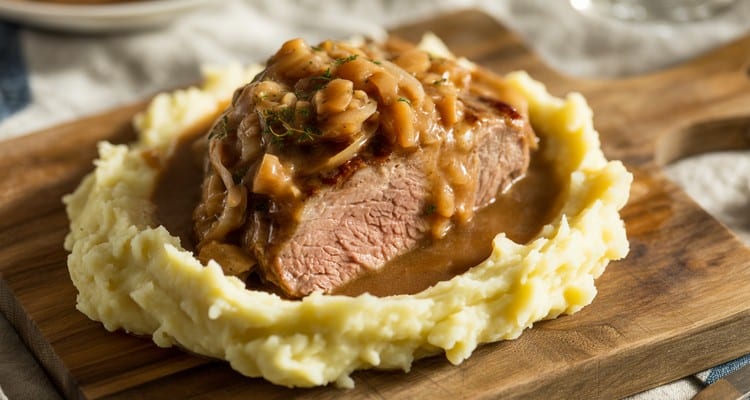
Tender Smothered Pork Steaks with Rich Onion Gravy
Learn this smothered pork steak recipe with pork shoulder steaks, onion gravy, searing tips, braising time, storage advice, and smoky BBQ options.
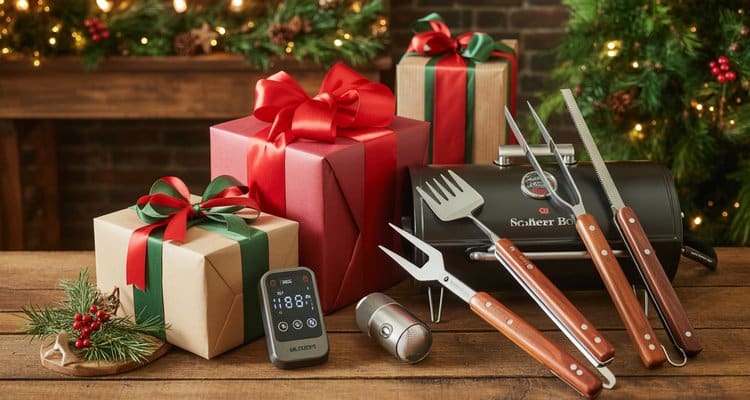
Ultimate Gift Guide for Smokers: Gear They’ll Actually Use
Discover the top smoker accessories and grilling gifts for 2026. Expert picks include thermometers, tool sets & specialty items pitmasters actually use.
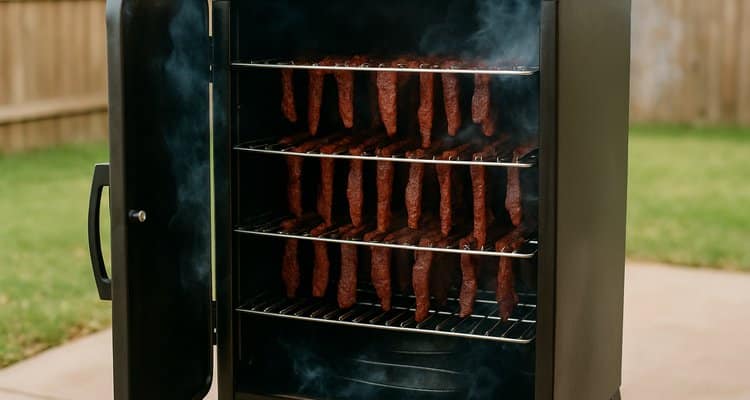
Ultimate Guide to Smokers for Jerky: Perfect Results
Discover the best smokers for homemade jerky with consistent heat control, smoke generation & ample rack space. Expert tested picks.