

Standing in front of a wall of smokers at your local BBQ store, feeling completely overwhelmed—you’re not alone. With electric models promising push-button convenience, ceramic kamados boasting ancient Japanese heritage, and traditional offset smokers that look like they belong at a competition, choosing the right smoker can feel impossible. Each type has its own personality, strengths, and ideal use cases.
At its core, a smoker is any cooker built to hold low, steady temperatures (typically 200–275°F) for hours using indirect heat and wood smoke — the opposite of a standard grill, which is built for quick, direct high-heat cooking. Some smokers double as grills, but the two jobs pull in different directions. You’ll sometimes see smokers simplified into four broad fuel categories — charcoal, gas, electric, and wood/pellet — but that framing hides a lot of real variation, which is why we break things down into eight distinct styles below.
The smoker you choose fundamentally changes your BBQ experience. An electric smoker transforms smoking into a set-and-forget process perfect for beginners, while a traditional offset smoker demands constant attention but rewards you with authentic competition-level flavor. Between these extremes lie pellet smokers combining technology with wood-fired taste, versatile kamado grills that can sear steaks and smoke brisket, and reliable charcoal bullets that have created backyard pitmasters for decades.
In this comprehensive guide, we’ll walk through eight major types of smokers, covering everything from how each works to their pros, cons, and who they’re best suited for. To help you find the perfect fit, we’ll walk through each type of smoker, starting with the easiest set-and-forget models and progressing to the traditional, hands-on smokers loved by pitmasters. Whether you’re a complete beginner looking for your first smoker or an experienced cook considering an upgrade, this guide will help you confidently choose the right smoker for your skill level, budget, and cooking style.
Smoker Types Comparison Table
| Smoker Type | Best For | Skill Level | Temp Control | Flavor Profile | Avg. Cost | Fuel Type |
|---|---|---|---|---|---|---|
| Electric Smokers | Complete beginners, apartment dwellers | Beginner | Easy (automatic) | Mild smoke | $150-$800 | Electricity + wood chips |
| Pellet Smokers | Tech enthusiasts, multi-purpose cooking | Beginner-Intermediate | Easy (PID control) | Good wood smoke | $400-$2000+ | Wood pellets + electricity |
| Gas/Propane Smokers | Frequent smokers wanting convenience | Beginner-Intermediate | Easy (knob control) | Good smoke | $200-$700 | Propane + wood chips |
| Charcoal Smokers (Vertical) | BBQ enthusiasts, portable needs | Intermediate | Moderate (vent control) | Excellent authentic smoke | $100-$600 | Charcoal + wood chunks |
| Kamado Grills | All-in-one versatility seekers | Intermediate | Moderate (precise vents) | Excellent rich smoke | $500-$3000+ | Charcoal + wood chunks |
| Drum Smokers | DIY enthusiasts, budget-conscious | Intermediate | Moderate (minimal vents) | Excellent strong smoke | $150-$600 | Charcoal + wood chunks |
| Offset Smokers | Serious pitmasters, large cooks | Advanced | Manual (constant management) | Authentic competition smoke | $800-$3000+ | Wood logs or charcoal |
| Gravity-Fed Smokers | Charcoal lovers wanting long burns | Beginner-Intermediate | Easy (gravity automation) | Excellent charcoal smoke | $600-$1500+ | Charcoal + wood chunks |
Electric Smokers
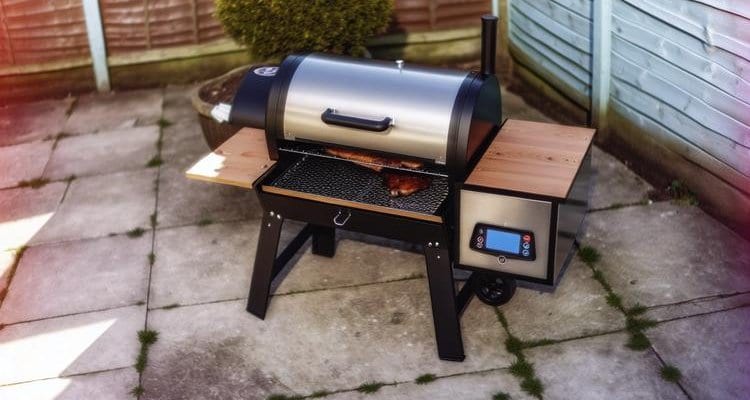
How Electric Smokers Work
Electric smokers operate like outdoor ovens specifically designed for smoking meat. An electric heating element at the bottom of the unit generates consistent heat, while wood chips or chunks placed on a tray above the element smolder to produce smoke. A digital thermostat automatically maintains your target temperature, adjusting the heating element as needed without any intervention from you.
Inside the smoker, a water pan sits above the wood chip tray, creating a moist cooking environment that prevents meat from drying out. The smoke rises past the water pan and circulates around your food on the cooking grates above. Most electric smokers feature a vertical cabinet design with multiple racks, allowing you to smoke several pieces of meat simultaneously.
The temperature range on most electric smokers runs from 100°F to 275°F, perfect for traditional low-and-slow smoking but limiting for higher-temperature cooking. Higher-end models include Bluetooth or WiFi connectivity, letting you monitor and adjust temperatures from your smartphone. Unlike wood or charcoal smokers, electric units don’t produce combustion gases, which means you won’t get the pink smoke ring on your meat—but the flavor is still there.
Pros
- Ultimate set-and-forget convenience: Set your temperature and walk away—the smoker maintains heat automatically for hours
- Perfect for beginners: Zero learning curve; if you can use an oven, you can use an electric smoker
- Consistent temperature control: Digital thermostats eliminate temperature swings common with fire-based smokers
- Minimal cleanup: No ash to deal with, just empty the wood chip tray and wipe down the interior
- Apartment and condo friendly: Many buildings that prohibit charcoal and gas allow electric smokers
- Affordable entry point: Quality beginner models start around $150-$250
Cons
- Least authentic smoke flavor: The smoke is more subtle compared to wood or charcoal burning—great if you prefer mild smoke, disappointing if you want intense BBQ flavor
- Requires electricity: You need an outdoor electrical outlet, limiting placement options
- Cannot be left outside long-term: As an electrical appliance, it needs protection from the elements when not in use
- Less traditional BBQ experience: No fire management means missing out on the hands-on craft many BBQ enthusiasts enjoy
- No smoke ring: Without combustion, you won’t get the prized pink smoke ring on your meat
Best For
Electric smokers are ideal for complete beginners taking their first steps into smoking, apartment or condo dwellers with space restrictions or fire prohibitions, anyone who prioritizes convenience over authentic flavor intensity, and cooks who want set-and-forget operation with minimal babysitting. If you value simplicity and consistent results over the traditional BBQ experience, an electric smoker delivers reliably every time.
Key Specifications
- Skill Level: Beginner (easiest to master)
- Price Range: $150-$800 (budget to premium)
- Fuel: Electricity + wood chips for smoke
- Maintenance: Easy—electrical appliance care, periodic cleaning
- Learning Curve: Days (nearly instant mastery)
- Temperature Range: 100-275°F typical
For a detailed technical breakdown, check out our guide on how electric smokers work.
- ThermoMaven wireless meat thermometer — monitor cooks remotely across any smoker type
- Traeger Signature Blend pellets — an easy all-around fuel for pellet grills
- Grill Armor extra-long heat-resistant gloves — safely handle hot grates, pans, and smoker parts
- ThermoMaven bristle-free grill brush — scrub grates clean, leaving no wire behind
Pellet Smokers
How Pellet Smokers Work
Pellet smokers represent a high-tech fusion of traditional wood-fired flavor and modern automation. These cookers burn compressed wood sawdust pellets—the same pellets used in pellet stoves—to generate both heat and smoke. A large hopper mounted on the side holds pounds of pellets, gravity-feeding them to an electric auger (a spiral drill) that automatically delivers fuel to an internal firepot located inside the cooking chamber.
Inside the firepot, a hot rod ignites the pellets, creating heat and smoke simultaneously. The auger continuously feeds pellets from the hopper through a horizontal tube into the firepot, where they combust and produce the smoke that flavors your food. A sophisticated PID (Proportional-Integral-Derivative) controller acts as the brain, constantly monitoring the cooking temperature and adjusting the auger’s pellet feed rate to maintain your target heat. If the temperature drops, more pellets feed in; if it rises, the feed slows. This precision rivals electric smokers while delivering authentic wood smoke.
Most pellet smokers can handle temperatures from 180°F for cold smoking up to 500-600°F for grilling and searing, making them genuinely versatile outdoor cookers. WiFi connectivity is standard on most modern models, allowing you to monitor and adjust temperatures, receive alerts, and even change cooking modes from your phone—all while sitting inside watching the game.
Pros
- Excellent temperature consistency: PID controllers maintain temps within ±5-10°F, rivaling electric smokers
- True “set and forget” with automation: Fill the hopper, set your temp, and let the smoker do the work for hours
- Versatile cooking: Smoke low-and-slow at 225°F, then crank to 450°F to sear—all on the same unit
- Wood-fired flavor better than electric: Burning real wood produces authentic smoke that electric smokers can’t match
- WiFi/app control on most models: Modern convenience meets traditional BBQ
- Large cooking capacity: Most pellet smokers offer 500-1000+ square inches of cooking space
- Beginner-friendly with advanced features: Easy to use but offers room to grow your skills
Cons
- Higher initial cost: Quality pellet smokers start around $400 and easily exceed $2000 for premium models
- Requires electricity: The auger and controller need power, limiting true portability
- Moving parts can fail: Augers jam, controllers malfunction, and hot rods burn out—mechanical complexity means more potential problems
- Pellet quality matters: Cheap pellets with high filler content produce excess ash and can cause auger jams
- Not as portable: Heavy units requiring electricity don’t travel well
- More mechanical complexity: Compared to simple charcoal smokers, there’s more that can go wrong
Best For
Pellet smokers excel for tech enthusiasts who appreciate precision digital controls, cooks wanting wood flavor without managing fire, anyone needing multi-purpose outdoor cooking beyond just smoking, and BBQ lovers who value consistency and convenience over hands-on fire management. If you want to smoke a brisket overnight without waking up every hour to check temperatures, a pellet smoker delivers.
Comparison: Electric vs Pellet Smokers
Since “electric vs pellet smoker” is one of the most common comparison questions, here’s the quick breakdown: pellet smokers produce significantly heavier, more authentic smoke flavor than electric models because they burn real wood pellets. Both offer excellent convenience with automatic temperature control, but pellets add genuine wood-burning authenticity. Pellet smokers are more versatile—capable of smoking, grilling, baking, and roasting—while electric smokers focus solely on low-and-slow smoking. The tradeoff? Pellets cost more upfront and have moving parts that can fail, while electric smokers are simpler, cheaper, and have fewer maintenance concerns. Choose pellets for better flavor and versatility; choose electric for ultimate simplicity and lower cost.
Key Specifications
- Skill Level: Beginner to Intermediate
- Price Range: $400-$2000+ (mid-range to premium)
- Fuel: Wood pellets + electricity for auger/controller
- Maintenance: Moderate (clean ash, grease, check auger mechanism)
- Learning Curve: Weeks (mastering pellet types, temp settings, smoke profiles)
- Temperature Range: 180-500°F (some models to 600°F+)
Pellet quality dramatically affects performance—learn about choosing the right wood pellets for optimal results.
Gas/Propane Smokers
Gas smokers bridge the gap between charcoal flavor and electric convenience. These vertical cookers use propane burners to generate heat and smoke wood chips placed near the flame. Think of them as the middle ground: easier than charcoal but with more authentic smoke character than electric.
How Gas Smokers Work
A propane burner sits at the bottom of the cabinet, controlled by adjustable valves that regulate gas flow from a standard propane tank. Above the burner, a metal tray or cast-iron box holds wood chips or chunks, which smolder when heated to produce smoke. The heat rises through the vertical chamber past water pans (on most models) and multiple cooking racks, creating indirect convection cooking. Temperature control comes from adjusting the gas valve—more gas equals higher heat, less gas brings temps down. Most gas smokers feature built-in thermometers, and better models include dampers for additional airflow control.
Pros
- Quick startup: Light the burner and you’re smoking in 15-20 minutes—no waiting for charcoal to ash over
- Easy temperature adjustment: Turn a knob to raise or lower heat instantly
- Long cook times without refueling: A standard 20-pound propane tank can run 15-20 hours of smoking
- More portable than electric: No electrical outlet required, works anywhere with a propane tank
- Better smoke flavor than electric: Wood chips smoldering over gas flame produce more authentic smoke than electric heating elements
- Affordable entry point: Quality gas smokers start around $150-$250
Cons
- Not as easy as electric or pellet: Requires more monitoring than fully automated smokers
- Manual wood chip addition: You’ll need to add fresh chips every 45-90 minutes for continuous smoke
- Less smoke flavor than charcoal or wood: Propane burns very clean, so all smoke comes from the wood chips—you won’t get the rich, layered smoke of burning charcoal
- Temperature fluctuations: Wind and weather affect propane smokers more than insulated electrics
- Ongoing propane costs: While tanks are cheap, you’ll need refills regularly
Best For
Gas smokers are ideal for beginners who want more smoke flavor than electric models provide but aren’t ready to manage charcoal fires, outdoor enthusiasts who need portability without electrical dependence, apartment or condo dwellers where charcoal may be restricted but propane is allowed, and anyone wanting faster startup times and easier temperature control than traditional smokers. If you’re stepping up from an electric but offset smokers seem too demanding, gas is your sweet spot.
Key Specifications
- Skill Level: Beginner to Intermediate
- Price Range: $150-$600 (budget-friendly to mid-range)
- Fuel: Propane + wood chips/chunks
- Maintenance: Easy (clean grease, ash from wood chips)
- Learning Curve: Days to weeks (mastering wood chip timing, temperature stability)
- Temperature Range: 200-275°F typical (some models to 325°F)
Charcoal Smokers (Vertical/Bullet)
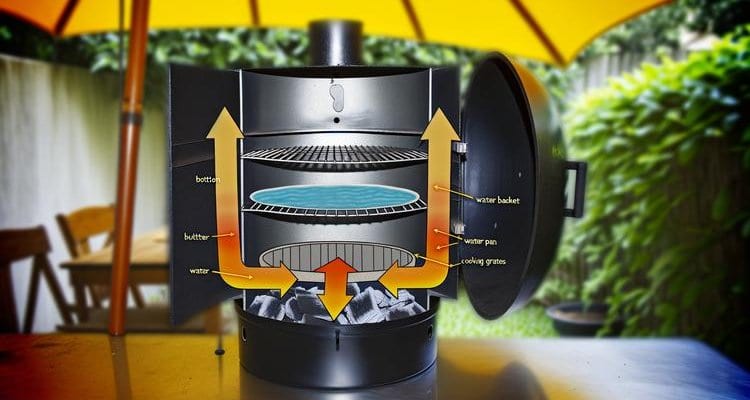
The charcoal bullet smoker—epitomized by the iconic Weber Smokey Mountain—represents the gold standard for smoke flavor enthusiasts who want hands-on control without the complexity of offset smokers. These vertical cookers use burning charcoal and wood chunks to create smoke, heat, and the unmistakable flavor purists crave.
How Charcoal Smokers Work
Picture a vertical barrel with three distinct zones: charcoal chamber at the bottom, water pan in the middle, and cooking grates near the top. You light charcoal in the bottom chamber (many pitmasters use the minion method—placing lit coals on top of unlit ones for extended burns), then control temperature through bottom intake vents and a top chimney damper. More airflow feeds the fire and raises temperature; restricting air lowers heat. The water pan serves double duty: it stabilizes temperature by adding thermal mass and keeps the cooking environment moist. Wood chunks placed on the hot charcoal smolder and smoke, infusing meat with rich, authentic BBQ flavor. The vertical design creates excellent airflow and even heat distribution through natural convection.
Pros
- Exceptional smoke flavor: Burning charcoal plus wood chunks creates the deep, complex smoke profile that defines championship BBQ
- Affordable excellence: The Weber Smokey Mountain 18″ costs around $400 and competes with smokers 3x the price
- No electricity required: Truly portable and works anywhere
- Efficient fuel use: The minion method can provide 8-12 hours of steady heat from one charcoal load
- Excellent heat retention: Thick metal construction holds temperature remarkably well
- Large cooking capacity: Two-tier grate design in most models provides 400-700+ square inches
Cons
- Requires fire management skills: You’re manually controlling airflow, adding fuel, and monitoring temperatures
- Longer startup time: Getting charcoal lit and temps stabilized takes 30-45 minutes
- Messy cleanup: Charcoal ash requires disposal after every cook
- Temperature fluctuations: Wind, weather, and fuel consumption affect heat more than automated smokers
- Learning curve required: Mastering vent control and fire management takes several cooks
Best For
Charcoal vertical smokers excel for flavor-focused pitmasters who prioritize authentic smoke over convenience, home cooks ready to develop real fire-management skills, BBQ competitors on a budget (the Weber Smokey Mountain dominates amateur competition circuits), and anyone who enjoys the hands-on ritual of traditional smoking. If you want championship-quality results without the price tag of a pellet smoker or the intimidation factor of an offset, a bullet smoker is your answer.
Popular Brands
Weber Smokey Mountain (the industry standard), Pit Barrel Cooker (drum-style variation), Dyna-Glo
Key Specifications
- Skill Level: Intermediate
- Price Range: $250-$600
- Fuel: Charcoal + wood chunks
- Maintenance: Moderate (ash removal, water pan cleaning, occasional deep clean)
- Learning Curve: Weeks to months (vent control mastery, minion method technique)
- Temperature Range: 225-275°F typical (can push to 325°F+)
Kamado Grills
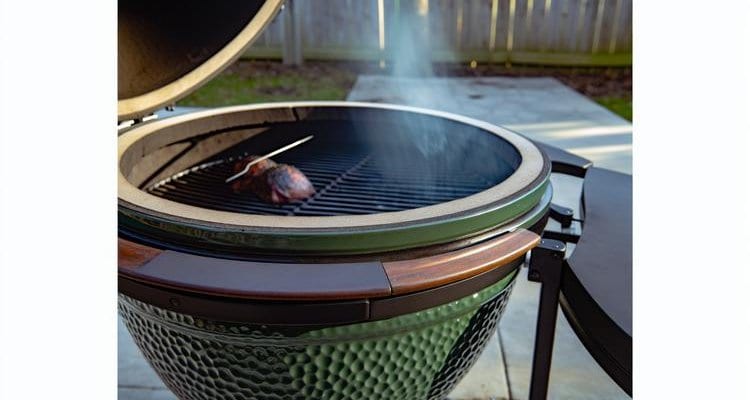
Kamado grills are the premium category of outdoor cooking—thick ceramic egg-shaped cookers that excel at smoking, grilling, roasting, and even baking pizza. These ancient-design cookers (originating in Japan over 3000 years ago) combine exceptional heat retention, fuel efficiency, and true versatility in one beautiful, heavy package.
How Kamado Grills Work
Thick ceramic walls (typically 1-2 inches) create an insulated cooking chamber that holds heat and moisture like no other smoker type. Charcoal burns in a bottom firebox with precisely controlled airflow entering through bottom vents and escaping through a top chimney cap. The ceramic construction provides 360-degree even heat distribution and requires minimal fuel—a single load of lump charcoal can burn for 12-18 hours at low smoking temperatures. The oval or egg shape promotes efficient airflow circulation, while the heavy ceramic mass stabilizes temperature against external weather conditions. Adjusting the bottom intake vent and top cap allows incredibly precise temperature control from 200°F low-and-slow smoking up to 700°F+ pizza-baking temps.
Pros
- Unmatched versatility: Smoke brisket at 225°F Saturday, grill burgers at 500°F Sunday, bake pizza at 700°F Monday—one cooker does it all
- Exceptional fuel efficiency: Thick ceramic insulation means you’ll use far less charcoal than traditional smokers
- Superior heat retention: Once dialed in, temps hold rock-steady for hours without adjustment
- All-weather performance: Excellent for cold-climate smoking when thin-metal smokers struggle
- Rich smoke flavor: Burning lump charcoal and wood creates authentic BBQ character
- Built to last decades: Ceramic construction doesn’t rust, and quality kamados outlive cheaper metal smokers by years
- Minimal ash production: Efficient burns create less waste and easier cleanup
Cons
- Expensive investment: Quality kamados start around $500 and premium models (Big Green Egg, Kamado Joe) easily exceed $1500-$2000
- Extremely heavy: A large Big Green Egg weighs 200+ pounds—not truly portable despite marketing
- Ceramic can crack: Drop it, tip it, or thermal shock it (cold water on hot ceramic), and you risk expensive damage
- Learning curve for temperature control: Overshooting your target temp means waiting for the massive ceramic mass to cool down
- Smaller cooking surface: Compared to similarly-priced pellet or offset smokers, kamados offer less square footage
Best For
Kamado grills are ideal for serious outdoor cooking enthusiasts who want one premium cooker that does everything, year-round cooks in cold climates where insulation matters, those who value quality and longevity over initial cost savings, and cooks who appreciate both low-and-slow smoking and high-heat searing capability. If you’re choosing between a gas grill and a smoker, consider spending on a kamado that replaces both.
The Big Green Egg kamado grill represents the category’s premium standard with unmatched build quality and lifetime ceramics warranty.
Popular Brands
Big Green Egg (the category leader), Kamado Joe (feature-rich competitor), Primo (oval shape for more cooking surface)
Key Specifications
- Skill Level: Intermediate
- Price Range: $500-$3000+
- Fuel: Lump charcoal + wood chunks
- Maintenance: Moderate (ash removal, ceramic care, gasket replacement every few years)
- Learning Curve: Weeks to months (temperature overshooting management, vent control mastery)
- Temperature Range: 200-750°F+ (true low-and-slow to high-heat searing)
Drum Smokers (Ugly Drum Smoker)
The Ugly Drum Smoker (UDS) embodies the “less is more” philosophy of BBQ. Built from a simple 55-gallon drum with minimal parts, these no-frills cookers deliver excellent smoke flavor and surprising cooking capacity at a fraction of traditional smoker costs. Don’t let the utilitarian appearance fool you—drum smokers produce competition-quality results.
How Drum Smokers Work
Picture a vertical 55-gallon drum with a charcoal basket at the bottom, cooking grate near the top, and minimal vents for airflow control. That’s it. You light charcoal in the bottom basket (many UDS users employ the minion method for extended burns), and heat rises directly upward to the cooking grate. Most drum smokers skip water pans entirely, creating a drier cooking environment with direct radiant heat. Temperature control comes from adjusting bottom intake vents and a simple lid—more air raises temps, less air brings them down. The design is remarkably efficient: a single charcoal load can run 10-12 hours at steady smoking temperatures. The large diameter provides generous cooking capacity despite the simple construction.
Pros
- Incredibly affordable: DIY kits cost under $200, or build your own for even less
- Simple design with few failure points: No electronics, no moving parts, no complicated mechanisms
- Large cooking capacity: The wide drum diameter accommodates multiple full racks of ribs or whole packer briskets
- Lightweight and portable: Far easier to move than ceramic kamados or heavy offset smokers
- Efficient fuel use: The sealed environment and minimal air leaks stretch charcoal burns
- Strong smoke flavor: Direct heat from burning charcoal creates robust BBQ character
Cons
- Basic appearance: Called “ugly” for a reason—not winning backyard beauty contests
- No water pan requires skill: The dry heat environment can produce dry meat if you don’t manage moisture carefully
- Learning curve for moisture management: Spritzing, wrapping, or adding water pans becomes critical
- Manual control only: No thermostats, no automation, no conveniences
- DIY versions need assembly: Kits require drilling, bolt installation, and basic handyman skills
Best For
Drum smokers excel for DIY enthusiasts who enjoy building and customizing, budget-conscious cooks wanting maximum performance per dollar, minimalists who appreciate simple, effective designs, and those comfortable with hands-on fire management and learning through experimentation. If you’d rather spend money on premium meat than a fancier smoker, the drum smoker is calling your name.
Build Options
DIY kits (under $200) include all hardware for assembly, or buy pre-built quality versions from Short Rib Drum Smokers and similar manufacturers.
Key Specifications
- Skill Level: Intermediate
- Price Range: $150-$600 (DIY to pre-built)
- Fuel: Charcoal + wood chunks
- Maintenance: Easy (minimal parts, simple ash removal)
- Learning Curve: Weeks (moisture management is the key skill)
- Temperature Range: 225-350°F typical (can push higher)
Offset Smokers
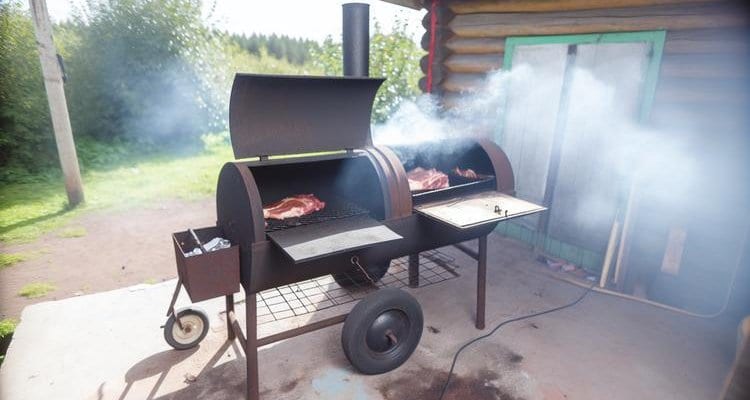
The offset smoker is the traditional choice of competition pitmasters and BBQ purists. With a horizontal cooking chamber and separate firebox, these iconic smokers deliver unmatched smoke flavor through genuine wood-burning fire. Offset smokers represent the deep end of the smoking pool—rewarding skill with extraordinary results but demanding attention, experience, and commitment.
How Offset Smokers Work
An offset smoker features two chambers: a large horizontal barrel for cooking and a smaller firebox attached to the side. You build a fire in the firebox using split logs or charcoal plus wood chunks, and heat and smoke flow horizontally through the cooking chamber before exiting the chimney on the opposite end. This “offset” design keeps the fire separate from the meat, providing pure indirect heat and smoke. Temperature control comes from managing the fire itself—adding fuel increases heat, restricting airflow lowers it. The horizontal flow creates a temperature gradient (hotter near the firebox, cooler toward the chimney), which experienced pitmasters use strategically by placing different meats in appropriate zones. Quality offset smokers feature thick steel construction (1/4″ or thicker) that holds heat and minimizes temperature fluctuations from weather.
Pros
- Unbeatable smoke flavor: Burning real logs creates the most authentic, complex smoke profile possible
- Large cooking capacity: Horizontal chambers offer 750-1200+ square inches for multiple briskets simultaneously
- Traditional BBQ experience: This is how championship pitmasters cook—fire, smoke, and skill
- Temperature zones for versatility: The heat gradient lets you smoke and grill different meats at different temps simultaneously
- Impressive presence: An offset smoker signals serious BBQ credibility
- Reverse-flow designs improve consistency: Premium offsets route smoke under a baffle plate for more even heat distribution
Cons
- Steep learning curve: Fire management, smoke control, and temperature regulation require significant practice
- Constant attention required: Long cooks mean adding wood every 45-60 minutes and monitoring temps continuously
- Quality costs serious money: Cheap offset smokers are frustrating thin-metal disappointments; quality units start around $800 and premium models (Lang, Yoder) exceed $2000-$5000
- Thin cheap models leak heat: Budget offset smokers struggle with temperature stability and burn excessive fuel
- Heavy and immobile: Thick-steel quality offsets weigh 300-500+ pounds
- Not beginner-friendly: Expect failed cooks while learning
Best For
Offset smokers are designed for dedicated BBQ enthusiasts ready to master traditional fire-management techniques, competition cooks who want authentic stick-burning flavor, those with time for long, attentive cooks, and anyone who views smoking as a rewarding hands-on craft rather than a convenience task. If you’re impatient, want automation, or aren’t willing to learn fire skills, an offset smoker will frustrate you. But if you’re drawn to the romance of wood-fire cooking and want the flavor ceiling that only burning real logs can provide, nothing else compares.
Quality Matters
Avoid cheap offset smokers at all costs. Thin metal construction leaks heat, wastes fuel, and makes temperature control nearly impossible. Invest in 1/4″ thick steel construction at minimum—brands like Oklahoma Joe’s Highland (entry level), Yoder, Lang, and Lone Star Grillz represent the quality threshold where offset smoking becomes enjoyable rather than frustrating.
Popular Brands
Oklahoma Joe’s (budget-friendly entry), Yoder (premium quality), Lang BBQ Smokers (competition-grade), Lone Star Grillz (custom high-end)
Key Specifications
- Skill Level: Advanced
- Price Range: $800-$5000+ (quality models only—avoid cheap offsets)
- Fuel: Split logs (or charcoal + wood chunks)
- Maintenance: Moderate to high (ash removal, grease management, occasional seasoning)
- Learning Curve: Months to years (fire management mastery takes serious practice)
- Temperature Range: 225-300°F typical (can run hotter for grilling)
Gravity-Fed Smokers
Gravity-fed smokers represent the newest evolution in charcoal smoking technology—marrying old-school charcoal flavor with modern automation. These innovative cookers use a vertical charcoal hopper that automatically feeds fuel downward into the firebox, eliminating the constant fire-tending that traditional charcoal smokers demand while maintaining genuine wood-and-charcoal smoke character.
How Gravity-Fed Smokers Work
Imagine a large vertical hopper holding 15-20 pounds of charcoal and wood chunks. At the bottom of this hopper sits a small firebox with an electric fan-controlled intake vent. A digital controller monitors the cooking chamber temperature and adjusts the fan speed to feed more or less oxygen to the fire. As charcoal burns at the bottom, gravity pulls unlit fuel down from above to replace it—hence “gravity-fed.” This design provides 12-18 hours of hands-off cooking from a single charcoal load. The fan-assisted airflow gives precise digital temperature control similar to pellet smokers, but you’re burning real charcoal and wood chunks for authentic smoke flavor. Most gravity-fed models also offer grilling capability by opening vents for high-heat direct cooking.
Pros
- Authentic charcoal flavor with automation: Get the real smoke character of charcoal without constant fire management
- Extremely long cook times: 12-18 hours on a single fuel load makes overnight brisket cooks genuinely hands-off
- Digital temperature control: Set your target temp and the controller maintains it automatically
- Versatile cooking modes: Low-and-slow smoking plus high-heat grilling in one unit
- Large cooking capacity: Most models offer 800-1000+ square inches across multiple racks
- Unique combination: The only smoker type that blends charcoal authenticity with pellet-like convenience
Cons
- Premium pricing: Expect to spend $600-$1500+ for quality gravity-fed models
- Requires electricity: The fan and controller need power, limiting true portability
- Limited brand selection: Masterbuilt Gravity Series dominates the market with few alternatives
- Newer technology: Less long-term reliability data compared to decades-old smoker designs
- Still requires charcoal disposal: More ash cleanup than pellet or electric smokers
Best For
Gravity-fed smokers excel for cooks who want authentic charcoal smoke flavor without the hands-on commitment of traditional charcoal smokers, anyone running long overnight cooks who values sleep over fire-tending, those seeking versatility beyond just smoking (grilling, searing), and BBQ enthusiasts ready to invest in premium technology. If pellet smokers seem too “gas grill-like” but offset smokers demand too much attention, gravity-fed splits the difference perfectly.
Popular Brands
Masterbuilt Gravity Series (560, 800, 1050 models dominate the category)
Key Specifications
- Skill Level: Beginner to Intermediate
- Price Range: $600-$1500+
- Fuel: Charcoal + wood chunks + electricity for fan/controller
- Maintenance: Moderate (ash removal, grease cleaning, fan maintenance)
- Learning Curve: Days to weeks (simpler than traditional charcoal, slightly more complex than pellet)
- Temperature Range: 180-700°F+ (smoking to high-heat grilling)
How to Choose the Right Smoker for You
With eight distinct smoker types to choose from, finding your perfect match comes down to understanding your priorities, constraints, and cooking style. Rather than searching for the “best” smoker—which does not exist—focus on finding the best smoker for you. Use the decision groups below to narrow the field.
Budget: What Can You Realistically Spend?
- Under $300: Your best options are electric smokers ($150–$250), basic gas smokers ($150–$250), or DIY drum smoker kits (under $200). Entry-level charcoal bullets also fit this range. Avoid cheap offset smokers because thin metal makes temperature control frustrating and wastes fuel.
- $300–$800: This sweet spot includes quality charcoal bullets such as the Weber Smokey Mountain around $400, mid-range pellet smokers ($400–$600), entry-level kamados ($500–$700), the gravity-fed Masterbuilt 560 around $600, and decent gas smokers. These are proven performers that can last for years.
- $800–$2,000: Premium choices include high-end pellet smokers such as the Traeger Timberline and Camp Chef Woodwind, quality kamados such as the Big Green Egg Large and Kamado Joe Classic, the gravity-fed Masterbuilt 1050, and entry-level quality offsets such as a modified Oklahoma Joe’s Highland or a used Lang or Yoder.
- $2,000+: Top-tier options include competition-grade offsets such as the Lang 36″ and Yoder Wichita, premium kamados such as the XL Big Green Egg and Primo, and fully loaded pellet smokers with advanced technology.
Experience Level: Be Honest About Your Skills
- True beginner—never smoked before: Start with an electric or pellet smoker. Both remove fire-management complexity so you can focus on meat selection, seasoning, and timing. Gas smokers also work but require slightly more attention.
- Some grilling experience, new to smoking: Charcoal bullets, pellet smokers, or gravity-fed models provide room to develop skills without overwhelming complexity. Kamados also work if you are patient with the learning curve.
- Confident with fire management: Charcoal bullets, kamados, drum smokers, and quality offsets all become viable because you understand airflow, combustion, and temperature control.
- Experienced pitmaster: Any smoker type works, although you may especially appreciate the capabilities of offsets, kamados, and gravity-fed models.
Frequency: How Often Will You Actually Smoke?
- Occasional—a few times per year: Keep the process simple with an electric or gas smoker. Avoid high-maintenance options that require regular practice to keep your skills sharp.
- Monthly—10–15 times per year: Charcoal bullets, pellet smokers, and gas models offer enough involvement to develop skills without demanding constant practice.
- Weekly or more—a serious hobby: Any smoker type can work because frequent cooks build and maintain the necessary skills. Multiple smokers may make sense, such as a pellet model for weeknights and an offset for weekend projects.
Space Constraints: Know Your Limitations
- Apartment balcony or small patio: Electric smokers, compact pellet smokers, or gas smokers can work, subject to local rules. Charcoal and wood smokers are often prohibited, so verify your lease or HOA requirements before buying.
- Suburban backyard with moderate space: Vertical smokers—including bullet, electric, pellet, and drum models—provide substantial capacity in compact footprints. Kamados need stable surfaces but do not take excessive space.
- Large yard with room to spare: Offset smokers, multiple cookers, and a permanent smoking station all become viable.
Hands-On vs. Set-and-Forget: What’s Your Style?
- I want total automation: Electric smokers are truly hands-off, while pellet smokers automate the cook with more features. Gravity-fed models also provide strong automation with charcoal flavor.
- I want some involvement, but not constant babysitting: Charcoal bullets, kamados, and gas smokers need periodic fuel, wood, or vent adjustments and temperature checks every hour or two.
- I enjoy hands-on fire management: Offsets, drum smokers, and charcoal bullets without controllers give you direct control over combustion, airflow, and temperature throughout the cook.
Flavor Priority vs. Convenience
Authentic smoke flavor generally demands more effort, while maximum convenience involves some flavor compromise:
- Flavor is everything; convenience is secondary: Offsets burning split logs produce the deepest, most complex smoke. Charcoal bullets and kamados deliver excellent flavor with moderate effort.
- I want great flavor with reasonable convenience: Pellet smokers, gravity-fed models, and charcoal bullets with digital controllers balance authentic smoke with user-friendly operation.
- Convenience matters most; adequate flavor is fine: Electric and gas smokers prioritize ease of use. They produce smoke flavor, but not the same depth as wood-burning methods.
Other Cooking Needs: More Than Just Smoking?
- Smoking only: Any smoker type works, so focus on smoking performance rather than secondary capabilities.
- Grilling and smoking: Kamados excel at both, smoking at 225°F and grilling around 500°F. Pellet smokers grill adequately, and gravity-fed models offer high-heat capability.
- High-heat searing: Kamados reach 700°F or more for steakhouse-quality sears. Some pellet and gravity-fed models also work, but kamados lead this category.
- Baking and pizza: Kamados are outstanding outdoor ovens because they reach pizza-stone temperatures and hold heat consistently.
Quick Recommendations by User Profile
- “I’m a complete beginner who wants easy success”: Choose an electric or pellet smoker to remove fire-management complexity while you learn the fundamentals.
- “I want authentic BBQ flavor I can learn to manage”: Choose a charcoal bullet such as the Weber Smokey Mountain or a kamado for strong smoke with a manageable learning curve.
- “I want to master traditional BBQ techniques”: Choose a quality offset smoker costing $800 or more. It has the steepest learning curve but can deliver championship-level results.
- “I’m on a tight budget but want real BBQ”: Choose a charcoal bullet or drum smoker kit for an affordable path to excellent smoke flavor.
- “I want maximum versatility”: Choose a kamado or pellet smoker to smoke brisket, grill burgers, bake pizza, and roast chicken on one cooker.
- “I want set-and-forget overnight cooks”: Choose a pellet, gravity-fed, or electric smoker so you can sleep without constant temperature adjustments.
The Smoker Upgrade Path
Many serious BBQ enthusiasts eventually own multiple smokers for different purposes. A common progression is:
- Starter: Begin with an electric smoker under $200 or a charcoal bullet costing $250–$400 to learn the basics without a major investment.
- Intermediate: Add a kamado costing $800–$1,200 or a quality pellet smoker costing $600–$1,000 for versatility and convenience, while keeping the starter smoker for specific uses.
- Advanced: Invest in a quality offset costing $1,500–$3,000 or more for competition-level BBQ and special-occasion cooks, while retaining the pellet smoker or kamado for weeknight convenience.
Frequently Asked Questions
Which smoker is best for beginners?
Electric smokers offer the absolute easiest learning curve—set the temperature, add wood chips, and walk away. Pellet smokers provide automation with significantly better smoke flavor than electric models but require slightly more understanding of pellet types and controller settings. Both options remove fire management complexity entirely, letting beginners focus on meat selection, seasoning, timing, and temperature basics. Gas smokers are also beginner-friendly with simple knob controls. Start with electric if you want zero complications, or choose pellet if you’re willing to invest more upfront for authentic wood-smoke flavor with digital convenience.
What’s the difference between electric and pellet smokers?
Both deliver set-and-forget convenience with automatic temperature control, but they differ significantly in smoke production and flavor. Pellet smokers burn real hardwood pellets through an auger-fed system, creating authentic wood smoke comparable to traditional methods. Electric smokers use heating elements (like an oven) with separate wood chip trays producing milder, subtler smoke. Pellet smokers are more versatile—capable of smoking, grilling, baking, and roasting—while electrics focus solely on low-and-slow smoking. The tradeoff? Pellets cost more upfront, have moving parts that can fail, and require electricity; electric smokers are simpler, cheaper, and have fewer maintenance concerns. Choose pellets for better flavor and versatility; choose electric for ultimate simplicity and lower cost.
Do electric smokers produce good smoke flavor?
Yes, electric smokers produce legitimate smoke flavor—it’s just more subtle and milder than wood-burning methods. The heating element smolders wood chips to create smoke, but you won’t get the intense, layered smoke ring that comes from actual combustion in charcoal or wood fires. Electric smokers excel for people who prefer lighter smoke character or are sensitive to heavy smoke flavor. The key to maximizing flavor: use quality wood chips (avoid generic bags), experiment with different wood types (hickory for bold, apple for mild), and consider adding a smoke tube for supplemental smoke during long cooks. Electric smokers won’t match the depth of offset or charcoal smokers, but they deliver consistent, adequate smoke for excellent BBQ.
How much should I spend on my first smoker?
Budget $150-$400 for a quality beginner smoker that will serve you well for years. In this range, you can get excellent electric smokers ($150-$250), solid gas smokers ($200-$300), entry-level pellet smokers ($350-$400), or a charcoal bullet smoker like the 18″ Weber Smokey Mountain ($400). Avoid the temptation to buy cheap big-box offset smokers under $300—thin metal construction makes temperature control frustrating and wastes fuel. Better to start with a quality beginner-friendly smoker and learn fundamentals than struggle with equipment that fights you. You can always upgrade later once you’ve developed skills and know exactly what features matter to you. Remember: championship BBQ comes from technique and practice, not expensive equipment.
What’s the easiest smoker to use?
Electric smokers are the undisputed champions of ease—they’re truly set-and-forget. Turn a dial to your target temperature (like setting an oven), add wood chips to the tray, load your meat, and close the door. The electric heating element maintains temperature automatically without fire management, fuel addition, or constant monitoring. Pellet smokers come in close second with digital controllers and automated pellet feeding, though you’ll need to understand hopper management and occasional auger clearing. Gas smokers rank third for simplicity—light the burner, adjust the knob for temperature, add wood chips periodically. If “easy” is your top priority and you don’t mind sacrificing some smoke intensity, electric is your answer.
Are pellet smokers worth the extra cost?
It depends entirely on your priorities and how you plan to use the smoker. Pellet smokers are worth it if you value versatility (smoking, grilling, baking, roasting in one unit), want convenience with authentic wood flavor (better smoke than electric, easier than charcoal), appreciate digital controls and WiFi monitoring, or plan to cook frequently enough to justify the investment. Pellets aren’t worth the premium if you’re on a tight budget (charcoal bullets deliver similar smoke for half the price), want the absolute simplest option (electric is easier), or only smoke occasionally (harder to justify the cost). Think of pellet smokers as the “premium all-in-one” category—you’re paying for automation, versatility, and technology. For serious BBQ enthusiasts who cook weekly, they’re often worth every penny.
Can I use a smoker in cold weather?
Yes, but performance varies significantly by smoker type. Kamado grills excel in cold weather thanks to thick ceramic insulation that holds heat regardless of outside temperature—you’ll use only slightly more charcoal. Pellet smokers handle cold well with insulated blankets (sold separately) and automatic temperature control compensating for heat loss. Gravity-fed smokers with fan-controlled combustion also maintain temps effectively. Electric smokers struggle somewhat in extreme cold as heating elements work harder. The biggest challenges come from thin-metal offset smokers and budget charcoal bullets, which leak heat and burn excessive fuel in freezing conditions. Tips for cold-weather smoking: use insulated blanket accessories, position smokers out of wind, allow extra startup time, expect higher fuel consumption, and avoid opening the door frequently (each peek loses substantial heat).
What’s the difference between offset and vertical smokers?
Offset smokers feature horizontal cooking chambers with separate side-mounted fireboxes, creating a traditional BBQ aesthetic and horizontal heat/smoke flow. You build a fire in the firebox, and heat travels horizontally through the cooking chamber before exiting the chimney. Offsets require mastery—you’re actively managing real wood or charcoal fires for 12+ hours, adjusting airflow, adding fuel every 45-60 minutes, and dealing with temperature gradients. Vertical smokers (bullets, drums, electrics, pellets) stack components vertically: fire or heat source at bottom, cooking grates above, with heat rising naturally through convection. Vertical designs are more compact, easier to control, and better for beginners. Choose offset smokers if you’re serious about traditional stick-burning BBQ and have the time/skills for fire management; choose vertical smokers for easier temperature control and more forgiving operation.
Which smoker produces the best smoke flavor?
Offset smokers burning 100% split logs produce the most authentic, complex, and intense smoke flavor possible—this is how competition pitmasters cook championship brisket. Charcoal bullet smokers and kamado grills deliver excellent smoke (just below offsets) when burning charcoal plus wood chunks, offering rich flavor that satisfies purists. Gravity-fed and pellet smokers provide very good smoke from burning real wood, though some enthusiasts detect a subtle difference from pure stick-burning methods. Gas smokers produce moderate smoke from wood chips smoldering over propane flame. Electric smokers create the mildest smoke since wood chips smolder on heating elements rather than burning. That said, “best” depends on personal preference—some people prefer lighter smoke, while others want intense smoke ring and bark. Start with what matches your skill level; flavor will improve as you master technique regardless of smoker type.
How long does it take to learn to use each type of smoker?
Electric and gas smokers: Days to instant success. Temperature control is as simple as turning a dial—you’ll produce good BBQ on your first or second attempt. Pellet and gravity-fed smokers: 1-3 weeks to understand controller settings, pellet or charcoal types, and optimal temperature profiles for different meats. Charcoal bullet smokers, kamados, and drum smokers: Weeks to months developing vent control skills, fire management, and understanding how weather affects performance. Expect 5-10 cooks before achieving consistent results. Offset smokers: Months to years mastering fire building, wood selection, airflow adjustments, and temperature stability. Many pitmasters say they’re “always learning” even after years of offset cooking. The learning curve directly correlates with flavor potential and hands-on involvement—easier smokers have shorter curves, while more complex smokers reward the investment with extraordinary results.
Can I smoke and grill on the same unit?
Yes, several smoker types handle both low-and-slow smoking and high-heat grilling. Kamado grills are the undisputed dual-use champions—smoke brisket at 225°F Saturday, then grill steaks at 600°F Sunday. The ceramic construction and adjustable vents allow precise control across the full temperature spectrum. Pellet smokers grill adequately (most reach 450-500°F, some up to 600°F+) and many feature sear boxes or direct-flame accessories. Gravity-fed smokers like the Masterbuilt Gravity Series reach grilling temps (500-700°F) by opening vents for high airflow. Dedicated smoking units—electric smokers, most offset smokers, and drum smokers—focus on low-and-slow smoking only and don’t reach grilling temperatures effectively. If you want one cooker to replace both your smoker and grill, invest in a kamado for the best of both worlds.
What size smoker do I need for my cooking?
For a family of 4 with occasional guests: Small to medium smokers work perfectly—18″ charcoal bullets (400-500 sq. in.), small kamados, or compact pellet/electric smokers. You can fit 2-3 pork butts, 4-6 racks of ribs, or a full brisket. For regular entertaining of 8-12 people: Medium to large smokers provide needed capacity—22″ charcoal bullets, large kamados (Big Green Egg Large), standard pellet smokers (700-900 sq. in.), or entry-level offset smokers. For catering, competition BBQ, or large gatherings: Large offset smokers (1000+ sq. in.), multiple pellet smokers, or commercial units become necessary. Many serious cooks eventually own multiple smokers rather than one huge unit—a small electric for weeknight pork chops and a larger offset for weekend brisket competitions. Start with medium capacity and add a second smaller unit later if needed.
Are built-in smokers available for outdoor kitchen islands, or are all smokers freestanding?
Most smokers on this list — electric, pellet, charcoal bullet, offset, and gravity-fed — are freestanding units on their own legs or cart. Kamado grills are the main exception: many manufacturers sell drop-in models specifically designed to be built into an outdoor kitchen island countertop, since the ceramic shell doesn’t need external clearance the way a firebox or exhaust stack does. If a built-in installation is a priority, a kamado is generally the most straightforward type to design around.
Choose Your Perfect Smoker and Start Smoking
You’ve now explored eight distinct smoker types, each offering unique strengths that appeal to different cooks with different priorities. There’s no universally “best” smoker—only the best smoker for your specific situation. Electric smokers deliver unmatched simplicity for beginners. Pellet smokers blend convenience with authentic wood flavor and versatility. Gas smokers bridge ease and portability. Charcoal bullets and kamados reward skill development with exceptional smoke character. Drum smokers maximize value for budget-conscious DIY enthusiasts. Offset smokers represent the pinnacle of traditional stick-burning BBQ. And gravity-fed smokers marry old-school charcoal authenticity with modern automation.
Your decision comes down to honest evaluation of your budget, experience level, available space, time commitment, and flavor priorities. A beginner choosing an offset smoker will face frustration and failed cooks. An experienced pitmaster buying an electric smoker might feel limited by simplicity. But match the right smoker type to your current needs, and you’ll produce fantastic BBQ while enjoying the learning journey.
Don’t be intimidated by the options or feel pressured to buy the most expensive equipment. Championship-quality results come from technique, practice, and patience—not from premium price tags. Start with what fits your budget and skill level today. Master the fundamentals of temperature control, smoke management, and meat selection on whatever smoker you choose. You can always upgrade to more advanced equipment or add complementary smokers to your collection as your passion and skills grow.
Ready to take the next step? Explore our comprehensive beginner’s guide to choosing your first smoker for detailed model recommendations and buying advice. Once you’ve selected your smoker, dive into our smoking techniques and equipment guides to master temperature control, wood selection, and timing. And if you’re completely new to outdoor cooking, start with essential BBQ techniques for beginners to build your foundational skills.
The perfect smoker is the one that gets you cooking. Choose based on your needs, not trends or marketing. Light that fire, load that meat, and start your BBQ journey today. Happy smoking!
Related BBQ Guides

Grill Smoker Box Guide: Add Real Smoke to Any Grill
Compare top grill smoker boxes: cast iron vs stainless steel durability, placement strategies & wood chip capacity. Expert tested for gas grills.
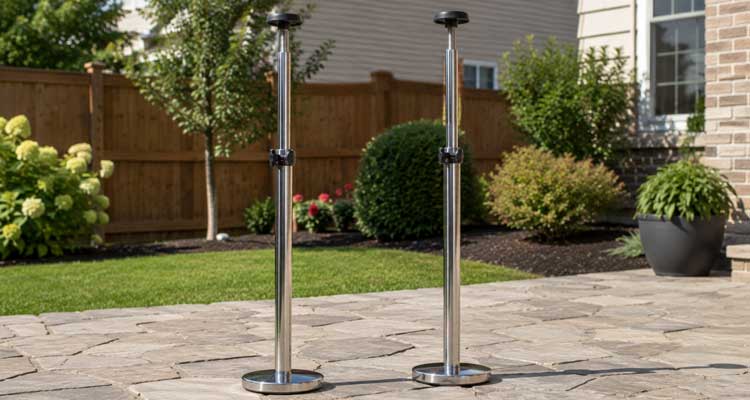
Smoker Cover Support Poles: Keep Your Grill Dry All Year
Find the best smoker cover support poles to protect your grill from rain and snow. We tested top models for durability, stability, and value. Find yours.

3-Burner Gas Grills: Perfect Options for Every Budget in 2026
Looking for the perfect 3-burner grill? We tested top gas grills from Weber, Char-Griller & more, from budget-friendly to premium options.