
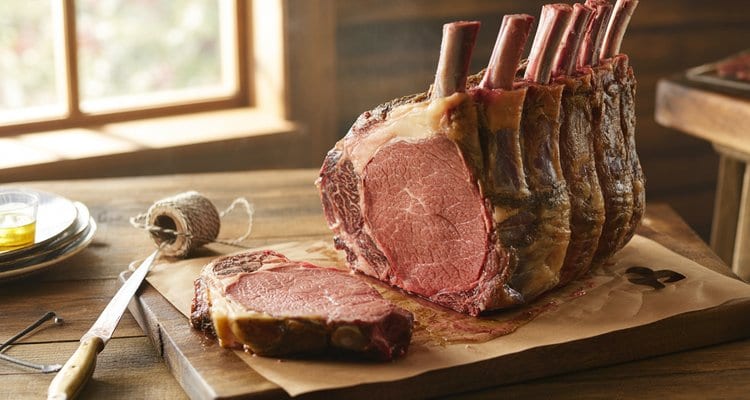
Prime rib is an expensive cut, so getting the quantity right matters. Buy too little and you’re scrambling to stretch servings. Buy too much without a leftover plan and you’ve overspent on a roast that ends up forgotten in the back of the fridge. This guide breaks down exactly how much prime rib per person you need for any gathering, from intimate holiday dinners to larger celebrations.
The safest buying rule is simple: plan on 1 pound of raw bone-in prime rib per adult, or 1/2 to 3/4 pound of boneless prime rib per adult. That gives you generous dinner slices without turning the roast into a guessing game. If you want leftovers, round up by about 20 percent.
Prime Rib Per Person Quick Answer
Prime rib is usually sold as a standing rib roast, bone-in rib roast, or boneless rib roast. The bone-in version includes rib bones, extra fat, and trimming loss, so the raw weight looks bigger than the edible meat on the plate. For a holiday dinner where prime rib is the main event, use these rules:
- Bone-in prime rib: 1 pound raw per adult
- Bone-in with leftovers: 1 1/4 pounds raw per adult
- Boneless prime rib: 1/2 to 3/4 pound raw per adult
- Rib count: 1 rib bone usually serves about 2 adults
If you’re used to thinking in restaurant portions rather than raw pounds, a standard cooked steakhouse cut runs about 8-12 ounces for a “Queen Cut” and 14-16 ounces for a “King Cut” — for reference, that 1-pound-raw-per-adult rule above nets out to roughly a 6-8 ounce cooked portion once trimming and cooking loss are factored in.

Prime Rib Serving Chart
Use this chart when you need a fast answer at the butcher counter. It assumes adults, dinner portions, and a roast served with normal holiday sides.
Use this chart to convert your guest count into a practical bone-in or boneless roast size, with a separate allowance when you want leftovers.
| Guests | Bone-In Dinner | Bone-In With Leftovers | Boneless Dinner | Rib Bones |
|---|---|---|---|---|
| 4 | 4 lb | 5 lb | 3 lb | 2 bones |
| 6 | 6 lb | 7-8 lb | 4-5 lb | 3 bones |
| 8 | 8 lb | 10 lb | 6 lb | 4 bones |
| 10 | 10 lb | 12-13 lb | 7-8 lb | 5 bones |
| 12 | 12 lb | 14-15 lb | 9 lb | 6 bones |
For a dinner-size portion, plan on roughly one pound of bone-in prime rib or three-quarters of a pound boneless per adult.
Understanding Prime Rib Grades
The term “prime rib” refers to the cut, not the USDA grade. You can buy prime rib at three different quality levels, and the grade affects both price and how much marbling runs through the meat. USDA Prime is the highest grade, featuring abundant marbling throughout. Prime-grade rib roasts are typically found at specialty butchers, high-end grocery stores, and warehouse clubs like Costco. Expect to pay a significant premium, but the extra fat means more flavor and a more forgiving cook. USDA Choice is the most common grade at supermarkets.
Choice rib roasts have good marbling and deliver excellent results for most home cooks. This is the sweet spot for value and quality. USDA Select has less marbling and is leaner. Select-grade prime rib can work for budget-conscious cooks, but it’s more prone to drying out. If you go this route, consider a lower cooking temperature and keep a close eye on your meat thermometer.
When planning portions, the grade doesn’t change how much you need per person. Separately from grade, ask about first cut versus second cut if your butcher offers a choice: the first cut (ribs 10-12, closer to the loin) is leaner and more uniform in shape, while the second cut (ribs 6-9, closer to the chuck) has more marbling and fat but a less even shape. Neither changes your per-person math much, but the first cut carves into more consistent slices. But higher-graded roasts are more forgiving if you slightly overcook them, which can be worth the extra cost for high-stakes holiday meals.
Common Guest Count Examples
A 5-pound bone-in prime rib usually feeds about 5 adults, or 4 adults if you want leftovers. A 7 1/2-pound bone-in roast feeds about 7-8 adults for dinner. A 20-pound bone-in roast can feed about 20 adults, but it is usually easier to cook two smaller roasts instead of one huge roast. Smaller roasts cook more evenly and give you more flexibility with timing. Ten pounds of bone-in prime rib is not enough for 20 adults unless it is a buffet with another protein and heavy sides. The old “500 rule” is a cooking method, not a buying rule. Use the serving chart to buy the roast, then use a thermometer to judge doneness and safety.
Bone-In vs Boneless Prime Rib
Bone-in prime rib is easier to size by rib count. A 3-bone roast usually feeds about 6 adults, while a 4-bone roast usually feeds about 8 adults. As a rough weight reference, each rib bone on a standing rib roast adds about 1.5 to 2 pounds of raw weight, which is why a 4-bone roast typically lands in the 8-10 pound range before trimming.
The bones protect the meat during cooking, help presentation, and give you a clear ordering language at the counter. The rib bones also add flavor during the roasting process. Many pitmasters prefer bone-in for this reason, even though carving takes a bit more skill. Ask your butcher to remove the bones and tie them back on — this gives you the flavor benefits during cooking with easier slicing at the table.
Boneless prime rib is more compact. You are paying for less bone weight, so 1/2 pound per person can work when you serve heavy sides. For a centerpiece dinner, 3/4 pound per adult feels safer. Boneless roasts are also easier to cook evenly since there’s no bone to insulate one side.
When To Round Up Or Down
Round up when prime rib is the main attraction, dinner starts late, or your guests expect thick slices. Also round up for holiday meals, light side dishes, or planned leftovers. Round down for buffets, lunch portions, kids, or menus with another protein. A 10-person buffet with ham, turkey, or several heavy sides may not need a full 10-pound bone-in roast. One size worth avoiding altogether: bone-in roasts under about 4 pounds. At that size the bone-to-meat ratio gets inefficient, there’s little margin for carryover cooking, and the roast tends to overcook before it develops a proper crust. If your group is small, a boneless roast or a different cut altogether will serve you better than a tiny bone-in one.
What To Tell The Butcher
Use plain language. Ask for a standing rib roast if you want bone-in prime rib. Ask for a boneless rib roast if you want easier carving and a smaller raw weight. For a bone-in roast, give the butcher the number of guests and rib bones. For example: “I need a 4-bone standing rib roast for 8 adults.”
If you want easier slicing, ask for the bones to be cut off and tied back on. Ask for the fat cap to be trimmed, not removed. A thin layer of fat protects the roast and helps browning. A scalped roast can dry faster on the outside.
If you’re ordering ahead for a holiday, call at least a week in advance. Prime rib is a popular cut during Christmas and New Year’s, and butchers often sell out of the best roasts. Placing an order early also lets you specify the exact size and grade you want.
Cooking Time Estimates
While this guide focuses on buying, knowing rough cooking times helps you plan your day. If you’re planning ahead, consider a 24-to-48-hour dry brine: season the roast with salt and let it sit uncovered on a rack in the fridge before cooking day. The salt draws out surface moisture that evaporates over that time, which sets you up for a drier exterior and a noticeably better bark once you sear it. These estimates assume a 225-250°F smoker or low oven temperature for the reverse sear method. Bone-in prime rib at 225-250°F:
- 4-5 lb roast: 2-2.5 hours
- 6-8 lb roast: 3-4 hours
- 10-12 lb roast: 4-5 hours
Always cook to internal temperature, not time. Pull the roast when it reaches 115-120°F for rare, 125-130°F for medium-rare, or 135°F for medium. The temperature will rise another 5-10 degrees during the rest. A reliable wireless meat thermometer lets you monitor the roast without constantly opening the smoker or oven door. After the low-temperature cook, sear the roast at 500°F for 8-10 minutes to develop a flavorful crust. This reverse sear method produces edge-to-edge doneness with a perfect brown exterior.
Cooked Yield And Carving
Prime rib loses weight as fat renders and moisture evaporates. Expect about 15-20 percent cooking loss for many roasts, plus any trimming or bone waste on bone-in cuts. Rest the roast before carving so juices settle. A 15-20 minute rest is standard for smaller roasts; larger roasts can rest up to 30 minutes without getting cold. Tent loosely with foil if your kitchen is drafty. For bone-in prime rib, remove the rib bones in one piece after cooking, then slice the roast across the grain. Use a sharp carving knife for clean cuts. Thin slices stretch servings; thick steakhouse slices use meat faster.
Side Dishes And Leftover Planning
Side dishes change the math more than most people expect. A dinner with mashed potatoes, rolls, salad, and vegetables can stretch a roast farther than a plate built around meat and one small side. Classic prime rib sides include Yorkshire pudding, creamed spinach, horseradish cream, roasted vegetables, and au jus made from the drippings. The richer your sides, the less meat each guest typically eats.
For leftovers, think in portions instead of pounds. One extra pound of raw bone-in prime rib may only become a few extra slices after cooking and trimming. If you want enough for sandwiches the next day, move up to the leftovers column in the chart instead of adding a token half pound. If you are serving appetizers before dinner, you can stay closer to the standard dinner amount.
If guests arrive hungry and prime rib is the first real food on the table, buy the larger roast. Don’t toss the carved-off bones, either — they make an excellent base for homemade beef broth, stock, or au jus; simmer them with aromatics for a few hours and you’ll have a flavorful head start on next week’s soup or gravy.
Safe Temperature Note
The official FoodSafety.gov safe temperature chart lists beef roasts at 145 degrees F with a 3-minute rest. The USDA FSIS beef guidance gives the same benchmark. Many BBQ cooks serve prime rib at lower doneness levels for preference. That is a doneness decision. The official safety benchmark is still worth understanding before you cook for guests, especially if you’re serving immunocompromised individuals, pregnant women, or elderly guests.
For a full comparison of wireless meat thermometer options, see our wireless meat thermometer guide.
Prime Rib FAQ
How many pounds of prime rib do I need per person?
How many ribs do I need for 8 people?
How much boneless prime rib per person?
How much bone-in prime rib per person?
Should I buy extra prime rib for leftovers?
How much prime rib for kids?
How much prime rib for a buffet?
How much weight does prime rib lose when cooked?
What should I ask the butcher for?
What temperature is prime rib safe to serve?
Final Buying Advice
For most dinners, buy 1 pound of bone-in prime rib per adult. If you want leftovers, round up to 1 1/4 pounds per adult or choose the next rib bone size. For boneless prime rib, buy 1/2 to 3/4 pound per adult. Use the lower end for buffets and heavy sides. Use the higher end when the roast is the whole point of the meal. When in doubt, err on the side of buying more. Prime rib leftovers are a gift — not a burden. Cold slices make exceptional sandwiches, and diced prime rib elevates breakfast hash, tacos, and stir-fry for days after the main event.
Related BBQ Guides
Infrared Grill Thermometers: Surface Temp Precision Guide
Discover the 5 best infrared thermometers for precise grill surface temps. Compare features, D:S ratios & emissivity. Expert tested 2026.

Smoked Beef Back Ribs: Ultimate Guide to BBQ Perfection
Master smoked beef back ribs with our complete guide. Learn prep, seasoning, smoking temps & time for tender, beefy perfection on any smoker.
The Ultimate Magnetic Grill Spice Rack for Easy Seasoning
Find the best magnetic spice rack for your grill. We tested magnet strength, capacity, and durability to keep your seasonings secure and within easy reach.