

The best vertical pellet smokers pack serious smoking capacity into a surprisingly compact footprint — and in 2026, the options have never been better. A vertical pellet smoker gives you consistent, set-it-and-forget-it cooking with authentic wood-smoke flavor, massive multi-rack capacity, and the precision of automated pellet feeding. Whether you are smoking a single brisket for a weekend cookout or loading up six racks of ribs for a competition, the right vertical pellet smoker handles it effortlessly. After extensive research and hands-on testing, we found the Pit Boss Navigator 6-Series Vertical Smoker PBV6M to be the best overall vertical pellet smoker for most backyard pitmasters.
It delivers the ideal balance of massive cooking capacity, a 75-pound hopper for 24+ hour cooks, Wi-Fi remote monitoring, and M Line double-wall construction — all at a competitive price point. But whether the Navigator 6-Series is right for you depends on your budget, cooking volume, and how much you value features like WiFi connectivity and premium build quality. This guide covers the five best vertical pellet smokers available in 2026, from budget-friendly entry points to competition-grade heavy-duty cabinet smokers. Every product in this roundup is a true vertical pellet smoker — no electric, no propane, no hybrids.
Quick Comparison
| Smoker | Cooking Area | Temp Range | Controller | Best For | Where to Buy |
|---|---|---|---|---|---|
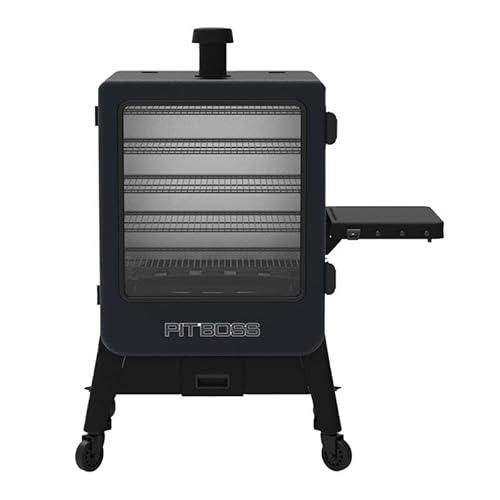 Pit Boss Navigator 6-Series Vertical Smoker PBV6M Pit Boss Navigator 6-Series Vertical Smoker PBV6M
|
2,224 sq in | 130–420°F | Digital + Wi-Fi | Best Overall | See at Amazon |
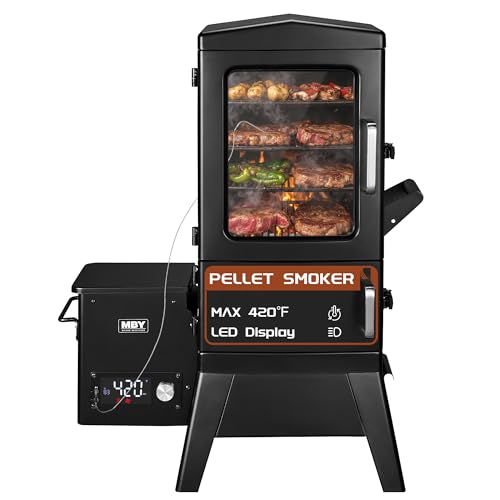 PIQUEBAR Vertical Pellet Smoker PIQUEBAR Vertical Pellet Smoker
|
616 sq in | 150–400°F | Digital | Best Budget | See at Amazon |
 Pit Boss Navigator 3-Series Vertical Smoker PBV3M Pit Boss Navigator 3-Series Vertical Smoker PBV3M
|
1,118 sq in | 130–420°F | Digital + Wi-Fi | Best Value | See at Amazon |
 Grilla Grills Mammoth Grilla Grills Mammoth
|
1,600 sq in | 200–450°F | PID + WiFi | Best Smart/WiFi | See at Amazon |
 Pellet Pro 2300 Pellet Pro 2300
|
2,300 sq in | 180–450°F | PID | Best Heavy-Duty | See at Amazon |
Pit Boss Navigator 6-Series Vertical Smoker PBV6M
2,224 sq in across 5 removable porcelain-coated steel racks
How to Choose the Best Vertical Pellet Smoker
A vertical pellet smoker — also called a cabinet smoker or upright pellet smoker — orients cooking racks vertically inside an insulated cabinet body. This design maximizes cooking surface per square foot of outdoor space, which is critical for anyone with a limited patio or deck. Heat and smoke circulate from a firebox at the bottom up through the cabinet, past multiple rack levels, and exit through a top or rear exhaust vent. Here is what separates a great vertical pellet smoker from an average one.
Cooking Capacity and Rack Configuration
Vertical pellet smokers range from around 800 square inches to over 2,400 square inches of total cooking area. For a family of four or occasional entertaining, 900–1,200 sq in of cooking area is more than sufficient. Competition cooks and large households should look at 1,500 sq in or more. Pay attention to individual rack dimensions, not just the total square inches — confirm that full briskets or pork shoulders will lay flat on a single rack without folding. Some vertical pellet smokers also support hanging hooks for sausage, bacon, and ribs, which can dramatically increase effective capacity beyond what racks alone provide.
Temperature Range and PID Controller
Most vertical pellet smokers operate between 150°F and 450°F, covering everything from low-and-slow smoking at 225°F to roasting at higher temperatures. The controller type makes a significant difference in accuracy. A PID controller (Proportional-Integral-Derivative) uses an algorithm to hold temperature within ±5°F of your set point by constantly adjusting pellet feed rate and combustion airflow. Standard digital controllers simply cycle the auger on and off in fixed intervals, causing temperature swings of ±20–25°F. For consistent smoke rings, bark development, and long-cook reliability, a PID controller is a meaningful upgrade.
Hopper Size and Pellet Management
Hopper capacity determines how long your vertical pellet smoker can run unattended. At 225°F, most upright pellet smokers burn one to two pounds of pellets per hour. A 40-pound hopper handles 20–40 hours of low-and-slow cooking without a refill — enough for an overnight brisket or a full day of ribs. Smaller hoppers of 15–22 pounds require more monitoring on long cooks. Check whether the smoker has a hopper cleanout door; switching between pellet wood flavors is far easier when you can drain the hopper without burning through the remaining pellets.
Ash and Grease Management
Long cooks generate both combustion ash from the burned pellets and rendered grease from the food, and how a vertical smoker handles both affects how much cleanup you're signing up for. Look for a dedicated ash cleanout at the bottom of the firebox -- something you can empty without disassembling the unit -- since ash buildup over several long cooks can restrict airflow and hurt combustion efficiency. Separately, check how grease and drippings are routed: a sloped interior floor or a dedicated grease bucket/tray keeps drippings from pooling inside the cabinet, while a flat-bottom design with no drainage means more scraping and wiping after every use.
Neither feature is guaranteed on every model, so it's worth confirming both before you buy if easy cleanup matters to you.
WiFi and App Control
WiFi-connected vertical pellet smokers let you monitor and adjust temperature remotely from your smartphone. For overnight cooks, this is genuinely useful — you can check both internal meat temperature and smoker temperature without leaving the house. Not all apps are created equal; some are polished and responsive while others are buggy and unreliable. Look for independent reviews of the companion app before buying a WiFi-enabled pellet cabinet smoker.
Build Quality and Insulation
Double-wall insulated construction holds heat far better than single-wall steel. This matters most during cold weather and wind. A well-insulated vertical pellet smoker maintains stable temperatures down to 10–20°F with minimal additional pellet consumption, while a thin-walled unit struggles to hold temperature below 40°F. Heavy-gauge steel construction — 16 gauge or thicker — adds durability and contributes to stable temperatures. Door gasket seal quality is equally important; a poor seal bleeds both heat and smoke, making consistent results difficult.
Cold Weather Performance
If you live in a northern climate and plan to smoke year-round, insulation is not optional — it is essential. Double-wall construction with a tight gasket seal dramatically reduces heat loss and pellet consumption in cold conditions. Some manufacturers offer insulation blankets as add-on accessories for colder climates. Among the vertical pellet smokers on this list, the Pellet Pro 2300 and Pit Boss Copperhead series are known for the best cold-weather performance, thanks to their double-wall cabinet construction and high-quality door seals.
If you are weighing vertical versus horizontal options, our guide to the best Camp Chef pellet grills covers the top horizontal models from one of the most respected names in the pellet category.
Boosting Smoke Flavor Intensity
A common complaint about pellet-fed smokers, vertical or horizontal, is that they produce a milder smoke flavor than an offset stick burner or a charcoal smoker. A few things help close that gap. Some models, like the Grilla Mammoth in this guide, include a lipped deflector plate specifically designed to hold extra wood chunks or chips on top of the standard pellet feed, boosting smoke output beyond what the pellets alone provide. On models without that feature, a separate smoke tube or maze filled with pellets and lit separately can be placed inside the cabinet to add supplemental smoke for the first few hours of a cook, when meat absorbs smoke most effectively.
Using fresher pellets also matters more than people expect -- pellets that have absorbed moisture from humid storage burn less efficiently and produce weaker, wetter smoke than pellets stored in a sealed, dry container.
Product Reviews
Pit Boss Navigator 6-Series Vertical Smoker PBV6M
- 2,224 sq in across 5 removable porcelain-coated steel racks
- Each rack holds 2 full-size foil pans — maximum batch cooking capacity
- 75 lb hopper with cleanout — 24+ hours of unattended smoking
- Wi-Fi + Bluetooth connectivity for remote temperature monitoring via Pit Boss app
- 3 meat probe ports (1 probe included) for multi-protein sessions
- M Line double-wall construction for superior heat retention and cold-weather performance
The Pit Boss Navigator 6-Series Vertical Smoker PBV6M earns the Best Overall spot by delivering the best combination of cooking capacity, build quality, and smart connectivity in the vertical pellet smoker category. With 2,224 square inches spread across five porcelain-coated steel racks — each measuring 25.7" × 17.3" and capable of holding two full-size foil pans — this smoker can run 6 full briskets, 20+ racks of ribs, or enough pulled pork to feed a neighborhood simultaneously. The 75-pound pellet hopper with cleanout enables 24+ hours of unattended low-and-slow smoking at 130–420°F without ever opening the door to refuel.
Wi-Fi and Bluetooth connectivity via the Pit Boss app lets you monitor chamber and meat temperatures remotely from anywhere in your house. Three meat probe ports (1 probe included) allow simultaneous multi-protein monitoring. The M Line build quality means tighter door seals, double-wall construction, better insulation, and more consistent cooking chamber temperatures throughout extended cooks — a significant advantage in cold weather.
See at AmazonPIQUEBAR Vertical Pellet Smoker
- 616 sq in across 4 adjustable cooking racks
- LED digital display for easy temperature control
- Built-in meat probe for internal temperature monitoring
- Includes built-in hooks for hanging sausage, bacon, and jerky
- Rainproof cover included — ready for outdoor storage
- Most affordable true vertical pellet smoker available
The PIQUEBAR Vertical Pellet Smoker is the most affordable true vertical pellet smoker on this list, making it an accessible entry point for anyone curious about upright pellet smoking without committing to a $500+ investment. At $349, it includes a rainproof cover, a built-in meat probe, and four cooking racks providing 616 square inches of total cooking area — enough for several racks of ribs, a couple of pork shoulders, or a full batch of sausage. The LED digital display provides straightforward temperature control, and the vertical design ensures efficient heat and smoke circulation from bottom to top.
Built-in hooks above the racks add versatility for hanging sausages, bacon, or jerky. The included rainproof cover is a practical touch that protects your investment when the smoker is stored outdoors between cooks. This is not a premium competition smoker — it lacks Wi-Fi, PID control, and the heavy-gauge double-wall construction of higher-end models.
See at AmazonPit Boss Navigator 3-Series Vertical Smoker PBV3M
- 1,118 sq in across 5 porcelain-coated steel racks
- 50 lb hopper capacity — 20+ hours of unattended low-and-slow smoking
- Wi-Fi + Bluetooth connectivity via Pit Boss app for remote monitoring
- 3 meat probe ports (1 probe included) for multi-protein tracking
- Awarded 2025 Best Vertical Smoker by Men's Journal
- M Line construction with improved insulation and door seal
The Pit Boss Navigator 3-Series Vertical Smoker PBV3M delivers the best balance of price, capacity, and build quality in the vertical pellet smoker category. Awarded 2025's Best Vertical Smoker by Men's Journal, it packs 1,118 square inches of cooking space across five porcelain-coated steel racks into a compact footprint that fits comfortably on any patio or deck. The 50-pound hopper is one of the largest in its price class, providing enough fuel for 20+ hours of unattended smoking at low temperatures.
Wi-Fi and Bluetooth connectivity via the Pit Boss app enables remote monitoring — check chamber and meat temperatures from your phone without leaving the house. Three meat probe ports (1 probe included) let you monitor multiple proteins simultaneously during large cooks. Each rack measures 17.5" × 12.8", large enough to fit standard foil pans. The digital control board with wireless technology operates across a 130–420°F range.
See at AmazonGrilla Grills Mammoth
- Over 1,600 sq in of cooking area — fits up to 10 racks or 24 S-hooks
- Alpha Connect 2.0 WiFi touchscreen controller with free smartphone app
- PID control system for precise set-and-forget temperature management
- Lipped deflector allows adding wood chunks or chips for enhanced smoke production
- Double-wall insulated construction for year-round cold-weather performance
The Grilla Grills Mammoth is the most tech-forward vertical pellet smoker on this list, combining WiFi connectivity, a touchscreen PID controller, and over 1,600 square inches of cooking space in a double-wall insulated cabinet. It is the best option for cooks who want full remote control over their smoking sessions from a smartphone. The Alpha Connect 2.0 WiFi controller and companion app let you set and adjust temperature, monitor multiple meat probe readings, and receive alerts when target temperatures are reached — all from your phone.
The PID control system works in tandem with the app to maintain set temperatures precisely, making it genuinely useful for multi-hour overnight cooks where consistency is critical. The lipped deflector design allows you to add extra wood chunks or chips directly to the burn area for boosted smoke production when you want heavier smoke flavor. The double-wall construction provides excellent cold-weather insulation, and the built-in water pan supports moisture management across the full rack height.
See at AmazonPellet Pro 2300
- 2,300 sq in of cooking area — competition-ready capacity
- 55-pound hopper for 30+ hours of unattended smoking
- Exclusive PID controller — maintains temperature within ±5–10°F
- 18-gauge double-wall steel construction for maximum insulation
- Included convection fan for even temperature distribution across all rack levels
- Three 21 × 20-inch stainless steel grates and a 7-section rib rack included
- Cover included — protects investment year-round
The Pellet Pro 2300 is the serious heavy-duty option in the vertical pellet smoker category. Built for competition cooks, large-batch smoking, and year-round operation in cold climates, it combines 2,300 square inches of cooking area, a 55-pound hopper, an included convection fan for temperature consistency, and an exclusive PID controller that maintains temperatures within ±5–10°F throughout the cook. The 18-gauge double-wall steel construction is the heaviest on this list. The included convection fan circulates heat and smoke evenly throughout the cabinet, eliminating the top-to-bottom temperature gradients that affect many single-fan or natural-convection vertical smokers.
The 55-pound hopper is the largest available on any vertical pellet smoker on this list after the Pit Boss 6-Series. At 225°F, that can translate to 30+ hours of unattended smoking. The included 7-section rib rack and three 21 × 20-inch stainless steel grates provide immediate versatility for large-batch cooks. A cover is included in the box.
See at AmazonLiving With a Vertical Pellet Smoker
Ash and Grease Management
Vertical cabinet smokers stack multiple racks above a single fire pot, so drippings and ash have to travel further and get managed differently than in a horizontal smoker. Look for a model with a removable ash or grease cup at the bottom rather than one that requires scraping loose debris out by hand — it makes cleanup after a long overnight cook considerably faster.
These Smokers Don't Sear
A vertical pellet smoker is built for low-and-slow cooking, not high-heat searing, since the firepot and burn mechanism can't reach steakhouse temperatures. If you want a sear on something you've smoked low and slow, plan on finishing it on a cast iron pan or a separate gas or charcoal grill rather than expecting the smoker itself to do it.
How much cooking space do I need in a vertical pellet smoker?
For a family of four or occasional entertaining, 900–1,200 square inches is more than sufficient. If you regularly cook for large groups or want to smoke multiple briskets simultaneously, look at 1,500 square inches or more. Keep in mind that individual rack dimensions matter — confirm that a full brisket or pork shoulder will lay flat on a single rack without folding.
How long can a vertical pellet smoker run unattended?
Runtime depends on hopper size and cooking temperature. At 225°F, most vertical pellet smokers burn 1–2 pounds of pellets per hour. A 40-pound hopper handles 20–40 hours, a 50-pound hopper runs 25–50 hours, and the 75-pound hopper on the Pit Boss Navigator 6-Series can sustain 24+ hours easily. Smaller 15-pound hoppers require refills every 8–15 hours on long cooks.
What is a PID controller and why does it matter?
A PID (Proportional-Integral-Derivative) controller uses an algorithm to hold temperature within ±5°F of your set point by constantly adjusting pellet feed rate and airflow. Standard digital controllers cycle the auger on and off in fixed intervals, causing temperature swings of ±20–25°F. For consistent smoke rings, bark development, and reliable long cooks, a PID controller is a meaningful upgrade.
Can I use a vertical pellet smoker in cold weather?
Yes, but performance varies dramatically based on construction. Double-wall insulated models like the Pellet Pro 2300 and Pit Boss Navigator M Line series maintain stable temperatures down to 10–20°F with minimal extra pellet consumption. Single-wall units struggle below 40°F and burn significantly more fuel. If you plan to smoke year-round in a northern climate, double-wall construction is essential, not optional.
What's the difference between a vertical pellet smoker and a horizontal pellet grill?
Vertical pellet smokers stack cooking racks in a compact cabinet footprint, maximizing capacity per square foot of patio space. They're purpose-built for low-and-slow smoking. Horizontal pellet grills offer more versatility — they can grill, sear, roast, and smoke — but provide less total cooking area for the same outdoor footprint. Choose vertical for dedicated smoking volume, horizontal for cooking versatility.
Do I need WiFi on a vertical pellet smoker?
WiFi is genuinely useful for overnight and extended cooks. It lets you monitor chamber and meat temperatures from your phone without leaving the house, and most apps send alerts when target temperatures are reached. For short 2–4 hour cooks, WiFi is a convenience. For 12+ hour overnight briskets, it's a significant quality-of-life upgrade. The Pit Boss Navigator series and Grilla Mammoth both offer reliable WiFi connectivity.
Conclusion
The best vertical pellet smoker for you depends on how much you cook, how much you want to spend, and whether features like Wi-Fi monitoring and PID precision matter to your workflow. For most backyard pitmasters, the Pit Boss Navigator 6-Series PBV6M is the best overall choice — its 2,224 square inches of cooking space, 75-pound hopper, Wi-Fi connectivity, and M Line double-wall construction cover every smoking scenario from family weekends to competition prep.
If budget is the priority, the PIQUEBAR Vertical Pellet Smoker at $349 gets you into real wood pellet smoking at the lowest price point available, while the Pit Boss Navigator 3-Series PBV3M delivers the best value with Wi-Fi, a 50-pound hopper, and Men's Journal's 2025 Best Vertical Smoker award at a mid-range price.
For tech-forward cooks who want the most precise temperature control and smartphone integration, the Grilla Grills Mammoth combines PID precision with the Alpha Connect 2.0 WiFi system and the ability to add wood chunks for boosted smoke production.
And for competition pitmasters and serious large-batch smokers who need maximum durability and capacity, the Pellet Pro 2300 delivers 2,300 square inches of cooking area, a 55-pound hopper, and 18-gauge double-wall steel construction that's built to last a lifetime. Every model on this list is a true vertical pellet smoker — no electric, no propane, no hybrids. Pick the capacity, hopper size, and feature set that match your cooking style, and start smoking.
Vertical vs. Horizontal Pellet Smokers: Which Should You Choose?
Choosing between a vertical pellet smoker and a horizontal pellet grill comes down to how you primarily cook and how much outdoor space you have available. Vertical pellet smokers maximize cooking area per square foot of outdoor footprint. A vertical cabinet smoker with 1,500 sq in of cooking area takes up roughly the same patio space as a horizontal pellet grill with 500 sq in. If you regularly smoke large batches — multiple racks of ribs, whole briskets, or a full load of sausages — vertical is almost always the more space-efficient choice. Vertical smokers also make hanging cooks with meat hooks practical, opening up a style of cooking that horizontal grills cannot match.
Horizontal pellet grills offer more versatility for direct-heat cooking. Most horizontal pellet grills can sear, roast, and smoke in the same unit. If you want to grill steaks and smoke a brisket on the same machine, a horizontal grill is the better choice. Horizontal models also tend to have more brand options and a wider range of price points. For pure smoking focus — especially long, low-and-slow cooks — a dedicated vertical pellet smoker will almost always outperform a horizontal pellet grill in smoke consistency, temperature stability across multiple rack levels, and total cooking capacity for the same physical footprint.
Vertical Pellet vs. Electric or Charcoal Cabinet Smokers
This guide focuses exclusively on true wood pellet vertical smokers, but cabinet-style smokers also come in electric and charcoal versions worth knowing about if you're cross-shopping the vertical/upright format generally. Electric cabinet smokers are the simplest to operate -- plug in, set a temperature, and add wood chips periodically for smoke -- but they produce noticeably less authentic smoke flavor than pellet or charcoal, since there's no real combustion driving the smoke.
Charcoal cabinet smokers (often called bullet or water smokers) deliver the most traditional smoke flavor and don't depend on electricity at all, but require far more hands-on fire management -- manually adding charcoal and adjusting vents rather than letting an auger and controller do the work. Pellet vertical smokers, the focus of this guide, land in the middle: real wood smoke flavor with far less hands-on fire management than charcoal, at the cost of needing a power outlet to run the auger and controller.
The Searing Limitation (and How to Work Around It)
An honest limitation worth knowing before you buy: vertical pellet smokers, including every model in this guide, are built for low-and-slow smoking and simply cannot reach true searing temperatures the way an open-flame grill or a hot cast iron surface can. If you want a hard sear -- on a reverse-seared steak, for example -- plan on a secondary tool rather than expecting the smoker itself to deliver it. A cast iron skillet or griddle set directly on a gas burner or over charcoal gets hot enough for a genuine crust, and a lot of pitmasters keep a small gas grill or a torch specifically for finishing a sear after the smoker does the low-and-slow work.
Think of a vertical pellet smoker as the tool for the smoking half of a cook, with a companion high-heat source handling the sear when a recipe calls for one.
Related BBQ Guides
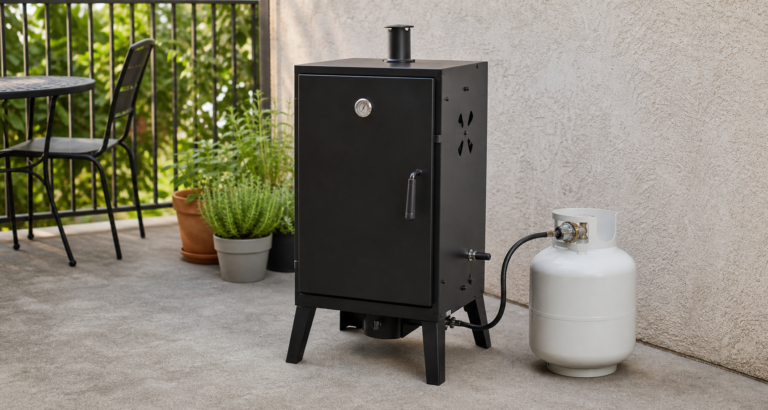
Maximize Space With Compact Propane Smokers for Small Patios
Discover compact propane smokers for small patios that maximize outdoor cooking space. Compare practical vertical smokers for flavor in limited areas.
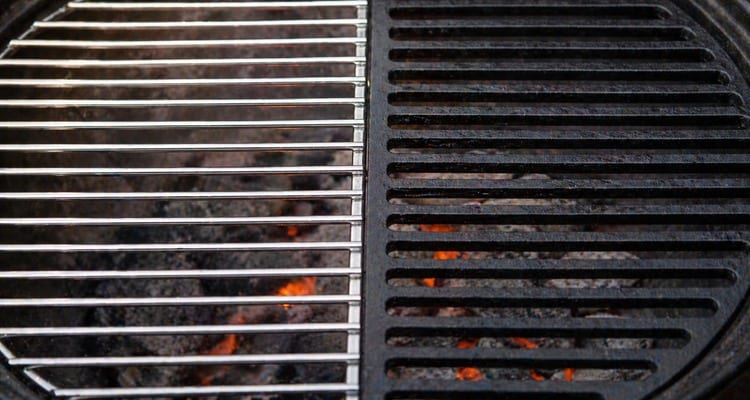
Perfect Sear Marks: Choosing Your Best Grill Grate Material
Compare the best grill grate material for your BBQ. We analyze cast iron, stainless steel, and porcelain for searing, durability, and easy maintenance.
Best BBQ Rubs and Seasoning Sets for 2026: Championship-Proven Collections
Discover the best BBQ rubs and seasoning sets for 2025. From budget champions at $9 to premium collections, find championship-proven formulas.