

Finding the right grill is easier than it sounds — if you know the right size. Too small and you're flipping burgers in shifts; too large and you're burning through fuel on a half-empty grate. A medium size grill sits squarely in the sweet spot: enough cooking area to feed a hungry family or a small gathering, without the bulk and cost of a full commercial-style setup.
So what counts as a medium size grill? We define it as any grill with a primary cooking surface of roughly 350 to 600 square inches — enough space for 15 to 20 burgers, a whole chicken with room for sides, or a full rack of ribs alongside a pile of vegetables. That range covers the vast majority of backyard gas grills, charcoal kettle grills, and mid-size pellet smokers on the market today.
Quick Comparison
| Medium-Size Grill | Fuel Type | Cooking Area | Best For | Where to Buy |
|---|---|---|---|---|
 Weber Spirit E-310 Gas Grill Weber Spirit E-310 Gas Grill
|
Liquid Propane | ~424 sq in | Best Overall | See at Amazon |
 Napoleon Rogue 425 Gas Grill Napoleon Rogue 425 Gas Grill
|
Propane | 425 sq in | Best for Families | See at Amazon |
 Weber Original Kettle Premium 22-Inch Weber Original Kettle Premium 22-Inch
|
Charcoal | 363 sq in | Best Charcoal | See at Amazon |
 Charbroil Pro Series 3-Burner Propane Gas Grill Charbroil Pro Series 3-Burner Propane Gas Grill
|
Liquid propane | 412 sq in | Best Gas Value | See at Amazon |
 Weber Searwood 600 Wood Pellet Smoker Grill Weber Searwood 600 Wood Pellet Smoker Grill
|
Wood pellet | 648 sq. in. | Best Pellet | See at Amazon |
Weber Spirit E-310 Gas Grill
3-burner propane gas grill with Snap-Jet per-burner ignition
Why Choose a Medium-Size Grill?
A medium-size grill is the most practical choice for the widest range of backyard cooks. Unlike compact portable grills, a medium grill gives you enough room to cook a complete meal in one pass — steaks, chicken thighs, corn, and peppers all on the grate at the same time. You don't have to keep rotating batches while guests wait.
Compared to large grills, a medium grill is easier to manage on every level. It heats up faster, uses less propane or charcoal per session, and takes up far less space on a patio or deck. For most families, 400 to 600 square inches of cooking area is genuinely all the grill you'll ever need.
The medium grill category spans gas grills, charcoal grills, and pellet grills — so there's no shortage of choices regardless of your preferred fuel type or cooking style. A mid-size grill also gives you real cooking versatility. With a three or four-burner gas grill, you can set up separate temperature zones — high heat on one side for searing, lower heat on the other for finishing.
On a charcoal grill in this size range, you have enough room to bank coals to one side for proper indirect cooking. And a medium pellet grill can smoke a brisket low and slow or crank up to searing temperatures for burgers. If you want to grill grilled corn, chicken, or a full weekend spread, a medium grill handles it all without the cost and complexity of a larger rig.
How to Choose the Best Medium-Size Grill
Medium-size grills come in gas, charcoal, and pellet configurations, and the differences between them are significant. Here's what to look for when choosing the right medium grill for your backyard.
Cooking area is measured in square inches and refers to the usable surface on the main grate — what we call the primary cooking surface. Warming racks and upper shelves are secondary and shouldn't count toward your capacity estimate. A grill with 435 square inches of primary cooking space can fit roughly 20 to 25 burgers.
That's a solid medium grill for a family of four to six with room to spare for a backyard get-together. Be wary of manufacturers who advertise total cooking area (including warming racks) instead of primary cooking space. The primary cooking surface is the number that actually matters when you're loading up the grate.
Your fuel choice shapes the entire grilling experience:
- Gas grills light with the turn of a knob, reach cooking temperature in ten to fifteen minutes, and let you dial in precise temperature control with independent burner adjustments. They're the workhorse choice for weeknight cooking. If budget is a concern, there are excellent gas grills under $500 that still deliver solid performance.
- Charcoal grills deliver that classic smoky, high-heat flavor that many BBQ enthusiasts swear by. The trade-off is a longer startup time and more hands-on heat management. A charcoal chimney starter makes lighting faster and cleaner, and it's a worthwhile investment alongside any charcoal grill.
- Pellet grills blend the convenience of gas with the wood-fired flavor of charcoal. They use compressed wood pellets and a digital controller to maintain precise temperatures automatically — excellent for low-and-slow smoking and increasingly capable of high-heat searing.
For a medium gas grill, three to four burners is the standard. More burners allow better temperature zone control across the cooking area. As for BTU output, look for a range of 30,000 to 45,000 BTU total across the main burners. Higher BTU alone doesn't guarantee better results — even heat distribution and grate quality matter more than the biggest number on the spec sheet.
Your grates are your primary cooking surface, and the material affects both performance and maintenance:
- Cast iron grates retain heat exceptionally well and produce excellent sear marks. They require occasional seasoning to prevent rust but reward you with superior browning and heat distribution.
- Porcelain-enameled grates (cast iron or steel underneath) are rust-resistant and easy to clean — no seasoning required. Most premium gas grills use porcelain-enameled cast iron for the best of both worlds.
Look for stainless steel burners, firebox components, and Flavorizer bars or heat tents. Stainless steel resists rust and holds up far longer than painted steel, especially in outdoor environments. A cast aluminum cookbox, like those found on Weber grills, resists corrosion and doesn't peel over time. Quality gas grills and pellet grills use stainless steel throughout internal components — burner tubes, heat deflectors, and manifolds — because these parts face direct heat and grease exposure on every cook.
Heavy-duty wheels add mobility without sacrificing stability. When comparing grills side by side, check the warranty length as a proxy for build confidence: grills backed by 10- to 15-year warranties are typically built from superior materials.
A built-in lid thermometer lets you monitor internal temperature without lifting the lid and losing heat. An easy-to-use ignition system — whether electronic or a spark ignition like Napoleon's JETFIRE — saves frustration at the start of every cook. A grease management drip tray keeps cleanup manageable and prevents dangerous flare-ups. Side shelves (ideally folding for space savings) give you a place to stage tools and platters while you cook.
Product Reviews
Weber Spirit E-310 Gas Grill
- 3-burner propane gas grill with Snap-Jet per-burner ignition
- Porcelain-enameled cast-iron grates for even heat and easy cleaning
- Stainless steel Flavorizer Bars add flavor and protect burners
- Pull-out grease tray and drip pan for easy cleanup
- Cast-aluminum cookbox resists rust and peeling
- Weber Works side rails for snap-on accessories
If there's one gas grill that has earned the right to sit at the top of any medium grill roundup, it's the Weber Spirit E-310 . This three-burner propane gas grill delivers the precise, consistent heat that Weber is known for, backed by porcelain-enameled cast-iron grates that retain temperature evenly across the full cooking area. Three stainless steel burners provide reliable, even heat distribution, while the Snap-Jet ignition system lights each burner independently with a single-hand press-and-turn — no fumbling, no repeat clicks.
Stainless steel Flavorizer Bars sit above the burners to vaporize drippings for added grill flavor and funnel grease away from the heat source, while the full grease management system — a pull-out drip tray and large catch pan — makes post-cook cleanup straightforward. The cast-aluminum cookbox won't rust or peel, and the built-in cabinet below hides your propane tank neatly out of sight. Weber backs this grill with a 10-year limited warranty, and the Weber Works side rails accept snap-on accessories for further customization.
See at AmazonNapoleon Rogue 425 Gas Grill
- 3-burner propane gas grill with 425 sq in primary cooking area
- Signature WAVE porcelain-enameled cast iron cooking grids
- JETFIRE ignition for fast, reliable lighting on every burner
- 15-year full warranty — among the best in the industry
- Folding side shelves for compact storage on small patios
- Locking caster wheels for stable positioning
- Durable black porcelain enamel lid and powder coat finish
The Napoleon Rogue 425 is the gas grill for the backyard cook who wants premium performance and the peace of mind that comes with a 15-year full warranty — one of the longest coverage periods in the industry. With 425 square inches of primary cooking area and three independently controlled stainless steel burners, the Rogue 425 handles everything from low-temperature roasting to high-heat searing with equal confidence. The WAVE porcelain-enameled cast iron cooking grids are a Napoleon signature — their curved design creates distinctive crosshatch sear marks and channels juices back against the food while it cooks, keeping meat moist and flavorful.
The JETFIRE ignition delivers instant, reliable lighting on every burner. Folding side shelves keep this grill compact for storage on smaller patios and balconies, while locking caster wheels make repositioning easy. The durable black porcelain enamel lid resists fingerprints and weathering. Napoleon also offers a suite of compatible infrared grills and accessories for those who want to expand their outdoor cooking setup.
See at AmazonWeber Original Kettle Premium 22-Inch
- 22-inch charcoal kettle grill, the industry benchmark since 1952
- 363 sq in primary cooking area — grill up to 13 burgers at once
- Two rust-resistant aluminum dampers for precise temperature control
- One-Touch cleaning system with high-capacity ash catcher
- Hinged cooking grate for mid-cook charcoal access
- Built-in lid thermometer for at-a-glance temperature monitoring
- Porcelain-enameled bowl and lid resist rust and peeling
- Angled lid hook keeps lid off the ground during cooking
The Weber Original Kettle has been the benchmark charcoal grill since 1952, and the 22-inch Premium version proves why that reputation has never faded. At 363 square inches of cooking area on the primary grate, it sits at the lower end of the medium charcoal grill range — but no other grill in its class offers the same combination of build quality, temperature control, and sheer cooking versatility. Two rust-resistant aluminum dampers (one on the lid, one on the bowl) give you precise control over airflow and cooking temperature, letting you dial in anything from a hot sear to a low, slow smoke.
The One-Touch cleaning system with its high-capacity aluminized ash catcher makes post-cook cleanup far faster than most competitors. The hinged cooking grate — a Premium upgrade — lets you add charcoal mid-cook without removing the grate entirely. A built-in lid thermometer keeps you informed without lifting the lid. The porcelain-enameled bowl and lid retain heat well and resist rust for years of hard use.
See at AmazonCharbroil Pro Series 3-Burner Propane Gas Grill
- 3-burner propane gas grill with a medium-size 412 sq in primary cooking surface
- Amplifire cooking system helps reduce flare-ups and improve heat distribution
- Porcelain-coated cast-iron grates resist rust and clean up more easily
- 25,500 BTU main burner system designed for efficient fuel use
- Oversized side shelf provides prep space for tools, sauces, and platters
- Compatible with optional Charbroil accessories for griddle or charcoal-style cooking
The Charbroil Pro Series 3-Burner Propane Gas Grill is a better fit for this medium-size grill guide than the previous 4-burner bundle. It gives you a true mid-size gas grill layout with 412 square inches of primary cooking space, three burners, and Charbroil's Amplifire cooking system for more even heat and fewer flare-ups. The porcelain-coated cast-iron grates are practical for regular backyard use because they hold heat better than thin wire grates and clean up more easily after saucy cooks.
Its 25,500 BTU burner system is designed around efficient heat delivery rather than oversized output, making it a sensible value pick for families that want everyday propane convenience without stepping into a large premium grill.
See at AmazonWeber Searwood 600 Wood Pellet Smoker Grill
- Wood pellet smoker grill with a full 180°F to 600°F temperature range
- DirectFlame cooking supports searing, browning, roasting, and smoking
- Rapid React PID controller heats quickly and recovers temperature after lid openings
- SmokeBoost setting holds low temperatures to build stronger wood-smoke flavor
- Wi-Fi and Bluetooth connectivity through Weber's connected cooking system
- Includes a food probe for monitoring doneness from the grill controller
The Weber Searwood 600 Wood Pellet Smoker Grill is the correct medium pellet grill for this slot. Unlike the previous listing, which was only a cover, this is the actual Wi-Fi and Bluetooth-enabled pellet grill with a broad 180°F to 600°F temperature range for smoking, roasting, grilling, and searing. DirectFlame cooking helps it handle browning and searing better than older pellet grills that struggled above smoking temperatures.
The Rapid React PID controller is useful when the lid gets opened during active cooks because it helps recover temperature quickly. SmokeBoost gives low-and-slow cooks a stronger wood-smoke profile, while the included food probe and connected controls make it easier to monitor longer cooks without hovering over the grill.
See at AmazonUnderstanding BTU Heat Flux and Efficiency
When evaluating a gas grill's power, don't just look at the total BTU rating. Instead, calculate the BTU heat flux by dividing the total BTUs of the main burners by the primary cooking surface area. A highly efficient medium-size grill should aim for a ratio of 80 to 100 BTUs per square inch. This ratio ensures the grill has enough concentrated power to sear effectively without burning through fuel unnecessarily.
The Role of Double-Walled Lids
When shopping, pay close attention to the lid construction. A double-walled (or twin-wall) lid features an inner liner that traps a pocket of air, acting as an insulator. This design is crucial for retaining heat, creating a natural convection oven effect inside the cookbox, and significantly reducing fuel consumption—especially during cold-weather cooking sessions.
Burner Materials: 304-Grade Stainless Steel vs. Painted Steel
Not all stainless steel is created equal. Premium medium-size grills utilize high-quality 304-grade stainless steel for their burners and flame tamers, which offers superior resistance to rust and chemical corrosion. Lower-end models often use cheap painted tubular steel or low-grade steel alloys that quickly rust from the inside out due to moisture and acidic drippings.
Natural Gas Conversions and Fuel Limitations
If you are considering running your grill on natural gas, keep in mind that plumbing a dedicated natural gas line carries a high upfront installation cost. Furthermore, attempting to convert a liquid propane grill to natural gas using third-party kits can void your manufacturer's warranty and pose safety hazards. Always buy a dedicated natural gas model if that is your preferred fuel source. Additionally, if you use alternative fuels like butane for portable or auxiliary burners, be aware that butane performs poorly in cold temperatures (below 5°C/41°F) compared to propane, which maintains steady pressure even in freezing conditions.
Built-In vs. Freestanding Configurations
While most medium-size grills are freestanding carts, some models are designed as built-in units for outdoor kitchen islands. If you choose a built-in configuration, you must plan for precise cutout measurements and install an insulated jacket if the island is constructed from combustible materials like wood. Freestanding models offer more flexibility and are much easier to relocate or replace down the line.
Are Hybrid Gas and Charcoal Grills Worth It?
For outdoor cooks torn between the speed of gas and the flavor of charcoal, hybrid grills offer a compelling compromise. These mid-sized units typically feature standard gas burners alongside integrated charcoal trays, allowing you to switch fuel sources or use gas burners to quickly ignite charcoal briquettes. While highly versatile, they require more thorough cleaning to prevent ash from clogging the gas burner ports.
What is considered a medium-size grill?
A medium-size grill generally has a primary cooking surface of 350 to 600 square inches. That's enough cooking area for 15 to 25 burgers at once, a whole spatchcocked chicken with vegetables on the side, or a full rack of ribs. In practical terms, it comfortably feeds a family of four to six and handles most backyard entertaining without the bulk of a large grill.
Gas grills, charcoal grills, and pellet grills all fall into the medium size grill category at this cooking area range — you'll find quality grills from brands like Weber, Napoleon, and Char-Broil across all three fuel types.
What size grill do I need for a family of 4?
For a family of four, a medium grill in the 400 to 500 square inch range is ideal. A three-burner gas grill with 420 to 450 square inches of cooking space can handle a full family dinner — burgers, chicken, corn, and sides — in one pass. If you frequently cook for larger groups or like to batch-cook for the week, a four-burner gas grill or a pellet grill with 500 to 600 square inches gives you extra flexibility without stepping up to an oversized rig. Medium size grills are also the most space-efficient choice for standard backyard patios and decks — large grills often require more clearance than a typical outdoor space comfortably allows.
Is a gas or charcoal grill better for a medium-size grill?
It depends on what matters most to you. A medium-size gas grill wins on convenience — faster startup, easier temperature control, and less cleanup. A medium charcoal grill wins on flavor — the natural smoke and high-heat sear from charcoal is difficult to replicate with a gas grill. Many experienced grillers keep both: a gas grill for weeknight convenience and a charcoal grill for weekend cooking when the extra setup time is worth it.
If you want wood-fired flavor with push-button convenience, a medium pellet grill like the Weber Searwood 600 is an increasingly compelling third option. The best medium size grill for you depends on how you cook, not just which fuel type sounds appealing in theory.
How many BTUs does a medium gas grill need?
A medium gas grill with three to four burners typically produces 30,000 to 45,000 BTU of total heat output. More important than the raw BTU number is how efficiently that heat reaches your food. Quality cast iron grates retain heat well and help with heat distribution across the cooking surface.
A well-designed grill with 35,000 BTU and proper heat distribution will outperform a poorly designed model with 50,000 BTU. Look for even grate coverage, stainless steel burners for longevity, and a snug-fitting lid that holds heat in rather than letting it escape.
What essential features should I look for in a medium-size grill?
The most important features in a medium grill are build quality, grate material, and ignition reliability. Look for porcelain-enameled cast iron grates for heat retention and easy cleaning, stainless steel or cast aluminum construction for corrosion resistance, and a proven ignition system (electronic or JETFIRE-style) that lights on the first try. A built-in lid thermometer is essential for monitoring cooking temperature. An easy-to-remove grease management drip tray keeps the grill cleaner and reduces flare-up risk. For gas grills, independent burner control lets you create separate temperature zones on the cooking area.
Do medium-size grills offer advanced features like smart connectivity?
Yes — several medium-size grills now include technology once reserved for high-end units. The Weber Searwood 600 pellet grill features full Wi-Fi and Bluetooth connectivity through the WEBER CONNECT app, a Rapid React PID controller for digital temperature precision, and a SmokeBoost setting for low-and-slow smoking. On the gas grill side, the Napoleon Rogue 425 offers JETFIRE ignition and WAVE cooking grids for enhanced searing. Even budget-friendly grills like the Char-Broil Performance Series include electronic ignition and a FlavorMax cooking system. You don't have to spend top dollar to get a grill with solid modern features.
How long does a medium-size grill last?
A well-made medium-size grill should last ten to fifteen years with proper care. Gas grills with stainless steel burners and porcelain-enameled grates typically outlast grills built with painted steel components, which can corrode within a few years in outdoor environments. Weber grills, for example, are well-known for their longevity — many customers report using the same Weber gas grill or charcoal kettle grill for fifteen years or more.
Charcoal grills like the Weber Kettle are exceptionally durable due to their simple, few-component design.
To maximize the lifespan of any medium grill, cover it when not in use, clean the grates and grease management drip tray regularly, and store propane gas grills with the burners free of rust and debris. Annual inspection of gas grill burner tubes and ignition systems catches small issues before they become bigger problems.
What is the benefit of a double-walled grill lid?
A double-walled lid features an inner liner that creates an insulating air pocket. This design helps the grill retain heat more efficiently, creating a convection effect that cooks food evenly while reducing overall fuel consumption.
Can you convert a propane grill to natural gas?
While some grills support conversion, doing it yourself with aftermarket parts can void your warranty and create safety hazards. It is usually safer and more cost-effective to buy a dedicated natural gas model from the start.
What is the ideal BTU heat flux for a gas grill?
An efficient gas grill should have a heat flux of 80 to 100 BTUs per square inch of primary cooking space. This ratio ensures the burners generate enough concentrated heat to sear meat effectively without wasting fuel.
The Verdict
Related BBQ Guides

Master the Art of Marinating Chicken for Juicy Results
Learn how to marinate chicken the right way — the right acids, oils, timing per cut, grilling tips, and common mistakes to avoid for juicy, flavorful results.
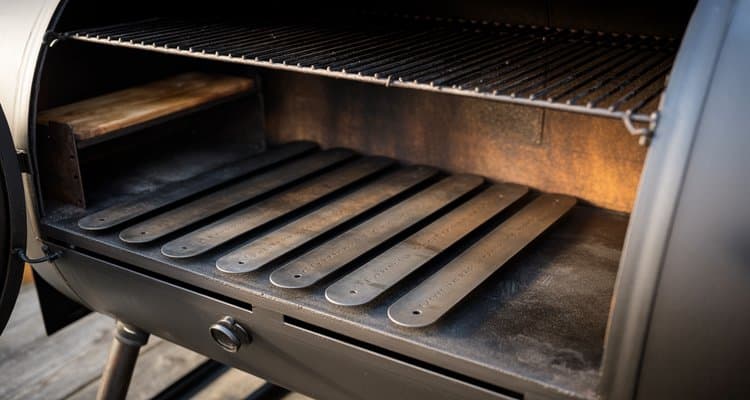
Offset Smoker Baffle Plates: Even Heat Distribution
Eliminate hot spots with our top baffle plates & firebox baskets. Expert-tested heat deflectors for even cooking across your offset smoker.
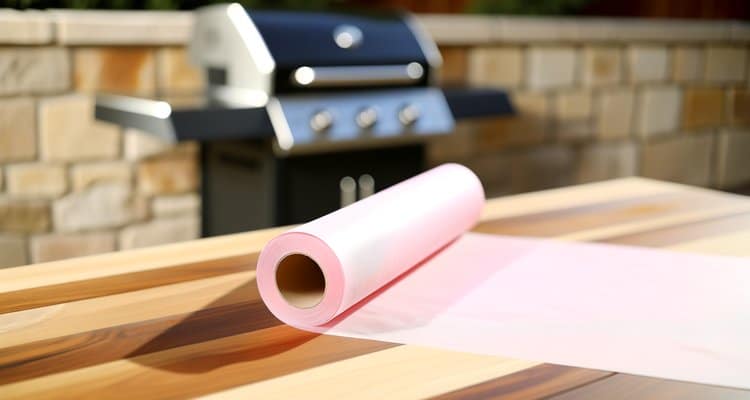
Pink Butcher Paper for Smoking: Your Complete BBQ Guide
Master the Texas crutch with our pink butcher paper guide. 6 FDA-approved rolls tested, wrapping techniques & foil vs paper comparison.