
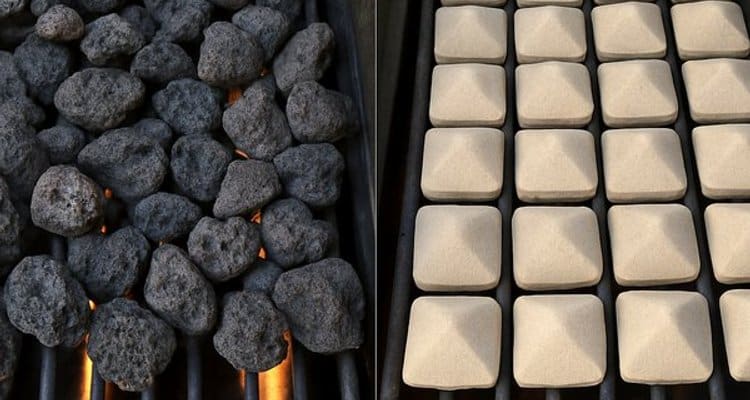
If you own a gas grill, you have probably wondered about the best way to distribute heat evenly across your cooking surface. The debate between lava rocks vs ceramic briquettes has been ongoing since the early days of gas grilling, and choosing the right option can significantly impact your grilling results. Both lava rocks and ceramic briquettes serve the same fundamental purpose in a gas grill: they absorb heat from the burners below and radiate it evenly across the grilling surface.
This heat distribution system helps eliminate hot spots, reduces flare-ups from dripping grease, and can even add smoky flavor to your food when drippings vaporize on contact. Modern gas grills have largely moved away from using lava rocks, favoring ceramic briquettes, metal heat plates, or flavorizer bars instead. However, many grillers still swear by the traditional lava rock method, and older grills may be specifically designed to use volcanic rock for heat distribution.
Quick Comparison
| Briquette | Type | Lifespan | Maintenance | Initial Cost | Where to Buy |
|---|---|---|---|---|---|
 Mr. Bar-B-Q Natural Lava Rocks 2-Pack Mr. Bar-B-Q Natural Lava Rocks 2-Pack
|
Lava Rock | 1-2 years | Medium | Lower | See at Amazon |
 Mr. Bar-B-Q 60 Count Ceramic Briquettes Mr. Bar-B-Q 60 Count Ceramic Briquettes
|
Ceramic | 3-5 years | Low (self-cleaning) | Higher | See at Amazon |
 FryOilSaver Co. 7lb Natural Volcanic Lava Rocks FryOilSaver Co. 7lb Natural Volcanic Lava Rocks
|
Lava Rock | 1-2 years | Medium | Lower | See at Amazon |
 Easylife Tech Ceramic Briquettes Easylife Tech Ceramic Briquettes
|
Ceramic | 3-5 years | Low (self-cleaning) | Higher | See at Amazon |
 DUCANE/FLAMETTE Ceramic Briquettes 70 Count DUCANE/FLAMETTE Ceramic Briquettes 70 Count
|
Ceramic | 3-5 years | Low (self-cleaning) | Higher | See at Amazon |
 OCS Parts Natural Lava Rocks OCS Parts Natural Lava Rocks
|
Lava Rock | 1-2 years | Medium | Lower | See at Amazon |
 Chef Master Ceramic Briquettes 50 Pack Chef Master Ceramic Briquettes 50 Pack
|
Ceramic | 3-5 years | Low (self-cleaning) | Higher | See at Amazon |
Mr. Bar-B-Q Natural Lava Rocks 2-Pack
Even heat distribution ensures consistent cooking across the entire grill surface
What Are Lava Rocks for Gas Grills?
Lava rocks are natural volcanic stones that have been used in gas grills since the 1960s and 1970s. These porous rocks are formed when molten lava cools rapidly, creating a lightweight material filled with tiny air pockets that make them excellent at absorbing and radiating heat.
When you place lava rocks on a gas grill, they sit on a rock grate positioned between the burners and the cooking grates. As the burners heat up, the lava rocks absorb this thermal energy and begin radiating it upward toward your food. The porous structure of volcanic rock allows them to heat relatively quickly while maintaining consistent temperatures across the grilling surface.
The natural porosity of lava rocks also plays a role in flavor enhancement. When meat juices and marinades drip onto the hot rocks, they vaporize instantly, creating smoke that rises back up to flavor your food. This is why many grillers who use lava rocks for gas grills report a more authentic smoky taste compared to grills with metal heat shields.
Lava rocks offer several advantages for gas grill owners. First, they provide excellent heat distribution across the cooking surface, helping to eliminate cold spots that can result in unevenly cooked food. The heat retention capabilities of volcanic rock mean your grill stays hot even when you open the lid, reducing temperature fluctuations during cooking. The cost-effectiveness of lava rocks makes them attractive for budget-conscious grillers.
A bag of natural lava rocks typically costs less than ceramic briquettes, and they work with both natural gas and propane grills. The rustic, natural appearance of volcanic rock can also enhance the aesthetic of fire pits and outdoor fireplaces beyond just gas grill applications.
Despite their benefits, lava rocks have some significant drawbacks. Their porous nature means they absorb grease over time, which can lead to increased flare-ups and potentially uneven heat distribution as the rocks become saturated. Most lava rocks need replacement every one to two grilling seasons, depending on how frequently you use your grill.
Lava rocks are also fragile and can crumble or crack from thermal shock, especially if exposed to sudden temperature changes or moisture. New lava rocks require an initial seasoning period of about 20 minutes on high heat before they are ready for grilling. These maintenance requirements have led many modern gas grill manufacturers to move away from lava rock systems entirely.
What Are Ceramic Briquettes?
Ceramic briquettes are manufactured heat distribution elements made from high-temperature fired clay or ceramic materials. Unlike natural lava rocks, ceramic briquettes are engineered to provide consistent performance and have become the preferred choice for many gas grill enthusiasts and manufacturers.
Ceramic briquettes function similarly to lava rocks but with key engineering improvements. They are typically manufactured in uniform pyramid or pillow shapes that allow for consistent spacing and optimal heat distribution. The ceramic material is less porous than volcanic rock, which means it does not absorb grease as readily. Most ceramic briquettes feature self-cleaning properties.
When you run your grill on high heat for 10-15 minutes after cooking, the accumulated grease and food residue burns off, restoring them to near-original condition. This self-cleaning capability is one of the main reasons they have gained popularity among grillers who want low-maintenance heat distribution.
The primary advantage of ceramic briquettes for gas grills is their exceptional durability. While lava rocks may need replacement annually, quality ceramic options can last three to five years or even longer with proper care. This longevity often makes them more cost-effective over time despite their higher initial purchase price.
These manufactured heat elements provide more even heat distribution than lava rocks due to their uniform shape and consistent density. They are excellent at reducing flare-ups because their smooth, non-porous surface prevents grease absorption. Many grillers report that they produce a flavor profile closer to charcoal grilling, making them popular among those seeking that authentic grilled taste.
The main drawback of these ceramic heat elements is their higher upfront cost compared to lava rocks. They are also heavier, which can add weight to your grill and may require sturdier grates to support them properly. Some warranties may be voided if you add them to a grill not designed for this purpose, so always check your manufacturer guidelines first.
Now let us compare lava rocks vs ceramic briquettes across the factors that matter most to gas grill owners. This detailed analysis will help you determine which heat distribution method is right for your grilling style.
Both lava rocks and ceramic briquettes improve heat distribution in gas grills compared to having no heat medium at all. However, the ceramic option has the edge here. Its uniform shape and manufactured consistency result in more predictable heat patterns across the cooking surface. Lava rocks, being natural stones, vary in size and density, which can create minor hot spots. Winner: Ceramic Briquettes
This category shows the most significant difference between the two options. Lava rocks typically last one to two years before they begin crumbling, absorbing too much grease, or losing their efficiency. The ceramic alternative, in contrast, can perform effectively for three to five years or more. Winner: Ceramic Briquettes
Lava rocks require regular attention. You should flip them periodically to burn off accumulated grease and inspect them for cracks or crumbling. Once they become saturated with grease, flare-ups increase and replacement becomes necessary. The ceramic option is largely self-cleaning. A 15-minute burn-off on high heat after cooking keeps them in good condition with minimal effort. Winner: Ceramic Briquettes
Both options enhance flavor by vaporizing drippings into smoke. Lava rocks produce a good smoky flavor due to their porous nature, which can hold some grease and release it as smoke during subsequent cooking sessions. The ceramic alternative produces similar results but with a cleaner burn that some grillers describe as closer to charcoal flavor. Winner: Tie (slight edge to ceramic for consistency)
Lava rocks win on initial purchase price. A bag of volcanic rock costs significantly less than an equivalent ceramic coverage. However, when you factor in replacement costs over a five-year period, the ceramic option often proves more economical despite its higher upfront investment. Winner: Depends on your timeframe
Quick Verdict: Which Should You Choose?
Choose ceramic briquettes if: You grill frequently, want minimal maintenance, prefer long-term value, or are upgrading from an older system. Most grillers find the ceramic option to be the better investment. Choose lava rocks if: You have an older grill designed for them, want the lowest upfront cost, use your grill seasonally, or prefer the natural volcanic aesthetic for fire pits and outdoor fireplaces.
When to Choose Lava Rocks for Your Gas Grill
Despite the ceramic option winning most comparison categories, lava rocks remain a valid choice for specific situations. Understanding when lava rocks make sense will help you make the right decision for your grill setup. Budget-conscious grillers who want to improve their gas grill heat distribution without significant investment should consider lava rocks.
The low initial cost makes them accessible for anyone looking to experiment with heat distribution media. If you only grill occasionally during summer months, the shorter lifespan of lava rocks may not matter since they could last several seasons with limited use. Owners of older gas grills specifically designed for lava rocks should stick with the original heat distribution system.
These grills have rock grates and burner configurations optimized for volcanic rock, and switching to the ceramic alternative might not improve performance and could potentially void any remaining warranty coverage. Lava rocks also work well for applications beyond gas grills. They are excellent in fire pits, outdoor fireplaces, and decorative gas features where the natural volcanic appearance adds aesthetic value. The versatility of lava rocks for gas grill use and other outdoor applications makes them a practical choice for homeowners with multiple outdoor living features.
When to Choose Ceramic Briquettes
Ceramic briquettes are the better choice for most gas grill owners, particularly those who prioritize long-term value and low maintenance. If you fire up your grill multiple times per week during grilling season, this ceramic option will save you time and money over its extended lifespan. Grillers upgrading from lava rocks often find the ceramic alternative to be a revelation.
The more even heat distribution, reduced flare-ups, and self-cleaning properties make cooking more enjoyable and consistent. If you have been frustrated by hot spots, excessive flare-ups, or frequent rock replacement, they address all these pain points. Those seeking consistent, even heat for precise cooking techniques will appreciate this option.
Whether you are searing steaks at high temperatures or slow-cooking delicate fish, the reliable heat distribution helps you achieve predictable results. The closer-to-charcoal flavor profile also appeals to grillers who want that authentic taste without the hassle of charcoal management.
Product Reviews
Mr. Bar-B-Q Natural Lava Rocks 2-Pack
- Even heat distribution ensures consistent cooking across the entire grill surface
- Flare-up control absorbs drippings to prevent burns and uneven cooking
- Compatible with BBQ grills and charbroilers
- Easy single-layer setup takes minutes to install
- Two-bag value pack covers large grills or provides replacement stock
This two-bag set of lava rocks is an ideal solution for owners of large gas grills who need to establish or replace coverage across a substantial surface area. With a combined weight of 14 pounds, the natural volcanic rocks are sufficient for grills up to 600 square inches, ensuring a full, even layer can be applied for consistent heat radiation from corner to corner. The quantity also provides a convenient backup supply for future replacement.
The performance of these rocks centers on improving heat management and safety. Their porous structure is effective at absorbing and distributing thermal energy from the burners, which minimizes hot spots and ensures food cooks uniformly. This material also catches and vaporizes grease drippings, a function that significantly reduces dangerous flare-ups while protecting the burners from clogs and corrosion.
See at AmazonFryOilSaver Co. 7lb Natural Volcanic Lava Rocks
- Protects burners and distributes heat evenly with porous volcanic rock structure
- Absorbs grease to minimize dangerous flare-ups
- Rustic aesthetic upgrade enhances grill ambiance
- Efficient heat retention radiates warmth consistently
This 7-pound bag of lava rocks serves as a standard replacement for refreshing the heat distribution system in small to medium-sized gas grills. It provides enough material to cover a 300-square-inch area, making it a practical choice for most single-grill applications or for topping off an existing rock bed. Its primary function is to replace old, grease-saturated briquettes to restore even heating performance. The porous volcanic stones are engineered for efficient heat retention and radiation, which helps maintain steady cooking temperatures needed for predictable results.
By absorbing grease drippings during cooking, these rocks also help control the sudden flare-ups that can char food unexpectedly. This absorption process simultaneously protects the underlying burner components from damage and accelerated corrosion due to grease buildup.
See at AmazonOCS Parts Natural Lava Rocks
- Easy to use and maintain with simple setup
- Controls flare-ups and reduces smoke production
- Improves heat distribution across the entire grill surface
- Versatile application works with gas grills, charbroilers, fire pits, and fireplaces
These natural volcanic rocks are engineered for multi-purpose heat distribution, making them a practical choice for various home heating features. While suitable for standard gas grills and charbroilers up to 300 square inches, the material is also designed to withstand the thermal demands of gas fire pits and fireplaces. Its durability makes it a reliable medium for a range of applications. In a grilling context, these rocks create a uniform field of radiant heat that is essential for achieving consistent cooking results.
The porous structure of the volcanic stone helps vaporize meat and vegetable drippings to generate flavorful smoke, while simultaneously absorbing excess grease. This absorption is key to preventing the dangerous flare-ups that can ruin a meal.
See at AmazonMr. Bar-B-Q 60 Count Ceramic Briquettes
- Pack of 60 premium pieces for comprehensive coverage
- Full coverage ensures consistent heat distribution across the grill
- Eliminates cold spots and reduces flare-ups significantly
- Durable construction provides long-lasting performance
This 60-count set offers a durable, long-term upgrade from traditional lava rocks. The high-temperature ceramic briquettes provide ample coverage for most standard-sized gas grills. Unlike porous volcanic rocks that degrade over time, the solid ceramic construction delivers superior longevity and consistent thermal performance over many seasons of use, making them a more permanent heat distribution solution. The key advantages of these briquettes are simplified maintenance and improved cooking precision.
Their non-porous surface is self-cleaning, as it vaporizes grease drippings during the grilling process, which eliminates the need for periodic replacement. This design also provides highly uniform heat radiation, removing the hot and cold spots common with rock beds for more predictable grilling.
See at AmazonChef Master Ceramic Briquettes 50 Pack
- Reduces flare-ups with engineered ceramic design
- Improved heat distribution eliminates hot spots and cold corners
- Self-cleaning during the grilling process
- High-quality materials extend grill life
- Withstands high-temperature grilling for searing and intense heat cooking
These professional-grade ceramic briquettes are formulated for high-performance grilling environments where intense, direct heat is required. The 50-count pack is suited for grillers who frequently cook at high temperatures for searing steaks or other quick-cooking foods. The material is engineered for enhanced durability and thermal resilience, ensuring it will not crack or degrade under heavy, repeated use. The technical design of these briquettes creates a uniform thermal field that radiates heat consistently, which is critical for achieving a perfect crust without creating burnt spots.
Their solid, non-porous surface vaporizes drippings with high efficiency, which minimizes flare-ups that can occur with fatty foods. This also helps protect the grill's internal components from grease buildup and corrosion.
See at AmazonDUCANE/FLAMETTE Ceramic Briquettes 70 Count
- Unique 4-sided beveled pyramid design for optimal heat distribution
- 2 inches square tapering to flat top
- Reduces annoying flare-ups effectively
- Long-lasting performance from quality manufacturing
- Made in the USA
This 70-count set of briquettes is distinguished by a unique, four-sided beveled pyramid shape. This geometry is engineered to maximize the surface area available for heat radiation while creating channels for grease drippings to flow and vaporize. This process enhances grilled flavor and is highly effective at reducing flare-ups. The set provides coverage for up to 280 square inches of grilling surface. As a ceramic product, these briquettes offer a long-lasting and low-maintenance alternative to disposable lava rocks.
Their interlocking pyramid design ensures there are no significant gaps or cold spots between them, which contributes to a more uniform and consistent cooking surface. The durable construction is designed to provide reliable performance over many grilling seasons.
See at AmazonEasylife Tech Ceramic Briquettes
- Distributes heat evenly across the entire grill surface
- Protects food from dangerous flare-ups
- Easy to install - simply place on rack between flame and food
- Perfect replacement for outdated lava rocks
- Reusable and easy to clean with self-cleaning during use
This set of ceramic briquettes is designed as a straightforward and accessible upgrade from standard lava rocks, particularly for smaller grills. Providing coverage for just over 200 square inches, it is sized for compact gas grills and offers an immediate improvement in heat consistency. The installation is simple, requiring only that the briquettes are placed on the grate between the burners and the food.
The primary functional benefit is more even heat distribution for uniform cooking results, eliminating the hot spots often found with worn-out rock beds. Made of durable ceramic, these briquettes are reusable and require minimal upkeep. Their self-cleaning nature means that grease drippings are vaporized during use, making them a low-maintenance and long-lasting heat management system.
See at AmazonHow to Install and Replace Lava Rocks or Ceramic Briquettes
Proper installation ensures optimal heating and extends the life of your lava rocks or ceramic briquettes. Follow these steps whether you are setting up new heat media or replacing old materials in your grill.
- Remove old heat media: If replacing existing lava rocks or ceramic heat elements, carefully remove all old materials. Dispose of crumbling lava rocks properly.
- Clean the rock grate and firebox: Use a grill brush to remove debris, grease buildup, and any ash from the grate and firebox area. This ensures proper airflow and heat distribution.
- Arrange in a single layer: Place lava rocks or ceramic heat media in a single layer across the rock grate. Avoid stacking, which can restrict airflow and create hot spots.
- Season on high heat: Run your gas grill on high for 15-20 minutes with the lid closed. This burns off any manufacturing residue and prepares the heat media for cooking.
- Ready for grilling: After seasoning, your grill is ready to use. The heat media will now provide even heat distribution across the cooking surface.
Regular maintenance extends the life of your heat distribution system. Flip lava rocks and ceramic heat elements periodically to ensure even wear and burn off accumulated grease. After cooking, run your grill on high for 10-15 minutes to burn off drippings, especially important for the ceramic option with self-cleaning properties. Inspect lava rocks regularly for crumbling or excessive grease absorption. Replace when they begin breaking apart or causing increased flare-ups. The ceramic alternative needs less frequent inspection but should be checked annually for cracks or significant discoloration that might indicate replacement time.
If you want to convert an older gas grill from lava rocks to ceramic briquettes, first check your manufacturer guidelines. Some warranties may be voided by changing heat distribution media. Ensure your rock grate can support the heavier weight of the ceramic option, and consider using expandable grill grates if needed for proper fit.
Can I use lava rocks or ceramic briquettes in any gas grill?
Not all gas grills are designed for these heat distribution media. Modern grills often use metal heat plates, flavorizer bars, or other proprietary systems. Check your grill manual before adding any heat media. Grills with rock grates are designed for lava rocks or ceramic options, while grills without this feature should use their original system.
Why don't modern gas grills use lava rocks anymore?
Modern gas grills have moved away from lava rocks primarily due to maintenance concerns and improved alternative technologies. Lava rocks absorb grease, require regular replacement, and can contribute to flare-ups. Metal heat plates, ceramic briquettes, and flavorizer bars offer similar heat distribution benefits with less maintenance and longer lifespans.
How often should I replace lava rocks vs ceramic briquettes?
Lava rocks typically need replacement every one to two years depending on use frequency. Signs of needed replacement include crumbling, excessive grease absorption, and increased flare-ups. The ceramic option lasts three to five years or longer. Replace them when you notice cracks, significant discoloration, or reduced performance.
Do ceramic briquettes produce better flavor than lava rocks?
Both lava rocks and ceramic briquettes enhance flavor by vaporizing drippings into smoke. The flavor difference is subtle. Some grillers prefer the traditional smoky taste from lava rocks, while others favor the cleaner, more charcoal-like flavor from the ceramic option. Personal preference plays the biggest role in this decision.
Can I mix lava rocks and ceramic briquettes?
While technically possible, mixing these two heat media is not recommended. They have different heat absorption rates, weights, and maintenance requirements. Mixing can result in uneven heating and complicate maintenance. Choose one type and use it consistently for best results.
Are ceramic briquettes worth the extra cost?
For frequent grillers, the ceramic option is typically worth the higher initial investment. The three to five year lifespan means you may only buy one set in the time you would purchase three to five bags of lava rocks. The self-cleaning properties and reduced maintenance also save time and effort over years of grilling.
What about heat shields and flavorizer bars vs lava rocks?
Heat shields and flavorizer bars are metal alternatives to lava rocks and ceramic briquettes. They protect burners, vaporize drippings for flavor, and distribute heat. Metal heat deflectors are easier to clean and never need replacement due to crumbling. However, they may not provide the same level of heat retention as lava rocks or the ceramic alternative. Many modern grills combine heat deflectors with the option to add ceramic heat elements for optimal performance.
Conclusion: Making Your Choice
The lava rocks vs ceramic briquettes debate comes down to your priorities as a griller. Both options improve heat distribution in gas grills and enhance flavor through dripping vaporization. The key differences lie in durability, maintenance, and cost over time. For most grillers, we recommend ceramic briquettes.
Their superior longevity, self-cleaning properties, and more consistent heating make them the better long-term investment. The higher initial cost pays off through years of reliable performance with minimal maintenance. Lava rocks remain a viable choice for budget-conscious grillers, owners of older grills designed specifically for volcanic rock, and those who grill infrequently enough that the shorter lifespan is not a concern.
They also excel in fire pits and outdoor fireplaces where their natural appearance adds aesthetic value. Whichever option you choose, proper installation and maintenance will maximize the lifespan and performance of your heat distribution system. Your gas grill will reward you with even heat, reduced flare-ups, and that delicious smoky flavor that makes outdoor grilling so satisfying.
Related BBQ Guides

Top Smoker Rib Hooks for Hanging Ribs to Maximize Space
Discover the best smoker rib hooks for hanging ribs to maximize your cooking space and achieve perfect bark every time. Find your ideal set today.
Bluetooth Meat Thermometers: Your Complete Buying Guide
Compare the best bluetooth meat thermometers for 2026, from truly wireless probes to long range WiFi models, with real accuracy and battery life data.
Infrared Grill Thermometers: Surface Temp Precision Guide
Discover the 5 best infrared thermometers for precise grill surface temps. Compare features, D:S ratios & emissivity. Expert tested 2026.