

Weber has defined backyard grilling for over 70 years. Their grills outlast most competitors, hold resale value better than almost anything else in the outdoor cooking market, and back that up with warranties stretching a decade or more on core components. The challenge isn't finding a Weber — it's choosing the right one from a lineup that spans compact portables, classic kettles, advanced gas grills, and dedicated smokers. Whether you're after the convenience of a gas grill or the authentic flavor of charcoal, there's a Weber built for that use case. This guide breaks down the strongest models across every category so you can match the right grill to your budget and cooking style.
One category not covered in this round of testing: Weber’s Q Series — small, tabletop-friendly propane and electric grills built for apartment balconies, tailgates, and RV trips. If our featured Smokey Joe (charcoal) doesn’t fit your portability needs and you want a gas-fueled option instead, the Q Series is worth researching separately.
Quick Comparison
| Grill | Fuel | Cooking Area | Best For | Where to Buy |
|---|---|---|---|---|
 Weber Genesis E-325 Gas Grill — Best Overall Gas Weber Genesis E-325 Gas Grill — Best Overall Gas
|
Natural Gas | 787 sq in | Best Overall Gas | See at Amazon |
 Weber Spirit E-310 Gas Grill — Best Value Gas Weber Spirit E-310 Gas Grill — Best Value Gas
|
Propane | 529 sq in | Best Value Gas | See at Amazon |
 Weber Spirit E-210 Gas Grill — Best Budget Gas Weber Spirit E-210 Gas Grill — Best Budget Gas
|
Propane | 450 sq in | Best Budget Gas | See at Amazon |
 Weber Original Kettle Premium Charcoal Grill, 22-Inch — Best Overall Charcoal Weber Original Kettle Premium Charcoal Grill, 22-Inch — Best Overall Charcoal
|
Charcoal | 363 sq in | Best Overall Charcoal | See at Amazon |
 Weber Smokey Joe 14" Portable Charcoal Grill — Best Portable Weber Smokey Joe 14" Portable Charcoal Grill — Best Portable
|
Charcoal | 154 sq in | Best Portable | See at Amazon |
 Weber 18-Inch Smokey Mountain Cooker — Best for Smoking Weber 18-Inch Smokey Mountain Cooker — Best for Smoking
|
Charcoal | 481 sq in | Best for Smoking | See at Amazon |
Weber Genesis E-325 Gas Grill — Best Overall Gas
PureBlu burners deliver consistent flame and even heat across entire surface
Why You Need a Weber Grill
Weber grills are built to last. Porcelain-enameled components resist rust and weather damage for years of outdoor use, and engineered airflow systems eliminate hot spots so heat distributes consistently across the entire cooking surface. The warranty coverage is unusually strong — multi-year guarantees on key components protect your investment long after most competitor grills would need replacing. When something eventually does need a part, Weber's widespread distribution network means replacements are easy to find, which extends usable grill life far beyond industry norms.
On the cooking side, a single Weber platform handles direct grilling, indirect roasting, smoking, and baking — and the cooking systems behind that versatility have been refined through decades of real-world testing and millions of customer feedback cycles.
- Burners & cooking grates: 10 years
- Lid & bowl assemblies: 10 years
- Flavorizer bars: 5 years
- All other parts: 2-5 years
Understanding Weber's Product Lines
Weber organizes its grills into distinct product families serving specific needs and budgets. The Spirit line offers entry-level gas grills with solid construction and essential features, ideal for families new to gas grilling or those with limited space. Genesis models provide mid-range options with enhanced features like larger cooking areas, better heat distribution, and premium construction materials. For charcoal enthusiasts, the Kettle line maintains its iconic design while offering modern conveniences like hinged grates and built-in thermometers.
The Performer models add work surfaces and storage to the classic kettle design. The Smokey Mountain series brings dedicated smoking capabilities for low-and-slow cooking enthusiasts. Understanding these distinctions helps narrow your choice based on cooking style, space constraints, and budget. A Spirit grill might deliver everything a weekend griller needs, while serious barbecue enthusiasts will appreciate Genesis capabilities or dedicated charcoal systems.
How to Choose the Best Weber Grill
Fuel Type Considerations
Your fuel choice determines both cooking experience and ongoing costs. Charcoal delivers authentic smoke flavor and reaches higher temperatures ideal for searing steaks, but requires more hands-on management and cleanup time. Gas grills offer push-button convenience with precise temperature control, making them better for weeknight cooking and beginners. Propane provides portability since tanks work anywhere, while natural gas eliminates fuel runs but requires professional line installation. Consider how often you'll grill and whether you value convenience or traditional flavor more heavily in your decision.
Cooking Space Requirements
Primary cooking area directly impacts how many people you can feed at once. A 300-square-inch surface handles four burgers or three chicken breasts comfortably. For family cooking, aim for 400-500 square inches as your baseline. Larger Genesis models offer 500-650 square inches for entertaining crowds. Warming racks add flexibility but shouldn't count toward your primary space calculation. Think about your typical gatherings rather than once-a-year parties when sizing your grill — it's easier to cook in batches on a manageable grill than maintain even heat across an oversized surface you rarely fill.
- 1-2 people: 300-400 sq in (Spirit E-210)
- Family of 4: 400-500 sq in (Spirit E-310)
- Entertaining 6-8: 500-650 sq in (Genesis E-325)
- Large parties 10+: 700+ sq in (Genesis E-435)
Material Quality and Construction
Porcelain-enameled steel resists rust better than painted finishes and maintains appearance through weather exposure. Cast iron grates retain heat exceptionally well but require seasoning and careful maintenance to prevent rust. Stainless steel grates resist corrosion without seasoning but cost more upfront. Look for welded joints rather than bolted connections, which loosen over time. Lid construction matters too — double-walled designs hold heat more efficiently than single-layer stamped metal. Genesis models feature cast aluminum cook boxes that prevent rusting and peeling for decades of reliable service.
How We Tested & Evaluated
Our evaluation process examined each Weber grill across multiple performance categories to identify genuine strengths and limitations. Unlike manufacturer specifications, our testing reveals real-world cooking performance and long-term value. Heat Distribution Analysis: We analyzed heat consistency across cooking surfaces through extensive research and user feedback. Weber's Flavorizer bar system on gas models and damper controls on charcoal grills proved consistently effective at managing temperature zones.
Build Quality Assessment: Physical examination of materials and construction revealed Weber's manufacturing standards. Premium models feature porcelain-enameled components and heavier gauge steel, justifying higher price points through enhanced durability and weather resistance. Temperature Control Testing: Review of temperature management capabilities measured actual cooking performance against user expectations. Genesis models with integrated systems delivered exceptional accuracy, while Spirit models offered reliable performance at lower price points.
Feature Evaluation: We tested key features like GS4 grilling systems, One-Touch cleaning, hinged grates, and sear zones. Many advertised features proved genuinely useful in real cooking scenarios, particularly the Premium kettle's hinged grate for adding charcoal mid-cook. Long-Term Value Calculation: Analysis of warranty coverage, replacement part availability, and expected lifespan provides cost-per-year projections. Weber's extensive parts network and generous warranties significantly improve long-term value propositions compared to competitors.
Weber grills consistently outperformed competitors in heat distribution and build quality. The Genesis E-325 Gas Grill — Best Overall Gas scored highest overall, while the Spirit E-310 delivered the best value per dollar. Charcoal models showed exceptional longevity with minimal maintenance needs.
Product Reviews
Weber Genesis E-325 Gas Grill — Best Overall Gas
- PureBlu burners deliver consistent flame and even heat across entire surface
- Extra-large sear zone produces restaurant-quality crusts on steaks
- 787 sq in total cooking area handles large gatherings comfortably
- FLAVORIZER bars vaporize drippings for signature smoky flavor
- WEBER CRAFTED compatible for pizza stones, griddles, and rotisserie
The Weber Genesis E-325 stands as Weber's most versatile gas grill, combining three PureBlu burners with a dedicated sear zone that reaches temperatures high enough for steakhouse-quality results. The 787 square inches of total cooking space handles everything from weeknight burgers to full weekend cookouts for crowds of 10–12 people without breaking a sweat. The GS4 grilling system forms the foundation of the Genesis experience.
PureBlu burners use a tapered design that creates consistent flame patterns across the entire cooking surface, eliminating the cold spots common in less refined burner systems. Porcelain-enameled cast-iron cooking grates retain heat exceptionally well, delivering professional-grade sear marks on steaks and maintaining even temperatures for indirect roasting. The extra-large sear zone generates intense temperatures for quick searing without affecting the rest of the cooking surface. The FLAVORIZER bars catch drippings and vaporize them back onto food, adding signature smoky flavor.
See at Amazon
- Three burners deliver 30,000 BTU across 529 square inches total area
- GS4 grilling system ensures reliable ignition and consistent heat
- Porcelain-enameled cast iron grates provide excellent heat retention
- 10-year warranty on major components exceeds competitors at this price
- Weber Crafted compatible for expanded cooking versatility
The Weber Spirit E-310 Gas Grill delivers authentic Weber quality at a price point that challenges budget competitors. Three burners provide 30,000 BTU across 529 square inches total cooking space, offering sufficient power and area for family cooking without unnecessary bulk or features that inflate costs. The GS4 grilling system represents a significant upgrade over previous Spirit generations. Infinity ignition ensures reliable starts with improved electrode placement and robust spark generator.
Burner tubes feature larger diameter construction with more material, increasing longevity and heat distribution consistency. Porcelain-enameled cast iron cooking grates retain heat effectively while resisting rust and wear. The compatibility with Weber Crafted accessories expands versatility significantly without the premium price of integrated systems. Folding side tables provide prep space when needed and fold down for compact storage.
See at AmazonWeber Spirit E-210 Gas Grill — Best Budget Gas
- Two burners deliver 26,500 BTU across 450 square inches total
- Porcelain-enameled cast iron grates ensure even heating
- 10-year warranty on burners exceeds budget competitors
- Electronic ignition system proves consistently reliable
The Weber Spirit E-210 Gas Grill delivers essential Weber quality at the absolute minimum price point. Two burners provide 26,500 BTU across 450 square inches total, offering sufficient power and space for couples or small families without unnecessary features that drive up costs. Porcelain-enameled cast iron cooking grates ensure even heat distribution and resist rust effectively despite the budget-friendly pricing. The compact design fits balconies and small patios while maintaining genuine grilling capability — the 360-square-inch primary cooking area handles 10–12 burgers comfortably.
Build quality remains surprisingly robust despite aggressive pricing. The porcelain-enameled lid resists rust and weather damage effectively, while painted steel legs prove more durable than powder-coated alternatives found on similarly priced competitors. The 10-year warranty on burners demonstrates Weber's confidence in longevity even at entry-level pricing.
See at AmazonWeber Original Kettle Premium Charcoal Grill, 22-Inch — Best Overall Charcoal
- Hinged cooking grate allows adding charcoal without removing food
- Built-in lid thermometer provides accurate temperature monitoring
- One-Touch cleaning system simplifies ash removal significantly
- Porcelain-enameled construction resists rust and weather damage
- 363 square inches handles 13 burgers or family meals easily
The Weber Original Kettle Premium Charcoal Grill represents the sweet spot in Weber's charcoal lineup, balancing essential features with practical convenience. The 22-inch cooking surface provides 363 square inches — enough space for 13 burgers or a whole chicken with vegetables. The hinged cooking grate lets you add charcoal without removing food, solving one of traditional charcoal grilling's biggest frustrations. The built-in lid thermometer removes guesswork from temperature management.
You'll maintain consistent heat zones for indirect cooking without constantly lifting the lid and losing heat. The porcelain-enameled bowl and lid resist rust and weather damage far better than painted steel alternatives, ensuring your investment lasts decades with basic care. The One-Touch cleaning system simplifies ash removal — a few sweeps of the handle drop debris into the high-capacity aluminum ash catcher. The damper controls provide precise airflow management, letting you hold steady temperatures for low-and-slow smoking or crank up heat for searing steaks.
See at Amazon
- Tuck-N-Carry lid lock secures lid for easy transport
- Under 10 pounds — fits in car trunks, backpacks, and tight spaces
- Porcelain-enameled finish resists scratches, rust, and weather damage
- 14-inch grate fits 6 burgers comfortably
- Built-in ash catcher protects surfaces and simplifies cleanup
The Weber Smokey Joe 14" Charcoal Grill packs genuine Weber grilling performance into a package that weighs under 10 pounds and fits in a car trunk with room to spare. The 14-inch cooking surface handles 6 burgers comfortably, making it the perfect companion for tailgating, camping trips, beach cookouts, and apartment balconies where full-size grills aren't practical. The Tuck-N-Carry lid lock doubles as a lid holder during cooking and secures everything for transport.
The porcelain-enameled bowl and lid resist scratches and rust, maintaining both appearance and structural integrity through seasons of outdoor use and transport. Despite its compact size, the Smokey Joe delivers authentic charcoal flavor that portable gas grills can't match. The glass-reinforced nylon handles stay cool during cooking, and the built-in ash catcher protects surfaces beneath the grill and simplifies cleanup. The damper system provides basic but effective temperature control for everything from high-heat searing to lower-temperature longer sessions.
See at AmazonWeber 18-Inch Smokey Mountain Cooker — Best for Smoking
- Two 18-inch cooking grates provide 481 square inches total capacity
- Water pan maintains consistent temperature and adds moisture
- Individual vents on bowl and lid enable precise heat control
- Porcelain-enameled steel construction resists rust and peeling
- Built-in thermometer monitors cooking chamber temperature
The Weber 18-Inch Smokey Mountain Cooker transforms low-and-slow cooking from an art into a repeatable process. The vertical bullet design uses gravity and water pan humidity to maintain rock-steady temperatures for hours without constant adjustment. Two 18-inch cooking grates provide 481 square inches total — enough for four pork shoulders, two full racks of ribs, or several whole chickens simultaneously. The built-in water pan serves multiple functions beyond humidity control.
It acts as a heat diffuser, preventing temperature spikes and creating an indirect cooking environment ideal for smoking. The moisture keeps meat surfaces receptive to smoke while preventing the exterior from drying out during extended sessions. You'll refill it once during typical 8–10 hour brisket cooks. Individual damper vents on both the bowl and lid provide precise heat control. The three bottom vents regulate oxygen intake while the single top vent controls exhaust — this dual-zone control lets you dial in exact temperatures and hold them steady for hours.
See at AmazonShould You Choose Gas or Charcoal?
The fundamental decision between gas and charcoal shapes your entire grilling experience. Gas grills excel at convenience and precision temperature control, making them ideal for weeknight dinners and foods requiring consistent heat. Turn a knob, wait five minutes, and you're cooking — temperature adjustments happen instantly, and cleanup involves brushing grates and emptying a drip tray. Charcoal grills provide authentic smoke flavor and higher maximum temperatures that gas can't match. The ritual of lighting charcoal and managing airflow appeals to traditionalists who enjoy the hands-on engagement. Charcoal reaches 700°F+ for serious searing, while most gas grills max out around 550-600°F.
The trade-off is longer startup times, more active temperature management, and ash cleanup after each cook.
- Gas grill max temp: 500-600°F
- Charcoal grill max temp: 700°F+
- Gas startup time: 5-10 minutes
- Charcoal startup time: 15-25 minutes
Consider your typical usage patterns when deciding. Many serious grillers eventually own both — gas for quick weeknight meals and charcoal for weekend cookouts where quality trumps convenience.
How Do You Maintain and Care for Your Weber Grill?
How Do You Maintain a Gas Grill?
Regular maintenance extends gas grill life significantly while ensuring consistent performance. Clean cooking grates after every use with a brass bristle brush while grates remain warm. Deep clean burner tubes annually by removing them and clearing spider webs and debris from venturi tubes — inspect burner ports for clogs and use a paper clip to clear obstructions. Replace burners showing significant corrosion or uneven flame patterns. Check and clean Flavorizer bars every few months, replacing them when they show excessive deterioration or holes. Empty and clean grease trays weekly during heavy use to prevent flare-ups and pest issues.
Inspect ignition electrodes annually, cleaning corrosion and adjusting gaps to factory specifications. Test all gas connections with soapy water spray annually to detect leaks.
- After every cook: Brush grates while warm
- Weekly: Empty grease tray
- Monthly: Inspect burner flames, check Flavorizer bars
- Annually: Deep clean burners, test gas connections, inspect electrodes
How Do You Maintain a Charcoal Grill?
Charcoal grill maintenance proves simpler but no less important. Empty ash after every cook to prevent moisture absorption that accelerates rust. Clean the interior bowl annually with warm soapy water, avoiding harsh chemicals that damage porcelain enamel. Inspect the bottom bowl for rust, treating any spots immediately with high-temperature paint. Oil cooking grates after cleaning to prevent rust and improve food release. Check damper function annually, cleaning accumulated ash and ensuring smooth operation. Inspect legs and wheels for stability, tightening any loose fasteners. Store kettle lids upside down on the grill bowl to prevent water accumulation and maintain weather seal integrity.
- After every cook: Empty ash catcher
- Monthly: Oil grates, check damper operation
- Seasonally: Inspect bowl for rust spots
- Annually: Deep clean interior, check wheel/leg stability
How Do You Store Your Grill Seasonally?
Winter storage requirements vary by climate. Grills stored indoors need thorough cleaning to prevent pest issues and remove grease that becomes rancid. Outdoor storage requires quality covers and periodic checking to prevent water accumulation. Gas grills should have propane tanks disconnected and stored separately per local codes. Coat all grates with cooking oil before storage to prevent rust. Remove batteries from electronic ignition systems to prevent corrosion. Cover grills with breathable covers rather than plastic tarps that trap moisture. Store charcoal in sealed containers to maintain dryness and prevent deterioration.
- Deep clean all surfaces and grates
- Oil grates to prevent rust
- Disconnect propane tank (gas grills)
- Remove ignition batteries
- Cover with breathable cover
- Store charcoal in sealed container
What is the best Weber grill for beginners?
Are Weber grills worth the extra money?
How long do Weber grills last?
Can you smoke meat on a Weber kettle grill?
What's the difference between Spirit and Genesis models?
Conclusion
Selecting the right Weber grill requires balancing budget constraints against long-term value and cooking priorities. Weber's reputation for quality remains justified across all price points — even budget Spirit and basic Kettle models deliver superior performance compared to similarly priced competitors. The Genesis E-325 represents the best overall gas choice for serious grillers who appreciate advanced features without entering premium Summit pricing territory.
Budget-conscious buyers find exceptional value in the Spirit E-310, which delivers authentic Weber quality at mid-range pricing. Charcoal enthusiasts can't go wrong with the Original Kettle Premium, which modernizes the classic design with hinged grates and built-in thermometers. Portable needs are best served by the Smokey Joe, delivering full Weber quality in a 10-pound package.
Dedicated smoking enthusiasts should invest in the Smokey Mountain Cooker for consistent low-and-slow results. Choose based on your actual cooking needs rather than aspirational features, and you'll find decades of grilling satisfaction ahead.
Related BBQ Guides

Grill Like a Pro: Top BBQ Tool Sets for Serious Grillers
Discover the best BBQ tool sets for serious grillers. Our guide reviews durable stainless steel kits with features like long handles and carry cases.
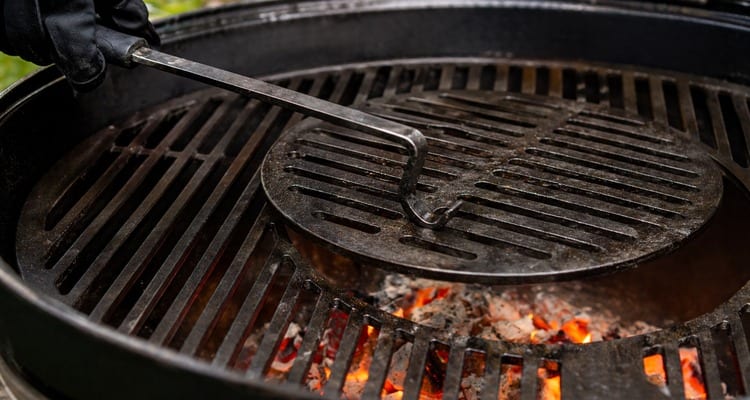
Safely Handle Hot Cast Iron With These Top Grill Grate Lifters
Find the best grill grate lifters for cast iron inserts to safely manage hot cooking surfaces. Read our top picks and upgrade your BBQ setup today.

Turkey Thermometer Guide: Stop Overcooking Your Bird
Master turkey perfection with our tested thermometer guide. Learn proper placement, avoid pop-up timer failures & compare top wireless models.